Hit Pakistani song 'Majboor' gets global audience
Updated 8 hours ago

Veteran actor reflects on Lahore’s changing identity, Pakistan’s past and the growing influence of AI on creativity
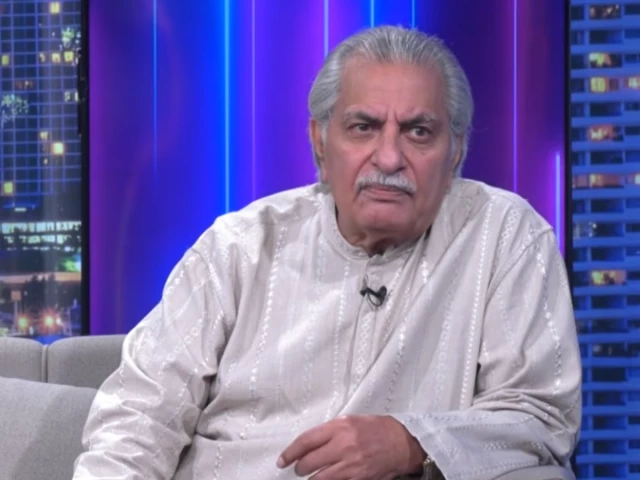
Veteran actor, director and writer Usman Peerzada took a reflective trip down memory lane in a recent interview, comparing the Pakistan he grew up in with the rapidly changing cultural landscape of today. Speaking about the changing character of Lahore, he offered a poignant commentary on heritage, art and identity.
For Peerzada, Lahore remains an irreplaceable romance. Recalling the tranquil, green city of his youth, he said, “Lahore was more of a cycle city. That was the beauty and joy of Lahore. I always call Lahore two cities: one is the inner city behind the walls, and the other is outer Lahore, which the British started settling after the mutiny. There was no conflict between the residents of old Lahore and new Lahore.”
He acknowledged that migration from smaller towns to the provincial capital is a natural part of urban growth, but argued that Lahore’s cultural character suffered when newcomers failed to understand the city’s inherent spirit.
“I always feel that the people who migrated from smaller cities damaged Lahore's culture. Unfortunately, they could not understand the temperament of this city. They could not understand the beauty and the joy that was Lahore and living in Lahore,” he said.
In his view, people who move to Lahore from smaller cities often try to reshape it according to their own expectations rather than embracing the city as it is.
Despite these changes, Peerzada believes Lahore’s essence cannot easily be displaced. Speaking about his enduring connection to the city, he said, “Lahore is what it is and will always remain that way. I have been in love with this city; I could never imagine ever living away from Lahore. Lahore has its magic; it's a great city, it has great magic, and I always pray that people don't destroy this magic.”
Reflecting on broader societal changes across the country, Peerzada drew a stark contrast between the Pakistan of his childhood and the country he sees today. “The Pakistan I was born in, that was not this Pakistan,” he said, describing the Pakistan he knew as more tolerant, educated and beautiful.
The actor also spoke about his upcoming autobiography, acknowledging that documenting a personal history comes with its own dilemmas, particularly when it involves sensitive truths and real people.
He said the book is intended not only as a record of his own life but also as a way of showing younger generations how society has changed. “It is not just my story; it is for these kids as well, to show what we were and what we have become,” he said.
Asked jokingly whether his life could ever be adapted into a film, Peerzada said the project would likely face immediate hurdles with censors. “First of all, that film would get censored. Similarly with the book I am writing, I can't figure out which parts I should delete and which names I should change to pseudonyms; I don't want to hurt people,” he said.
He also turned his attention to the modern entertainment industry and the rapid advancement of technology, warning that the growing reliance on computers and artificial intelligence could fundamentally alter the way people experience creativity and culture.
“We are reaching out very fast to that time when computers will dictate to us, when computers will decide what we have to eat, what we have to think, how we have to wear clothes, what kind of music we are going to listen to, what kind of cinema we are going to watch, and the Gen Z generation is already living in the such times,” he said.
While acknowledging that artificial intelligence can streamline automated creative output, Peerzada argued that genuine artistic expression requires a human element that technology cannot replicate. He said that even if AI is given notes about a character or situation, it can quickly produce a script, but questioned whether such work could ever capture the emotional depth of human storytelling.
For Peerzada, technology may be able to generate words, scenes and stories at remarkable speed, but the essence of creative work lies in something less tangible: the human experience behind it.








This material may not be published, broadcast, rewritten, redistributed or derived from. Unless otherwise stated, all content is copyrighted © 2026 The Express Tribune.
1727268465-0/Untitled-design-(42)1727268465-0-208x130.webp "the reverse renaissance")


COMMENTS
Comments are moderated and generally will be posted if they are on-topic and not abusive.
For more information, please see our Comments FAQ