Oil rises as Middle East supply concerns persist amid shipping attacks
Updated 2 hours ago

India, China lead 8.7m hectares of organic cultivation in region
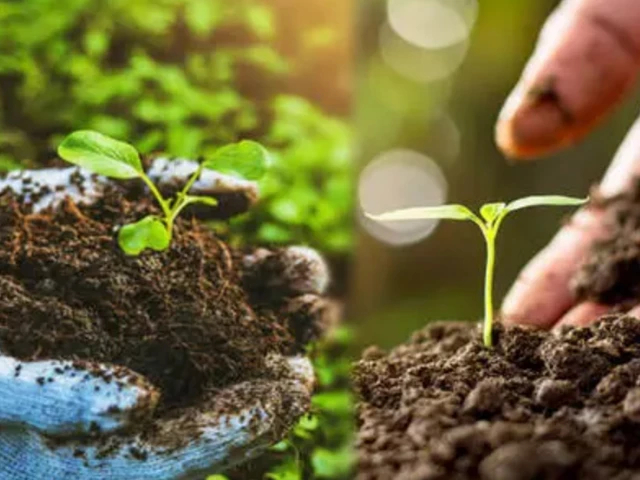
As global consumers increasingly reject chemically enhanced produce in favour of clean, sustainable food, South Asia is witnessing a quiet agricultural revolution. Across the region, millions of hectares are being converted into organic farmlands, transforming rural economies and opening lucrative export corridors.
Yet, Pakistan remains largely on the sidelines of this profitable green shift, constrained by outdated policy frameworks, a lack of certified seeds, and non-existent national standards.
While neighbouring giants India and China have aggressively capitalised on the trend, Pakistani growers are left struggling to find basic organic inputs. Recent figures from FiBL, a globally recognised research network, highlight a glaring contrast.
Over 8.7 million hectares in Asia were managed organically in 2024, with India accounting for nearly 3.97 million hectares and China following at 3.59 million. Asia's organic farming community now exceeds 2.7 million producers, but local participation remains negligible due to systemic hurdles at home. "The government needs to establish a separate and effective system for organic certification, testing, and traceability," said Najam Mazari, head of an organic food and product research institution. "This will allow domestic products to be exported to global markets with confidence. Rather than limiting organic agriculture to a health concept, we must link it to exports, rural employment, soil health, and the broader agricultural economy."
Mazari noted that without quality, certified seeds, transitioning to organic farming remains an uphill battle. He demanded that state seed bodies reserved at least 10% of their target for organic seeds, while private companies should be offered tax exemptions and easy loans to boost research and production. He also called for provincial organic clusters to offer training and marketing facilities, urging Islamabad to craft a national organic agricultural policy inspired by regional progress.
The struggle is all too familiar for progressive growers who have tried to make the leap independently. Standard crop management practices rely heavily on synthetic fertilisers and toxic pesticides, leaving soil depleted and foreign markets inaccessible due to strict chemical residue limits.
"We are eager to switch to organic cultivation because the global demand is astronomical, and our native soil is ideal for it," said Chaudhry Tariq Mahmood, a progressive farmer from south Punjab who recently attempted a transition to organic cotton and grain. "However, without dedicated government testing labs, separate organic certifications, and traceable supply chains, our produce gets lumped together with chemical-laden crops. We end up bearing high risks without reaping the premium export prices."
"Pakistan can no longer afford to delay decisions while regional competitors consolidate their grip on the international market," Mahmood said, adding, "if state authorities step up today to fix the supply chain, establish credible certification standards, and support local growers, Pakistani farmers can finally claim a fair share of the global organic trade".











This material may not be published, broadcast, rewritten, redistributed or derived from. Unless otherwise stated, all content is copyrighted © 2026 The Express Tribune.










COMMENTS
Comments are moderated and generally will be posted if they are on-topic and not abusive.
For more information, please see our Comments FAQ