PSX gains over 1,000 points as investors look past rate hike
Updated 3 hours ago

C/A gap narrows to $328m in July as remittances rise to $3.6b, offsetting deficit
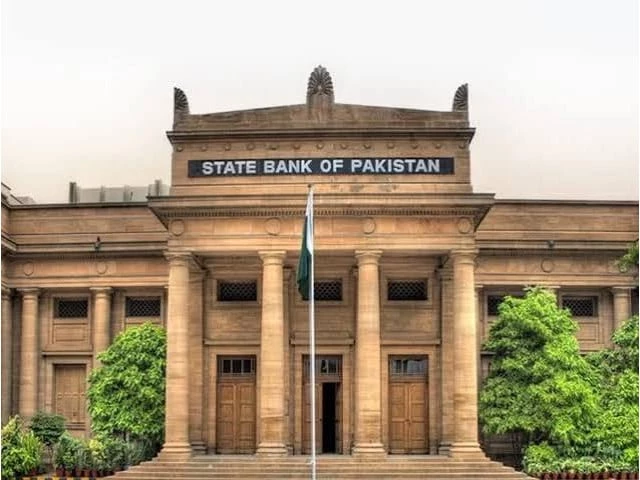
The current account balance recorded a deficit of $328 million in July 2026, compared to a deficit of $814 million in June 2026, despite a jump in remittances in the same month. The month-on-month improvement offered some relief, yet the broader picture for the foreign trade balance remains challenging.
According to the latest Balance of Payments data released by the State Bank of Pakistan (SBP), on a year-on-year basis, the July shortfall was also narrower than the $529 million deficit recorded in the same month last year. The monthly improvement of nearly $486 million was driven primarily by a stronger secondary income surplus and a modest recovery in goods exports, even as the overall trade gap in goods and services remained sizeable.
The data, which covers the first month of fiscal year 2026-27, shows both sequential and annual relief in the current account, though structural pressures in merchandise trade continue to weigh on the external sector. Goods exports rose to $3.1 billion in July 2026 from $2.6 billion in June, marking a solid month-on-month rebound. Compared with July 2025, exports were higher by 9.4%. The improvement helped limit the goods trade deficit to $3.2 billion in July, against $3.6 billion in the preceding month. However, the year-on-year picture was less favourable: the goods deficit widened from $2.7 billion in July 2025, as imports grew faster than exports.
Goods imports stood at $6.2 billion in July, almost unchanged from June's $6.2 billion but up 13.4% from $5.4 billion a year earlier. The persistent strength in import demand, particularly for industrial and intermediate goods, continues to outpace export performance and remains a key source of pressure on the trade balance.
Services trade showed mixed but relatively better trends. Exports of services increased to $927 million in July from $728 million in the same month last year and were higher than June's $942 million on a sequential basis when adjusted for seasonal patterns. Imports of services rose to $1.2 billion from $1.2 billion a year earlier. As a result, the services deficit narrowed to $228 million in July 2026 from $304 million in July 2025. Telecommunications, computer and information services remained the standout category within services exports, continuing the growth trajectory observed throughout FY26.
The balance on trade in goods and services recorded a deficit of $3.4 billion in July, compared with $2.9 billion in July 2025 and $3.6 billion in June 2026 (provisional adjusted figures). Primary income flows remained a consistent outflow, with a deficit of $848 million in July against $876 million a year earlier and $837 million in June. High debt-servicing costs and repatriation of investment income continue to keep the primary income account in deficit.
Secondary income provided the strongest support. The surplus rose to $3.9 billion in July 2026 from $3.3 billion in July 2025 and $3.7 billion in June. Workers' remittances, the dominant component, increased to $3.6 billion from $3.2 billion a year earlier and $3.4 billion in the previous month. The sustained inflow of remittances remains the single most important stabilising factor for the current account, offsetting a large part of the deficit on goods, services and primary income.
On a cumulative basis, the full-year FY26 current account had already swung into a modest deficit of $304 million after a surplus of $1.8 billion in FY25. The July reading suggests that the external account remains vulnerable to import growth and limited export momentum, even as remittances and services receipts provide a cushion.
Financial account developments in July showed net inflows on the overall balance of payments side, with the overall balance turning positive at $1.3 billion. This allowed for a corresponding adjustment in reserves and related items. SBP gross reserves (including CFC and excluding unsettled claims on the Reserve Bank of India) stood at $18.3 billion at the end of July.
While the month-on-month narrowing of the current account deficit offers short-term relief, the year-on-year comparison reveals that the underlying trade imbalance has not improved materially. Goods exports are recovering from a weak base, but import growth continues to outstrip them.
Meanwhile, gold prices remained steady in the local market on Tuesday at Rs461,936 per tola.
Furthermore, Pakistan's Real Effective Exchange Rate (REER), which gauges the rupee's value relative to a basket of major trading partners' currencies, rose to 107.92 in July 2026 from 106.33 in the previous month, according to data issued by the SBP on Tuesday.
Topline Research noted that the latest figure marks an eight-year peak and sits above the 10-year average of 102.44.
A REER reading above 100 signals that a country's exports are less competitive on the global market while imports become relatively cheaper. The opposite holds when the index falls below 100.













This material may not be published, broadcast, rewritten, redistributed or derived from. Unless otherwise stated, all content is copyrighted © 2026 The Express Tribune.










COMMENTS (1)
Comments are moderated and generally will be posted if they are on-topic and not abusive.
For more information, please see our Comments FAQ