12 killed as truck runs over devotees near temple in central India: police
Updated 3 hours ago

Trump says no talks with Iran are underway or scheduled
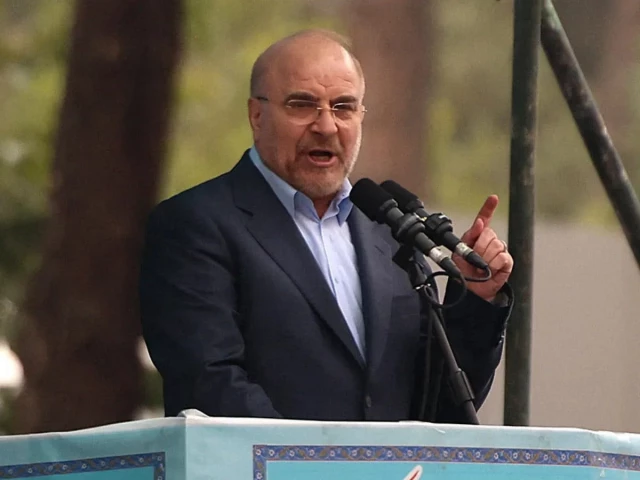
Iranian Parliament Speaker Mohammad Bagher Ghalibaf on Tuesday blasted US officials for “squeezing Iran” to wrest concessions he says were “never part” of a framework agreement signed earlier between Washington and Tehran.
“Americans think squeezing Iran harder will win concessions that were never part of the agreement,” Ghalibaf wrote on X.
Americans think squeezing Iran harder will win concessions that were never part of the agreement.
— محمدباقر قالیباف | MB Ghalibaf (@mb_ghalibaf) August 18, 2026
Bessent and Hegseth are way out of their league. Stop waiting for the clown crew to pull a rabbit out of their hat and clean up the mess you made.
US Treasury Secretary Scott Bessent and Secretary of War Pete Hegseth were “way out of their league,” he asserted, adding: “Stop waiting for the clown crew to pull a rabbit out of their hat and clean up the mess you made.”
In mid-June, Tehran and Washington signed a memorandum of understanding – through Pakistani and Qatari mediators – ending hostilities and launching talks aimed at reaching a negotiated settlement.
Talks, however, have since broken down amid ongoing disputes over the memorandum’s terms and navigation through the Strait of Hormuz, a critical route for global energy exports.
Trump says no talks with Iran are underway or scheduled
US President Donald Trump on Tuesday said that no talks with Iran were underway or scheduled, adding that the Strait of Hormuz remained open under Washington's naval blockade.
"No talks or conversations are going on, or scheduled, with the Islamic Republic of Iran," Trump wrote on his Truth Social platform.
"The Naval Blockade remains in full force and effect. The Hormuz Strait is open and operating. All water mines have been removed or detonated," he added.
— Rapid Response 47 (@RapidResponse47) August 18, 2026
Trump shares image depicting Strait of Hormuz as ‘US territory’
Trump earlier shared an image depicting the Strait of Hormuz as US territory, days after saying he would declare the strategic waterway part of the United States.
Trump posted an image on his social media account showing a map of the Strait of Hormuz labelled “New US territory”, echoing his earlier remarks about declaring the waterway US territory.
Speaking at an event on August 14, Trump had claimed that the US Navy was enforcing a complete blockade of the Strait of Hormuz.
“After we finish defeating Iran, which is being very badly defeated, pretty soon I’ll be declaring the Hormuz Strait a territory of the United States,” Trump had said.
In a separate social media post, Trump had also said the US had “total control” over the Strait of Hormuz and that he believed Washington could maintain that control.
Strait of Hormuz will not open until all terms of MoU are met: Iran's Ghalibaf
Senior Iranian Parliament speaker Mohammed Bagher Ghalibaf said on Tuesday that the Strait of Hormuz will not reopen "until the blockade is lifted, frozen assets are released, oil sanctions are removed, military threats and operations on all fronts are ended, and the other terms of the MoU are fully met."
.@mb_ghalibaf : The Strait of Hormuz will not be reopened until the blockade is lifted, frozen assets are released, oil sanctions are removed, military threats and operations on all fronts are ended, and the other terms of the MoU are fully met. pic.twitter.com/A0CEa1Zilh
— IRNA News Agency ☫ (@IrnaEnglish) August 18, 2026
In statements carried by the IRNA and ISNA news agencies, he added that "Iran is prepared to impose a heavier defeat on the enemy than before, proportionate to the enemy's actions and aggressions."
قالیباف: تنگه هرمز تا رفع محاصره و تحریم نفت باز نمیشود
— خبرگزاری ایسنا (@isna_farsi) August 18, 2026
-ایران آماده است به تناسب اقدامات و دست درازی دشمن، شکستی سنگین تر از قبل به او تحمیل کند pic.twitter.com/fNH4oHJKyw
Beijing opposes Washington’s unlawful measures against Tehran
The Chinese ambassador to Iran voiced opposition to the measures of the United States and the Israeli regime against Iran, IRNA reported on Tuesday.
Referring to the US conflict with Iran, Cong Peiwu opposed the unlawful measures of the United States and the Israeli regime against Iran. He said Chinese President Xi Jinping has submitted four initiatives to the United Nations to preserve and promote peace and stability in the Middle East.
He described the 55th anniversary of diplomatic relations as the beginning of effective and profound engagement that can create a new level of cooperation between the two countries.
Alaeddin Boroujerdi, the Chairman of the Iran–China Friendship Association, also thanked the Chinese ambassador and embassy for organising the event, describing bilateral relations as deep and historical and stressing the need to strengthen cooperation between the two countries.
He added that Iran–China relations have long maintained a positive and steady path across different historical periods and entered a new phase in the 20th century.
Agreement over Hormuz would make resuming US-Iran talks easier: Qatar FM spokesperson
Qatar's Foreign Ministry spokesperson said on Tuesday that resuming US-Iran talks would become easier once an agreement over the Strait of Hormuz took place.
He said that the mediators were waiting for Oman and Iran to reach a bilateral agreement before returning to broader US-Iran talks.
On the topic of the Iranian pilots that Iran says are detained by Qatar, a claim that Qatar denies, the Qatari spokesperson said that an invitation is still open for the Iranian delegation to visit on the pilots issue, but Iran has not responded.
He said that Iran and Qatar were in direct contact on the matter of the pilots, and that any Iranian request for ICRC involvement was a "media ploy."
Saudi Arabia resumes oil loadings, sales from inside Strait of Hormuz
Saudi Aramco resumed oil loading from inside the Strait of Hormuz last week and has more tankers waiting to load as the state energy giant offers spot heavy crude cargoes, according to shipping data and trade sources.
On Monday, the world's top oil exporter offered some Asian refiners Arab Medium and Arab Heavy crude cargoes for loading via ship-to-ship transfers off Fujairah in the United Arab Emirates this month.
It had halted sales for weeks following attacks on its tanker fleet in the Strait of Hormuz during an escalation of the US-Iran conflict last month.
The resumption of Saudi exports could help ease the tight supply of heavier grades that produce more residue fuel, which can be used to refuel ships or further processed at refineries to yield higher-quality fuels such as gasoline and diesel.
Three very large crude carriers (VLCCs) — Malaysia Prosperity, Algeria Prosperity, and Singapore Prosperity — loaded 2 million barrels of crude each at the Juaymah and Ras Tanura terminals between August 12 and 16.
Data from shiptrackers Vortexa and Kpler showed a gap of three weeks since the last loading at the ports. It was not immediately clear which grades the tankers were carrying.
Saudi Aramco has declined to comment. Sinokor, which owns the tankers, did not respond to a request for comment.
Six more VLCCs could load Saudi oil from inside the strait later this month, provisional data from Kpler showed.
Traders said Saudi Aramco could deploy Saudi tankers for the Hormuz transit, in addition to Sinokor vessels.
Seven VLCCs owned by Saudi-based operator Bahri were floating off the UAE and Oman while two more were heading to Fujairah, shipping data on LSEG showed on Tuesday.
Iran ‘won war and diplomacy,’ foreign minister says after Trump’s call for Tehran to surrender
Iranian Foreign Minister Abbas Araghchi said on Tuesday that Iran had “won both the war and diplomacy,” claiming those who initially sought Tehran’s “unconditional surrender” later sought negotiations.
Speaking at an event, Araghchi said Iran resisted for days against what he described as “the world’s largest apparent military,” alongside another army claiming military power and with the support of nearly all Western countries and some other states inside and outside the region, according to the Tasnim news agency.
“Those who were seeking unconditional surrender, shortly after the war began, begged for negotiations,” Araghchi said.
He claimed Tehran initially rejected a ceasefire and continued fighting until reaching a point where the other side accepted a ceasefire and negotiations “on Iran’s terms.”
“We fought with strength, and we negotiated with strength,” he said, adding that many foreign ministers had told him: “You won both the war and diplomacy.”
Araghchi’s remarks came after US President Donald Trump called on Iran on Monday to give up and “raise the white flag.”
Iran threatens new offensive while US rules out extending ceasefire deal
Iran will shift to a "fully offensive" military posture because efforts to negotiate a permanent end to the war with the U.S. have stalled, a senior Iranian official told Reuters on Monday, as Washington ruled out extending a temporary ceasefire agreement.
Outward progress towards peace talks and a resumption of oil tanker traffic through the strategic Strait of Hormuz has ground to a halt, threatening to extend the conflict that the US and Israel launched with attacks on Iran on February 28.
"Iranian entities must be prepared to escalate tensions in the Strait of Hormuz and wider region, as Iran will be ready to make decisions and take action on difficult decisions," the Iranian official said, adding that Tehran would conduct a "timely and precise" military attack to break the US naval blockade if diplomacy failed.
The Islamabad memorandum of understanding signed in June to end the war had given Iran and the US until Monday to reach a final peace agreement.
Signed on June 17, the memorandum set a 60-day time frame for a broader deal on Iran's nuclear programme and US sanctions.
Read: Iran threatens to go on offensive in Strait of Hormuz if diplomacy with US fails
The agreement, which declared the "immediate and permanent termination of military operations on all fronts," quickly unravelled over a dispute about control of the Strait of Hormuz, the narrow waterway through which a fifth of global oil and liquefied natural gas flowed before the war.
Asked by reporters on Monday if the US was seeking to extend June's interim agreement, US President Donald Trump said no.
Araghchi accuses Israel of sabotaging US-Iran ceasefire talks
Abbas Araghchi accused Israel of actively sabotaging diplomacy, saying the country was the primary obstacle to a lasting ceasefire deal with the US, according to the IRNA news agency.
“The Zionist regime was and remains the biggest opponent and obstacle to the implementation of the memorandum of understanding. They made every effort to prevent such an agreement from being reached, every effort to make this agreement fail, and every effort to prevent it from being implemented,” he said.
Araghchi added that Trump’s demand for an “unconditional surrender” from Iran failed to materialise, as Tehran ultimately accepted a ceasefire and conducted negotiations with the US on its own terms.
According to the report, Araghchi said those who “sought an unconditional surrender, within a short time of the war’s commencement, were begging for negotiations”.
“It was us who said we would not accept a ceasefire and continued the war until we reached a point where they accepted a ceasefire and negotiations on Iran’s terms,” he said.
Iran’s parliament speaker set to visit Iraq Wednesday for talks on regional developments
Iranian Parliament Speaker Mohammad Bagher Ghalibaf is set to visit Iraq on Wednesday for talks with Iraqi officials on regional developments and bilateral cooperation, Iranian media reported on Tuesday.
State broadcaster IRIB said Qalibaf’s talks will focus on regional developments, strengthening strategic cooperation between Tehran and Baghdad, and exploring joint measures to help promote stability and security in West Asia.
The talks will also cover strengthening bilateral relations, border security, counterterrorism, expanding economic cooperation, and implementing agreements between the two countries.
Qalibaf, who is Iran’s top negotiator in the talks with the US, is expected to meet senior Iraqi officials and other high-ranking figures during the visit, the outlet said.
His visit comes just days after a drone attack targeted the residence and private office of Masrour Barzani, the head of Kurdish Regional Government (KRG) in northern Iraq. After the attack, Baghdad asked for an official clarification from Tehran. Iran denied involvement in the attack and condemned it.
Vessel struck by 'unknown projectile' in Strait of Hormuz: UKMTO
A vessel was struck by an unknown projectile while transiting outbound through the Strait of Hormuz, the UK Maritime Trade Operations (UKMTO) centre said early on Tuesday.
"The Company Security Officer has reported that the vessel was struck by an unknown projectile while conducting an outbound transit of the Strait of Hormuz. The impact caused damage to the engine room and resulted in a crew casualty," it said in a statement.
The remaining crew members are being assisted by the Omani Coast Guard, UKMTO said
No environmental impact has been reported, while authorities are investigating the incident, it added.
UKMTO advised vessels transiting the Strait of Hormuz to exercise caution and report any suspicious activity.
Back channel to IRGC
In one glimmer of diplomacy, media reports said Trump had opened back-channel discussions with the Islamic Revolutionary Guard Corps, which has become more powerful during the war and controls large parts of Iran's armed forces and the economy.
Axios, citing two sources with direct knowledge, reported that former Director of National Intelligence Tulsi Gabbard spoke with an Iraqi Kurdish leader with close ties to the IRGC, and that through this intermediary the US delivered a message to IRGC commander General Ahmad Vahidi. Fox News later reported that Trump confirmed the report in a telephone interview.
The Trump administration was concerned about whether Iranian negotiators across the table actually spoke for the IRGC, Axios said, at a time when Reuters was reporting that Vahidi had become a pivotal figure. Vahidi responded that he was aligned with the Iranian negotiators, Axios said.
"I can't go into the details of it, but I will say that the conversations between the U.S. government and different areas of the Iranian government at all areas is probably more robust than it's maybe ever been," Jared Kushner, Trump's son-in-law and special envoy, said in a separate interview with Fox News Channel’s Chief Foreign Correspondent Trey Yingst on Monday.
Trump threatens to bomb Oman
Iran said point 5 of the Memorandum of Understanding gave it the right to manage the strait, which it shares with US ally Oman, while the US rejected that interpretation. Hostilities resumed as Iran began firing on vessels it said were trying to sail through Hormuz on an unapproved route, and Trump said on July 7 that the pact was "over."
The Iranian official told Reuters the US must meet the entirety of the MoU's provisions within a few weeks as a precondition for further negotiations.
Read more: Strait of Hormuz defenders will 'break your legs', Iran army chief to Trump
Even as Iran projects resilience in the war, its leaders are worried that a threat of more economic punishment could increase hardships, reignite unrest and further erode the Islamic Republic’s legitimacy, according to three Iranian officials.
Iran entered the war with high inflation, a weakening currency, energy shortages, sanctions and deep structural weaknesses, and must now contend with damaged infrastructure, disrupted trade, lost production and the cost of rebuilding.
Iran has separately been negotiating an agreement on managing the strait with Oman and says they are close to a deal.
Trump responded to those negotiations with a threat against the Gulf state, a longstanding US security partner.
"If Oman gets in the way, we'll bomb the shit out of them," Trump told Fox News.
Thousands of people have been killed in the conflict, mainly in Iran and Lebanon. Iran has bombed US military bases and infrastructure in countries including Oman, Jordan, Kuwait, Israel, the United Arab Emirates and Saudi Arabia.
Trump warned Americans in a speech at a rally on Friday to prepare for continued high fuel prices as a result of the war.
Benchmark Brent crude oil futures have surged during the conflict, hitting a peak of $126 a barrel, roughly 75% above pre-war levels. Brent crude settled more than $2 higher on Monday to $90.87 a barrel.
For Americans who will vote in November congressional elections, gasoline prices have risen above $4 per gallon, up from less than $3 before the war, according to the automotive group AAA.
Erdogan, Trump discuss bilateral ties, Iran and Gaza in phone call
Turkish President Recep Tayyip Erdogan held a phone call on Monday with US President Donald Trump, discussing bilateral relations as well as regional and global developments, said Turkiye’s Communications Directorate.
According to the statement, Erdogan told Trump that making maximum use of diplomacy amid tensions between Iran and the US is “important,” expressing hope that negotiations will continue and saying that Türkiye will keep supporting peace efforts.
The Turkish president said the Mecca Joint Defense Agreement signed earlier this month between Türkiye, Pakistan and Saudi Arabia “demonstrates a strong stance in ensuring regional stability and security,” the statement said.
On Gaza, Erdogan said that at a time when the goal is to move to the second phase of the peace process, there has been an increase in actions by the Israeli government targeting Palestinians, it added.
He added that “Türkiye will continue to support lasting peace in the region and steps to be taken for the reconstruction of Gaza,” according to the statement.
Iranian foreign minister says ‘nothing justifies’ attack on Iraqi Kurdish premier’s office
Iranian Foreign Minister Abbas Araghchi said on Monday that “nothing justifies” the drone attack targeting the office of Masrour Barzani, premier of the Iraqi Kurdish Regional Government (KRG).
“Nothing justifies the reckless attack on PM Barzani’s office,” Araghchi said in a statement on US social media company X.
Nothing justifies the reckless attack on PM Barzani's office. Kurdish friends should be vigilant against false-flag ploys to sow discord between neighbors.
— Seyed Abbas Araghchi (@araghchi) August 17, 2026
We protected our Kurdish friends against Saddam and DAESH, and we're thankful for security they've provided on our border.
“Kurdish friends should be vigilant against false-flag ploys to sow discord between neighbours,” he added.
Araghchi said Iran had protected its “Kurdish friends against Saddam (Hussein) and DAESH,” using an alternate name for the terrorist group ISIS and referring to the late Iraqi leader, adding that Tehran is “thankful for the security they’ve provided on our border.”
Earlier, Foreign Ministry spokesman Esmail Baghaei said the attack was “a highly suspicious development that must be approached with vigilance and scrutiny,” according to Iran’s official IRNA news agency.
Baghaei reaffirmed Tehran’s commitment to maintaining and strengthening friendly relations with Iraq and the Kurdish Regional Government in all areas of mutual interest.
He urged all sides to thwart what he called the “sinister plots of the enemies of Iran and Iraq” aimed at damaging the “fraternal relations between the two nations.”
Baghaei also cited previous warnings by Iraqi officials, including the country’s national security adviser, about the discovery of cells linked to foreign parties that were involved in planning and carrying out “false flag” operations.






This material may not be published, broadcast, rewritten, redistributed or derived from. Unless otherwise stated, all content is copyrighted © 2026 The Express Tribune.

1727268465-0/Untitled-design-(42)1727268465-0-208x130.webp "sisyphus in the land of saviours")



COMMENTS
Comments are moderated and generally will be posted if they are on-topic and not abusive.
For more information, please see our Comments FAQ