NCCIA arrests 4 suspects over child sexual abuse material trafficking in Islamabad
Updated 1 hour ago

Stresses due process, fair trial in cases involving life, liberty
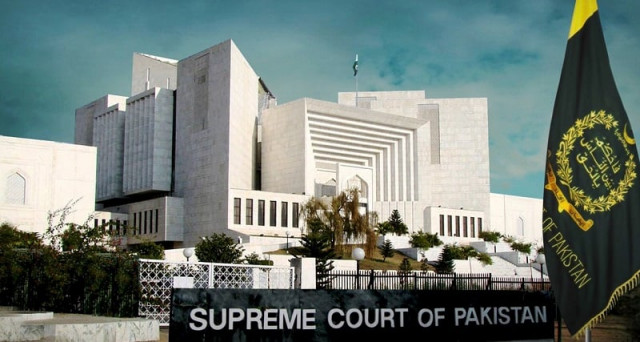
The Supreme Court has held that a review petition in a capital case could not have been dismissed without giving the accused an opportunity of hearing.
Justice Shakeel Ahmed, in an eight-page additional note, stressed that constitutional courts were not merely instruments for enforcing procedure but the ultimate guardians of justice.
The three-judge bench, headed by Justice Malik Shahzad Ahmad Khan, converted the death sentence of a convict into life imprisonment in murder case which was pending in SC since 2011.
The additional note found that the prisoner's first review petition had been dealt with and dismissed in 2012 without a proper opportunity of hearing.
The court declared the 2012 order legally non-existent and treated the latest petition as the convict's first review petition, ultimately converting the death sentence into life imprisonment.
"No judicial system can claim legitimacy if it knowingly permits a manifest illegality, a denial of hearing, or a fundamental procedural defect to culminate in the loss of life or liberty merely in the name of closure," the additional note stressed.
The bench heard the matter in which the review petition of the death-row prisoner had been heard in chambers without giving him an opportunity of hearing.
The order noted that the first review petition filed by the appellant was illegally dealt with and dismissed by the court in 2012.
"Therefore, we declare that order dated 26.04.2012, is non-existent in the eyes of law, thus, the instant review petition filed by the appellant cannot be termed as second review petition and the same is treated as the first review petition filed by the appellant before this Court."
Justice Shakeel Ahmed, in his additional note, said that where the sentence of death was in issue, the accused had been denied a right of audience, and the provisions of Articles 4 and 10-A of the Constitution had been disregarded, the evidentiary foundation was not beyond reasonable doubt in the strictest sense, and even the prosecution conceded that the extreme penalty was not warranted, the judicial conscience could not remain indifferent to the possibility of irreversible injustice.
"In such circumstances, this Court is vested with ample constitutional, equitable, Islamic, and inherent jurisdiction to revisit the matter so as to ensure that the sanctity of due process is preserved, public confidence in the administration of justice is maintained, and the constitutional promise of a fair trial is given full effect."
"The law, in its deepest sense, leans in favour of life where any reasonable doubt or mitigating circumstance emerges, for the finality of judicial process can never be permitted to eclipse the fundamental value of justice itself," Justice Shakeel Ahmed said.
"The administration of criminal justice, particularly in cases carrying the irreversible consequence of death, derives its legitimacy not merely from the correctness of the outcome but from the fairness, transparency, and legality of the process through which that outcome is reached."
"Any departure from prescribed legal safeguards, howsoever well-intentioned, strikes at the very foundation of public confidence in the judicial system."
The SC judge said the question before the court concerned the effect of hearing a review petition in chambers without providing the accused or his counsel a right of audience in a death penalty case.
"In the present case, owing to a Full Court or administrative decision, the matter was fixed in chambers before the learned Senior Judge, where the review petition was dismissed, and the learned other Judge of the Bench concurred with the said view."
The additional note further noted that the consequence is that the convict was denied a right of audience in a proceeding which, by its very nature, and under the principles of natural justice, required an open court hearing.
This deviation, the noted stressed, from the principle of natural justice raises a serious constitutional question touching upon the principles of fair trial, access to justice, and due process guaranteed under Articles 4 and 10-A of the Constitution, as the issue is not merely one of procedural irregularity but goes to the root of the legitimacy of the adjudicatory process where a litigant is condemned unheard in a matter affecting life and liberty.
Justice Shakeel Ahmed noted that an administrative decision inconsistent with the principle of natural justice could not prevail.
The hierarchy of law remained constitutionally settled, namely the Constitution, followed by statutes and rules having statutory force, and thereafter administrative instructions, and any administrative direction contrary to the principle of natural justice was void to the extent of its inconsistency.
"Consequently, disposal of a review petition in chambers in deviation from the principles of fair trial and access to justice and due process guaranteed under Articles 4 and 10-A of the Constitution would be coram non judice, procedurally illegal, and constitutionally infirm, offending Articles 4 and 10-A of the Constitution, particularly in cases involving life and liberty where Article 9 is directly engaged, and the consequences are irreversible, thereby demanding the strictest adherence to procedural fairness."
The judge described the court as the final safeguard against irreversible injustice, stressing that judicial authority must remain anchored in fairness, legality and due process.
"Court's final safeguard against irreversible injustice, ensuring that the solemn authority of a judicial verdict remains anchored in fairness, legality, and due process. In matters involving life and liberty, the refusal to correct a manifest error does not advance the cause of finality; it perpetuates the very injustice that the judicial process exists to prevent," the order says.














This material may not be published, broadcast, rewritten, redistributed or derived from. Unless otherwise stated, all content is copyrighted © 2026 The Express Tribune.






COMMENTS
Comments are moderated and generally will be posted if they are on-topic and not abusive.
For more information, please see our Comments FAQ