FinMin seeks BB rating, $1.5b financing
Updated 3 hours ago

Malnutrition, not inflation or debt, poses greatest long-term threat to economic growth
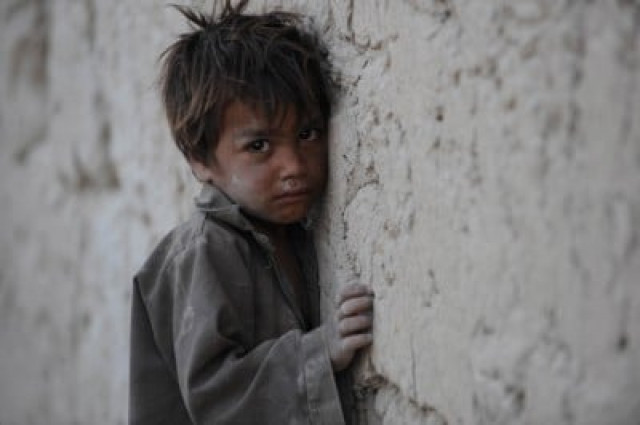
Pakistan's economic debate rarely strays far from familiar territory. Inflation, public debt, exports, taxation and the energy crisis dominate political speeches and newspaper headlines alike. These are undoubtedly pressing concerns for a country grappling with recurring fiscal instability. Yet beneath these visible economic challenges lies another crisis – less visible but arguably more consequential – that receives only episodic attention.
Nearly four in every ten Pakistani children are chronically malnourished. This is not merely a public health concern or a humanitarian tragedy. It is one of the greatest threats to Pakistan's long-term economic growth and competitiveness because it undermines the country's most valuable asset: its human capital.
According to the National Nutrition Survey 2018, 40.2% of Pakistani children under five are stunted, a figure that has remained stubbornly high for more than two decades. More recent assessments by Unicef and the World Bank suggest only modest improvements despite repeated policy commitments. Stunting is often misunderstood as simply being short for one's age. In reality, it is the physical manifestation of chronic undernutrition during the most critical period of human development. The first 1,000 days – from conception until a child's second birthday – shape brain development, immunity, learning capacity and future productivity. When nutritional deprivation occurs during this narrow window, much of the damage becomes irreversible.
The causes of stunting are far more complex than a shortage of food. A child repeatedly exposed to unsafe drinking water, poor sanitation and recurrent infections cannot effectively absorb nutrients even if food is available. Maternal malnutrition, anaemia, inadequate antenatal care and poor infant feeding practices place many children at a disadvantage before they are even born. Unicef estimates that in 2024, 38% of Pakistani children lived in severe food poverty, consuming foods from no more than two recommended food groups. Rising food prices, climate-induced crop failures, shrinking household incomes and poor nutritional awareness have combined to create conditions in which millions of children begin life with profound disadvantages.
Years of interacting with non-governmental organisations in Pakistan's rural communities have reinforced one uncomfortable reality: stunting is rarely the consequence of parental neglect. It is more often the outcome of systemic deprivation. In villages across the country, mothers travel long distances to reach basic health units only to find vacant posts, interrupted supplies of iron and folic acid tablets, or nutrition programmes that exist on paper but not in practice. Lady Health Workers often identify undernourished children during household visits but lack the therapeutic foods, supplements or referral pathways needed to intervene effectively. Parents frequently understand what constitutes a healthy diet, yet poverty leaves them choosing between purchasing nutritious food and meeting other essential household expenses. In communities where clean drinking water remains unavailable and sanitation is poor, repeated diarrhoeal illnesses erase whatever nutritional gains families struggle to achieve.
These experiences highlight an important truth. Malnutrition is not simply a health-sector failure. It reflects weaknesses across multiple sectors simultaneously. Safe water, sanitation, maternal healthcare, agriculture, education, women's empowerment and social protection all shape a child's nutritional status. Addressing one without the others produces only marginal gains. The government has increasingly begun to recognise this broader perspective. Planning Minister Ahsan Iqbal has rightly described childhood stunting as a human capital challenge rather than solely a medical issue, calling for greater coordination between federal and provincial institutions. The National Multisectoral Nutrition Programme launched in 2023 similarly emphasises maternal nutrition, behavioural change, food security and integrated governance. These are sound policy frameworks. Pakistan does not lack strategies, policy documents or technical expertise. What it lacks is consistent implementation.
The implementation gap becomes especially evident at district level. During NGO-supported programmes, communities often receive growth monitoring, nutritional counselling and maternal health education that produce measurable improvements. Yet when project funding ends, services frequently diminish or disappear because government systems are insufficiently equipped to sustain them. One village may benefit from regular nutrition screening while another only a few kilometres away receives none. Such disparities reveal a troubling dependence on externally funded projects rather than resilient public health systems capable of delivering essential nutrition services consistently.
The reasons for this are partly institutional. Following the 18th Constitutional Amendment, health and nutrition became largely provincial responsibilities, while financing, planning and development priorities continue to involve federal ministries and international partners. Devolution promised locally responsive governance, but in practice it has often blurred accountability. Nutrition programmes remain scattered across different departments, each operating under separate budgets, reporting structures and priorities. Coordination meetings and strategy documents have become increasingly common, but measurable improvements at community level remain disappointingly limited.
The economic costs of this persistent failure extend far beyond healthcare expenditure. A stunted child is more likely to experience poor educational attainment, reduced cognitive performance, lower lifetime earnings and diminished productivity as an adult. The World Bank's Human Capital Index places Pakistan at only 0.41, indicating that children born today will achieve less than half of their productive potential under current conditions. For a country where more than half the population is under the age of 25, this should be deeply alarming. Pakistan often speaks of its demographic dividend, but demographics alone guarantee nothing. Without adequate nutrition, healthcare and education, a youthful population risks becoming an underproductive workforce rather than an engine of economic growth.
Nutrition therefore deserves to be viewed not as a welfare programme but as a strategic economic investment. Maternal nutrition, exclusive breastfeeding, timely complementary feeding, routine growth monitoring, clean drinking water and improved sanitation should be treated as core components of national development policy. Governments should be judged less by the number of committees they establish or strategies they announce and more by measurable reductions in stunting, wasting and food poverty. District-level performance indicators, transparent monitoring and sustained financing will achieve far more than another ambitious policy document.
Pakistan's aspirations for higher exports, greater industrialisation and increased foreign investment are entirely legitimate. However, no economic strategy can succeed if the country's future workforce is denied the opportunity to reach its full physical and intellectual potential. Every road, factory, digital innovation and export industry ultimately depends upon the health, skills and productivity of the people behind them. The question is no longer whether the country can afford to prioritise child nutrition. The far more urgent question is whether it can afford another generation whose potential has been compromised before life has truly begun.
THE WRITER IS A PAEDIATRICIAN BY PROFESSION WITH A KEEN INTEREST IN HEALTH POLICY AND IMPROVING CHILD HEALTH AND NUTRITION











This material may not be published, broadcast, rewritten, redistributed or derived from. Unless otherwise stated, all content is copyrighted © 2026 The Express Tribune.






COMMENTS (3)
Comments are moderated and generally will be posted if they are on-topic and not abusive.
For more information, please see our Comments FAQ