Pakistan, US near trade deal
Updated 6 hours ago

Ratings growth requires lower debt, high revenues, strong external buffers
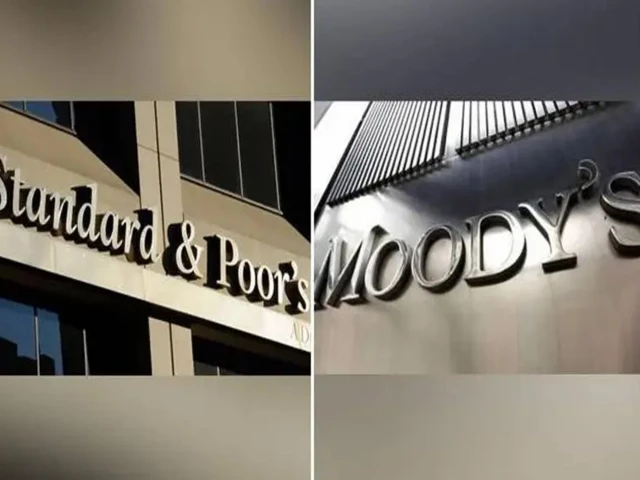
Pakistan should now set a clear sovereign rating objective: S&P's B+ within two years and Moody's B1 within three to five years. S&P raised Pakistan to B in July 2026, while Moody's has kept it at Caa1 since August 2025.
The country deserves recognition for avoiding default and restoring stability, but ratings are earned through repeatable institutions, not diplomatic "befitting replies". From today, B+ requires one S&P notch and B1 requires three Moody's notches. Even then, Pakistan would remain below investment grade.
The strongest evidence is fiscal. Pakistan's consolidated deficit has fallen from 7.9% of GDP in FY22 and 7.8% in FY23 to 6.8% in FY24, 5.4% in FY25 and a provisional 2.6% in FY26. The primary balance, which excludes interest payments, moved from deficit to surpluses of 0.9% in FY24, 2.4% in FY25 and 2.9% in FY26. The FY27 budget targets another 2% surplus. Three consecutive surpluses establish discipline; sustaining them beyond the IMF programme would establish credibility.
Expenditure restraint has been real. Consolidated current spending fell from Rs21.53 trillion in FY25 to Rs20.69 trillion in FY26, while markup payments declined from Rs8.89 trillion to Rs6.95 trillion. However, the quality of adjustment now matters. Tax revenue was 11.2% of GDP in FY26, while Rs2.43 trillion of State Bank profit and a Rs853 billion negative statistical discrepancy helped the headline result. The next upgrade must therefore come from documented taxpayers, digital compliance and efficient spending, not temporary windfalls.
Development also needs a new financing model. The federal PSDP allocation was Rs1.001 trillion in FY18, roughly $9.5 billion at the exchange rate then. FY27 again allocates about Rs1 trillion, now only $3.6 billion. In FY26, provinces executed Rs2.70 trillion of PSDP spending against net federal spending of Rs727 billion. This shift should be formalised. Dams, roads, airports and universities should increasingly use competitive public-private partnerships, with government providing land, viability gap funding, transparent tariffs and limited guarantees, while banks, pension funds, insurers and infrastructure bonds fund construction.
The NFC must support this division of labour. The present formula assigns 82% weight to population, 10.3% to poverty, 5% to revenue effort and 2.7% to inverse density. A modern award should reduce the population weight and reward own revenue, school enrolment, health outcomes, poverty reduction, climate resilience, export growth, FDI attraction and population stabilisation.
Provinces should fully fund devolved education and health, co-finance social protection such as BISP, and carry more policing and security expenditure. A negotiated national compact can preserve federal responsibility for defence and sovereign debt while sharing the associated fiscal burden more honestly.
History shows that higher ratings are achievable. Pakistan reached S&P B+ in November 2004 and Moody's B1 in November 2006, its strongest modern combination, during the Musharraf period. A second improvement cycle took Moody's from Caa1 to B3 in June 2015 and S&P to B in October 2016 under Nawaz Sharif. Pakistan has therefore regained its 2016 S&P level, but Moody's remains one notch below the 2015 level and three below the 2006 peak.
S&P has supplied the roadmap. A further upgrade requires the annual increase in net general government debt to remain below 3% of GDP, net debt to fall below 60% of GDP, government revenue to keep rising and financing costs to moderate. Its external thresholds include narrow net external debt below 100% of current account receipts and gross external financing needs below 100% of current account receipts plus usable reserves. Pakistan must meet these tests while protecting BISP, education, health and productive infrastructure.
The reward would be tangible. Domestic debt reached Rs59.5 trillion in June 2026. A two- to three-percentage-point reduction in its effective cost, once the portfolio reprices, implies gross annual savings of roughly Rs1.2 trillion to Rs1.8 trillion. The savings would arrive gradually and would reflect inflation, fiscal credibility and monetary policy, not ratings alone. Cheaper sovereign Eurobonds and sukuk would also lower the benchmark for private dollar bonds, which should be permitted mainly for firms with export cash flows.
Lower rates must finance production rather than another consumption and finished import boom. Every concessionary loan, public-private partnership and foreign investment package should target at least $1.50 of additional exports or import substitution for each dollar of imported machinery and inputs.
Indonesia built a nickel processing chain, Saudi Arabia converted hydrocarbons into petrochemicals and Finland turned forests into engineered products and machinery. Pakistan can similarly move from cotton, copper, limestone, rock salt and agriculture into finished goods. Reko Diq should ultimately support refining, metal fabrication, laboratories and engineering services in a prosperous Balochistan, with a smelter pursued when scale, energy and economics justify it.
Finally, the SIFC should become a whole-of-government productivity platform. Link tax, customs, property and banking data; mandate electronic invoicing and open contracting; disclose beneficial ownership; digitise land titles; and establish commercial courts with enforceable timelines. Roshan Digital Account inflows, already $13.65 billion cumulatively, should be directed through diaspora bonds and export funds rather than short-term consumption. Pakistan's next election should not determine the reform horizon. The next rating upgrade should.
The writer is an independent economic analyst













This material may not be published, broadcast, rewritten, redistributed or derived from. Unless otherwise stated, all content is copyrighted © 2026 The Express Tribune.








COMMENTS (2)
Comments are moderated and generally will be posted if they are on-topic and not abusive.
For more information, please see our Comments FAQ