Kundi, Naqvi vow coordinated anti-terror push as K-P holds first Apex Committee meeting under governor's rule
Updated 7 hours ago

Deforestation, declining prey and poor conservation are pushing Pakistan's largest wild cat closer to local extinctio
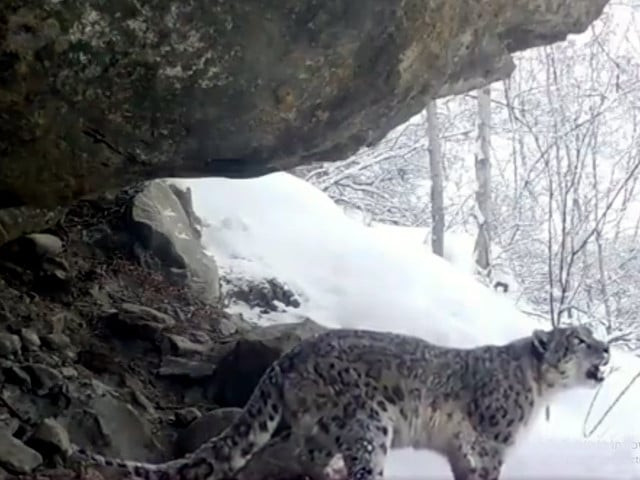
Once a symbol of the wild, the common leopard is now becoming a victim of a shrinking wilderness. Across Khyber-Pakhtunkhwa, every gunshot against this elusive predator reflects a deeper crisis - vanishing forests, disappearing prey and a fragile balance between humans and nature.
The latest incident occurred on July 20 in Bajaur district, where residents shot and killed a common leopard in the mountainous Mamund area near the Pakistan-Afghanistan border. According to local reports, the animal was skinned after it was killed, and residents allegedly refused to hand over the hide to the Khyber-Pakhtunkhwa Wildlife Department.
Shahid Khan, a resident of Bajaur, said some people kept the leopard's skin after killing it and refused to surrender it to wildlife authorities.
The Bajaur incident is the latest in a series of leopard killings reported in Kohat, Swat, Darra Adam Khel, Kurram, Mansehra and Tirah Valley.
Wildlife experts say habitat degradation and declining prey populations are forcing leopards into villages in search of food, where they prey on livestock and are often killed in retaliation.
Previous cases illustrate the trend. In September 2019, residents in Darra Adam Khel shot a leopard after attempts to capture it alive failed. In July 2020, another leopard was attacked with hunting dogs before being shot dead in Kurram district.
Although the Wildlife Department imposed a Rs150,000 fine on six individuals, no arrests were made. In March 2023, leopard cubs were reportedly killed in Tirah Valley, while another leopard was shot in Landi Kotal after allegedly attacking livestock. Conservationists criticised what they described as weak enforcement of wildlife laws.
Naveed Ahmad, Divisional Forest Officer (DFO) for the merged districts of the Khyber-Pakhtunkhwa Wildlife Department, said authorities had identified suspects involved in the Bajaur killing through photographs.
"We have identified those involved, and they will not escape legal action," he told The Express Tribune, adding that difficult terrain and poor internet connectivity often hamper communication with field staff, but authorities are pursuing the case.
Ahmad informed that comprehensive data on leopard populations in the merged districts was unavailable, but the species continues to inhabit mountainous areas of Khyber, Orakzai, Kurram, Bajaur and Darra Adam Khel. "The accused would be prosecuted under the Khyber-Pakhtunkhwa Wildlife and Biodiversity Act," he claimed.
Under the Khyber-Pakhtunkhwa Wildlife and Biodiversity Act, 2015, the common leopard is a protected species. Hunting or deliberately killing the animal is punishable by up to three years' imprisonment, a fine of up to Rs45,000, in addition to payment of the animal's assessed compensation value. Despite these provisions, wildlife experts say convictions remain rare.
Senior lawyer Ali Azeem Advocate believed the issue extends beyond prosecution.
"Every district has a Divisional Forest Officer responsible for wildlife protection," he said. "Preventive measures, conservation of forests, protection of natural prey and safeguarding national parks are equally important responsibilities. The law exists, but implementation remains extremely weak."
He warned that unless authorities address deforestation, habitat loss, declining prey populations and weak enforcement, leopard killings are likely to continue.
Environmentalists say the common leopard plays a vital ecological role by regulating wild herbivore populations and maintaining the balance of mountain ecosystems. Therefore, continued retaliatory killings could have long-term consequences for biodiversity across Khyber-Pakhtunkhwa.
With leopard deaths now reported almost every year across the province, conservationists are calling for stronger enforcement, greater community awareness, quicker compensation for livestock losses and improved wildlife management to ensure the survival of one of Pakistan's last remaining large predators.

















This material may not be published, broadcast, rewritten, redistributed or derived from. Unless otherwise stated, all content is copyrighted © 2026 The Express Tribune.





1727268465-0/Untitled-design-(42)1727268465-0-208x130.webp "the poor man s burden")
COMMENTS
Comments are moderated and generally will be posted if they are on-topic and not abusive.
For more information, please see our Comments FAQ