FinMin seeks BB rating, $1.5b financing
Updated 12 hours ago

Khizar Pervaiz highlights financing gaps, skills shortage, calls for holistic support on Express Tribune podcast

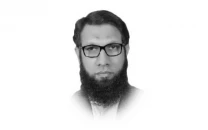
Small and medium-sized enterprises (SMEs), often described as the backbone of modern economies, remain central to Pakistan's growth story but continue to face structural challenges, according to Khizar Pervaiz, Chief Executive Officer (CEO) of the Sindh Enterprise Development Fund (SEDF).
Speaking on The Express Tribune podcast, hosted by Meher Fatima, Pervaiz highlighted the critical role SMEs play globally and locally, noting that they account for nearly 90% of businesses worldwide and contribute about half of global economic output. In Pakistan, SMEs contribute roughly 40% to GDP and employ a significant share of the non-agricultural workforce.
"SMEs are not limited to one sector – they operate across retail, agriculture, manufacturing, services and even emerging areas like fintech and innovation," Pervaiz said, adding that their diversity makes them a powerful engine for economic activity and employment generation.
Despite their importance, many SMEs in Pakistan struggle to scale beyond a certain point. Pervaiz identified a combination of factors behind this stagnation, including limited access to finance, shortage of skilled labour and lack of sustainable business planning.
"Financing is a major issue, but it is not the only one," he explained. "Entrepreneurs must also have viable, market-driven ideas and the capacity to sustain and expand their businesses over time."
Drawing comparisons with developed economies such as Germany, Singapore and South Korea, Pervaiz added that strong SME ecosystems – like Germany's famed "Mittelstand" – have been instrumental in driving innovation and economic resilience. He added that countries in the Gulf region are also increasingly investing in SMEs as part of efforts to diversify their economies.
To address the challenges in Sindh, the SEDF has been working as a facilitator rather than just a financing body. Established in 2012 under the Sindh Investment Department, the fund provides both technical and financial assistance to entrepreneurs.
"SEDF is a one-stop solution for businesses," Pervaiz said. "We help entrepreneurs develop bankable business plans, access land at subsidised rates and navigate regulatory requirements."
A key feature of SEDF's model is its collaboration with commercial banks. Under a typical financing structure, banks provide up to 70% of the required funding, while the entrepreneur contributes the remaining 30% as equity. SEDF then steps in to cover the interest cost on the bank loan – linked to the Karachi Inter-bank Offered Rate (Kibor) – for up to three years.
"This significantly reduces the financial burden on SMEs," Pervaiz explained. "The entrepreneur only pays the bank's spread, which gives them breathing space during the critical early years." The initiative also lowers risk for banks, encouraging greater lending to small businesses.
Beyond financing, Pervaiz stressed the importance of addressing skill gaps and improving business development capabilities among entrepreneurs. He noted that SEDF has expanded its role over time to tackle these broader challenges.
"We realised that SMEs' problems go beyond money," he said. "Supporting them requires a holistic approach, including training, technical support and creating an enabling environment."
As Pakistan seeks sustainable economic growth, strengthening SMEs could prove pivotal. With targeted policy support and institutional backing, experts believe the sector has the potential to drive innovation, create jobs and boost exports in the years ahead.











This material may not be published, broadcast, rewritten, redistributed or derived from. Unless otherwise stated, all content is copyrighted © 2026 The Express Tribune.








COMMENTS
Comments are moderated and generally will be posted if they are on-topic and not abusive.
For more information, please see our Comments FAQ