Canada-returned elderly couple found dead at Karachi home
Updated 4 hours ago

Denies relief over delay, process abuse
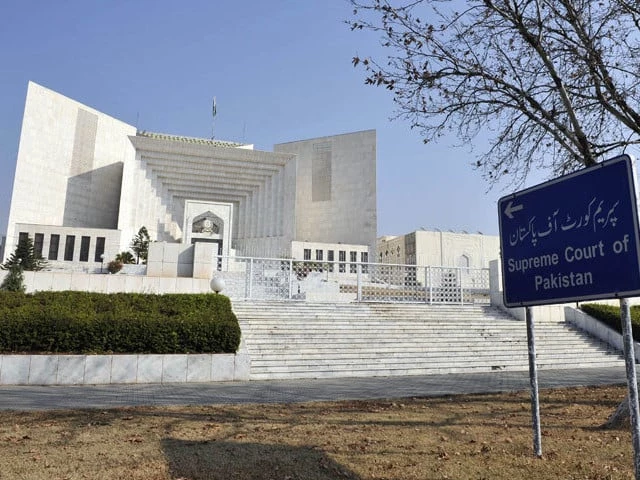
The Supreme Court has held that a party guilty of unnecessary delay, negligence and abuse of the judicial process is not entitled to equitable relief, observing that the law of limitation is not a mere technicality but a substantive legal framework designed to ensure timely and final resolution of disputes.
A three-member bench comprising Justice Shahid Bilal Hassan, Justice Muhammad Ali Mazhar and Justice Musarrat Hilali issued the unanimous judgment, authored by Justice Shahid Bilal Hassan, dismissing Civil Appeal No. 2555 of 2016 while upholding the concurrent judgments of the Lahore High Court and the subordinate courts.
The court held that the appellants had failed to file their appeal within the prescribed limitation period and were unable to provide any satisfactory explanation for the delay. It observed that an applicant seeking condonation of delay must furnish a reasonable, convincing and bona fide explanation for each day of delay; otherwise, the court cannot interfere with rights that have accrued upon the expiry of the statutory limitation period.
The judgment noted that the record showed the appellants had been granted several opportunities but failed to pursue the case diligently and, through their own negligence, lost the opportunity to seek legal redress.
The Supreme Court further observed that although courts generally prefer to decide cases on their merits, a thorough examination of the record in the present matter revealed no evidence that the impugned order had been obtained through fraud or any unlawful means. It held that the findings of the subordinate courts were fully supported by the evidence and the law, leaving no justification for interference.
Terming the appellants' conduct an abuse of the judicial process, the court imposed costs of Rs200,000, directing that the amount be paid within 30 days, failing which it would be recovered as arrears of land revenue in accordance with the law.















This material may not be published, broadcast, rewritten, redistributed or derived from. Unless otherwise stated, all content is copyrighted © 2026 The Express Tribune.





COMMENTS
Comments are moderated and generally will be posted if they are on-topic and not abusive.
For more information, please see our Comments FAQ