PM Shehbaz arrives in Peshawar for apex committee meeting, security briefing
Updated 1 hour ago

With gender inequality already keeping half the population outside of classrooms, unreliable internet is denying many
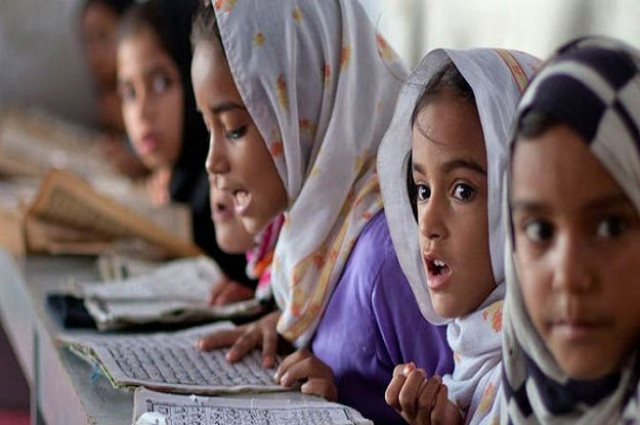
Every morning during the summer break, 16-year-old Khadija Bibi leaves her home in Kurram district and climbs a nearby hill in search of a mobile signal. Standing on the rocky slope with her phone raised has become part of her daily routine, allowing her to download lecture notes, submit assignments, and attend online classes whenever the weak connection permits.
"We live in an area where there is still no reliable internet signal," Khadija told The Express Tribune. "We frequently miss online classes and cannot submit assignments on time." A BS Computer Science student at Benazir Women University Peshawar, Khadija said unreliable internet had become one of the biggest obstacles to her education.
"The world is talking about 5G technology, but we are still deprived of even basic internet services. This is affecting our education and limiting our future opportunities," she said. Khadija's experience reflects the challenges faced by thousands of girls across Khyber-Pakhtunkhwa's merged districts, where poor internet connectivity has become another barrier to education alongside poverty, insecurity and inadequate educational facilities.
Despite government efforts to promote digital learning, significant gaps remain. Residents and education advocates say many schools in the merged districts either lack functional computer laboratories or have designated labs without computers or internet access.
The region also records some of the country's lowest educational indicators. According to Benazir Income Support Programme (BISP) data, the proportion of out-of-school children stands at 66 per cent in North Waziristan, 63 per cent in Bajaur, 61 per cent in South Waziristan, 51 per cent each in Mohmand and Khyber, and 47 per cent each in Kurram and Orakzai.
The Khyber-Pakhtunkhwa Women Empowerment Policy 2026-2030 further highlights the digital divide, noting that only 11 per cent of women in the merged districts have internet access, while the female literacy rate stands at just 17 per cent.
Qamar Naseem, Programme Manager at Blue Veins and Malala Fund Education Champion for Pakistan, said Pakistan has made progress in narrowing the digital gender gap, but women and girls in remote areas continue to be left behind.
Naseem further noted that girls in the merged districts continue to face digital exclusion because of weak telecommunications infrastructure, unreliable connectivity, and limited access to smartphones. "Even where network coverage exists, girls often do not own smartphones, cannot afford internet packages and have to rely on borrowed devices," he said.
"In many parts of Khyber-Pakhtunkhwa, particularly the merged districts, girls' use of mobile phones and the internet is often viewed with suspicion. Families impose restrictions because of concerns over online safety, social pressure, and cultural norms," he added.
According to Naseem, 35 per cent of women who use mobile internet borrow an internet-enabled phone, compared with only 6 per cent of men, limiting their ability to participate in online classes and develop digital skills. Social and cultural barriers further widen the divide.
Karishma Zakiullah, a digital inclusion consultant with the World Bank, urged that expanding digital connectivity must be accompanied by improved mobility for women. "Extending Bus Rapid Transit (BRT) services to the merged districts would improve access to education, training centres and employment."
"Even today, girls in the merged districts continue to face inadequate digital infrastructure and limited educational opportunities. The government and telecommunications authorities must prioritise these districts and ensure they receive the same quality of internet services available in settled areas," she said.
Repeated attempts by The Express Tribune to obtain comments from the Khyber-Pakhtunkhwa Information Technology Board (KPITB) and the Pakistan Telecommunication Authority (PTA) regarding internet connectivity in the merged districts went unanswered by the time this report was filed.










This material may not be published, broadcast, rewritten, redistributed or derived from. Unless otherwise stated, all content is copyrighted © 2026 The Express Tribune.







COMMENTS
Comments are moderated and generally will be posted if they are on-topic and not abusive.
For more information, please see our Comments FAQ