Perishable food items consumers face overcharging
Updated 18 hours ago

.
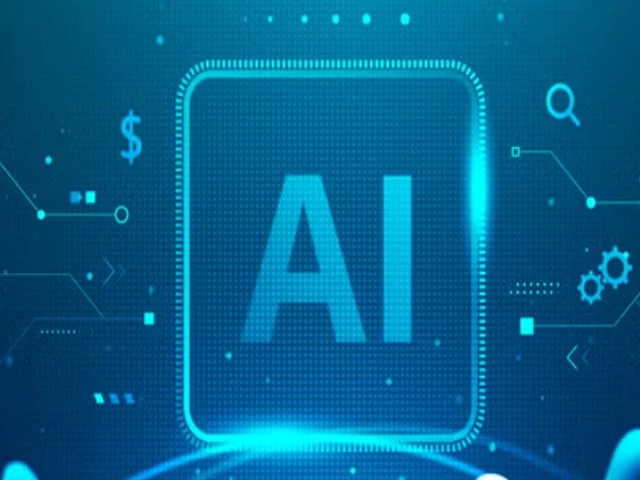
Every technological revolution arrives with a familiar cycle of anticipation, anxiety and exaggerated expectation. Artificial Intelligence is no exception. Depending on whom you ask, it is either destined to solve every challenge confronting society or to disrupt every profession we know.
Neither view is particularly helpful.
Throughout history, transformative technologies have never altered the trajectory of nations simply because they existed. Progress has never been determined by innovation alone. It has been shaped by the institutions that embraced it, the leadership that guided it and the people who chose to apply it with purpose. Artificial Intelligence should be viewed through precisely the same lens.
Far too often, our conversations revolve around algorithms, computing power and sophisticated models. These discussions are important, but they overlook a more fundamental question.
How can Artificial Intelligence improve the everyday lives of our citizens? That, in my view, is the only question that truly matters.
Technology must never become an objective in itself. Its purpose is to address real challenges, remove unnecessary barriers and create opportunities that were previously beyond reach.
Consider a government school teacher responsible for educating hundreds of students with limited resources. If Artificial Intelligence can reduce hours spent preparing lesson plans and administrative material, that is not merely technological advancement; it is time returned to teaching.
Consider a physician overwhelmed by administrative documentation after an already demanding day. If intelligent systems can simplify routine paperwork while allowing medical professionals to devote greater attention to patient care, that represents meaningful progress.
Consider a farmer confronting unpredictable weather, fluctuating markets and increasing pressure on agricultural productivity. If timely, data-driven insights can support more informed decisions, then technology has fulfilled a practical purpose rather than serving as an abstract concept.
These examples may appear modest, yet they illustrate a profound reality.
The greatest impact of Artificial Intelligence will not emerge from laboratories or conference halls. It will be realized in classrooms, hospitals, farms, businesses and public institutions where ordinary citizens encounter extraordinary improvements in their daily lives.
No algorithm can substitute for an inspired teacher. No software can replicate the compassion of a dedicated doctor. No intelligent system can replace the judgement, creativity and resilience that define human endeavor. Artificial Intelligence should augment human potential, not diminish it.
For Punjab, this presents an extraordinary opportunity.
Our province possesses one of its most valuable strategic assets: a young, ambitious and increasingly connected population. Every university graduate, every entrepreneur, every educator, every healthcare professional and every farmer represents a source of innovation waiting to be empowered.
The challenge before us is not whether Artificial Intelligence will reshape the future. It unquestionably will.
The more pressing question is whether we will prepare our people to shape that future themselves.
This responsibility cannot rest with government alone.
Universities must cultivate research that addresses local challenges rather than merely replicating international trends. Startups should be encouraged to develop solutions with tangible social impact. Industry must invest in innovation rather than viewing technology solely through the lens of efficiency. Educational institutions must equip students with analytical thinking, adaptability and digital literacy. Policymakers must ensure that innovation advances alongside transparency, accountability and public trust.
Sustainable progress has always emerged from collaboration rather than isolation.
Equally important is the principle that technological advancement should remain inclusive.
Artificial Intelligence must not deepen existing inequalities by benefiting only those who already possess resources, connectivity and technical expertise. On the contrary, its greatest promise lies in extending opportunity to communities that have historically remained underserved.
A student in Rajanpur should be able to access high-quality educational support comparable to that available in Lahore. A farmer in Bahawalnagar should benefit from the same quality of information as an agricultural specialist. A small business owner in Sialkot should be able to harness digital tools once reserved for multinational corporations.
That is the true democratization of technology.
Ultimately, history will not judge us by the sophistication of the systems we deploy or the number of agreements we sign. It will judge us by outcomes.
Ali Mustafa Dar is a software engineer by education, a business leader and Advisor to the Chief Minister of Punjab on Artificial Intelligence and Special Initiatives.














This material may not be published, broadcast, rewritten, redistributed or derived from. Unless otherwise stated, all content is copyrighted © 2026 The Express Tribune.



1727268465-0/Untitled-design-(42)1727268465-0-208x130.webp "roboking in pakistan")


COMMENTS (1)
Comments are moderated and generally will be posted if they are on-topic and not abusive.
For more information, please see our Comments FAQ