IMF forecasts 1.3% contraction in Pakistan, 6.6% growth in 2027
Updated 2 hours ago

Core inflation stays above 8% as PIDE report warns of oil price shock, external risks
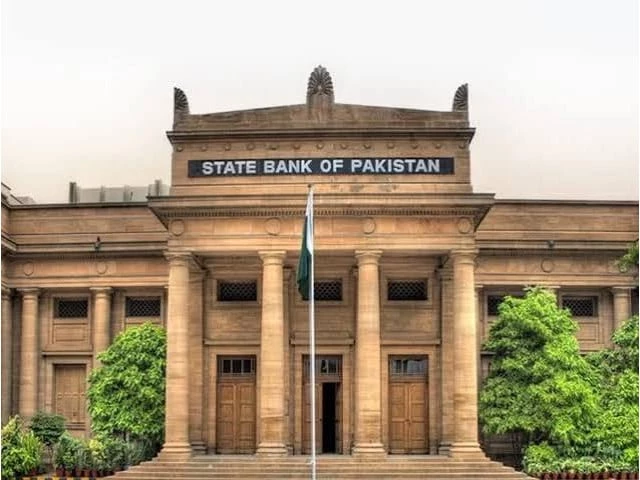
With inflation cooling but still refusing to settle, and an uneven economic recovery leaving little room for another monetary squeeze, economists have recommended that the State Bank of Pakistan (SBP) keep its policy rate unchanged at 11.5% at its July 27 monetary policy meeting.
The recommendation comes as policymakers face a delicate balancing act. Headline inflation has eased, but underlying price pressures remain elevated, while improved external conditions provide some breathing space without shielding the economy from fresh shocks. According to the July 2026 Monetary Policy Assessment by the Macro Policy Lab, a research centre at the Pakistan Institute of Development Economics (PIDE), headline Consumer Price Index (CPI) inflation eased to 11.1% in June, while urban and rural core inflation remained elevated at 8.7% and 7.9%, respectively.
The report titled "Market Expectations, Macroeconomic Conditions and Policy Assessment," prepared under the PIDE Monetary Policy Tracker, observed that much of the recent inflationary pressure had originated from food, energy, transport and administered prices, which monetary policy cannot directly reverse. However, it cautioned that the recent rebound in the weekly Sensitive Price Indicator (SPI) warranted vigilance against assuming that disinflation had become firmly entrenched.
Market signals broadly support maintaining the status quo. Short-term Treasury bill yields remain close to the policy rate, while the overnight rate is also aligned with the existing monetary stance. Higher six- and 12-month yields point to medium-term caution rather than an immediate case for easing or further tightening, it noted.
The assessment also found that economic recovery had strengthened but remained uneven, with recent momentum in large-scale manufacturing still soft. With little evidence of demand-driven overheating, another rate hike could impose additional costs on investment and economic activity without directly addressing the supply-side and administered-price shocks driving inflation.
Improved external conditions have created some breathing space. Stronger foreign exchange reserves, robust remittances and an orderly exchange rate have eased immediate external pressures. However, the wide merchandise trade deficit, upcoming external repayments and continued reliance on imported energy leave the economy exposed to renewed external shocks. The study wrote that Market Treasury Bill (MTB) yields offered further support for maintaining the current policy stance, serving as an important corroborating signal rather than a mechanical guide to the Monetary Policy Committee's decision.
At the July 22 auction, the one-month MTB yield remained below the 11.5% policy rate, while the three-month yield was broadly aligned with it, indicating limited immediate pressure for adjustment. However, yields on six- and 12-month Treasury bills rose to 11.80% and 11.99%, respectively, signalling moderate caution over the medium-term outlook. The effective overnight rate stood at 11.54% on July 16, closely aligned with the policy rate, indicating that short-term liquidity conditions remained consistent with the existing monetary stance.
Going forward, the tracker recommended incorporating private-sector credit growth, weighted-average lending rates, monetary aggregates and the term spread alongside auction yields to provide a more comprehensive assessment of monetary policy transmission. While current indicators favour a status quo, the assessment cautioned that the balance could shift quickly if key risks materialise. It identified a renewed global oil price shock as a medium-to-high probability risk that could push up transport and energy inflation while weakening the external balance. In such a scenario, the SBP could maintain its stance with a tightening bias if second-round inflationary effects broaden.
Persistent core inflation could slow disinflation and weaken the anchoring of inflation expectations, delaying any potential rate cut or prompting a hike if price pressures intensify. Exchange-rate depreciation could also fuel imported inflation and put pressure on reserves, requiring the central bank to hold or tighten policy.
On the domestic front, weaker industrial and employment recovery remains a concern. While such weakness could support a rate cut, the assessment suggests that easing should come only after inflation and external conditions improve. Conversely, faster-than-expected disinflation alongside stable reserves would create room for a less restrictive monetary stance, allowing the SBP to begin gradual, data-dependent easing.














This material may not be published, broadcast, rewritten, redistributed or derived from. Unless otherwise stated, all content is copyrighted © 2026 The Express Tribune.








COMMENTS
Comments are moderated and generally will be posted if they are on-topic and not abusive.
For more information, please see our Comments FAQ