Ride-hailing driver recounts Mir Raza's journey from home to Gulistan-e-Johar before murder
Updated 3 hours ago

Experts call for long-term rainwater harvesting to tackle rising urban flooding threats
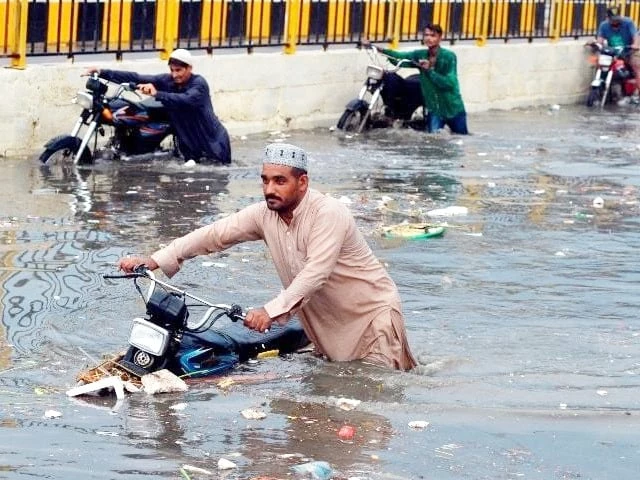
Monsoon rains have started lashing different parts of the country, with Karachi expected to receive rainfall from July to September. However, as the city enters the rainy season, concerns are growing over its flood preparedness, with the cleaning of storm-water drains still progressing at a sluggish pace.
According to the Pakistan Meteorological Department (PMD), below-normal rainfall is expected across the country during this year's monsoon season, including in Karachi. Despite the forecast, the city remains vulnerable to flooding. Historical records show that even 15 millimetres of rain can bring Karachi to a standstill, disrupting business activity and leaving major roads and neighbourhood streets submerged for hours.
Yasir Hussain, Director of the Climate Action Centre and an environmental expert, said annual drain cleaning has failed to provide a lasting solution. Hussain described it as a short-term exercise that consumes public funds every year while the city continues to flood. Instead, he called for a comprehensive rainwater harvesting strategy to prevent rainwater from being wasted through roads, drains and the sewerage system.
"Drain cleaning is only a short-term solution," Hussain said. "Karachi needs a long-term rainwater harvesting system, including injection wells, rooftop water storage, and small dams to capture rainwater. Restoring natural waterways and removing encroachments on storm-water drains will help reduce flooding, recharge groundwater and improve the city's water security."
Regional planner Dr Syed Nawaz-ul-Huda attributed Karachi's recurring flooding to decades of poor planning and neglect. He said the city's natural drainage channels once carried rainwater through the Lyari and Malir rivers into the sea, but rapid urbanisation, unplanned settlements, encroachments, illegal sewer connections and garbage dumping have crippled the drainage system, turning even moderate rainfall into urban flooding.
"Karachi's drainage system has been crippled by decades of unplanned urbanisation, encroachments, illegal sewer connections and garbage dumping," Dr Syed Nawaz-ul-Huda said. "The city needs an empowered local government, funding based on its needs, long-term rainwater harvesting, regular drain cleaning and strict action against illegal dumping. Even with below-normal rainfall forecast, damaged roads and ongoing development projects could cause major disruption."
According to a Karachi Metropolitan Corporation (KMC) report, 19 locations across Karachi regularly experience severe waterlogging during heavy rainfall. These include Tower, PIDC, I.I. Chundrigar Road, Shaheen Complex, Jinnah Bridge on Shahrah-e-Faisal, Nursery, Karsaz, Natha Khan, FTC Flyover, Airport (Falaknaz area), Gurumandir, Business Recorder Road, Old Sabzi Mandi, Civic Centre, NIPA Chowrangi, Rashid Minhas Road, Stadium Flyover, Liaquatabad No. 10 Flyover and Karimabad Flyover.
The report also identifies Nagan Chowrangi, Banaras Chowrangi, KDA Chowrangi, Yousuf Goth in Surjani Town, Safoora Goth, Saadi Town, Palm Village in Malir, Amroha Society, Thaddo Dam and Lal Basti among the areas historically worst affected during the monsoon.
Information obtained by The Express Tribune further indicates that Jahangir East and West, Martin Quarters, Gulshan-e-Iqbal Block 13-D, Saddar, Korangi Industrial Area, Qayyumabad Chowrangi, Kausar Niazi Colony, Arafat Town, Batha Town, Noorani Mohalla, Liaquatabad, Water Pump, Shafiq Mor, Sharafabad, PECHS Block 6, Mohammad Ali Society, Adamjee Nagar, Dhoraji, Dawood Chowrangi, Korangi Causeway, Kharadar, Bolton Market, Soldier Bazaar, University Road, Gulistan-e-Jauhar, Lyari's Cheel Chowk, Hassan Lashkari Village and Dariyabad also remain at risk of flooding during this year's monsoon season.
A KMC official noted that the annual drain-cleaning campaign began on June 29 and will continue until the end of September. KMC maintains 45 major stormwater drains, while town administrations oversee another 512 smaller drains. The official said work is under way in coordination with town authorities to clear blockage points across the drainage network before peak monsoon rains.

















This material may not be published, broadcast, rewritten, redistributed or derived from. Unless otherwise stated, all content is copyrighted © 2026 The Express Tribune.






COMMENTS (3)
Comments are moderated and generally will be posted if they are on-topic and not abusive.
For more information, please see our Comments FAQ