Former Rockstar director calls GTA 6 leaks 'nothing burger'
Updated 5 minutes ago

Nolan made several significant changes to the story, reshaping characters, mythology and the ending
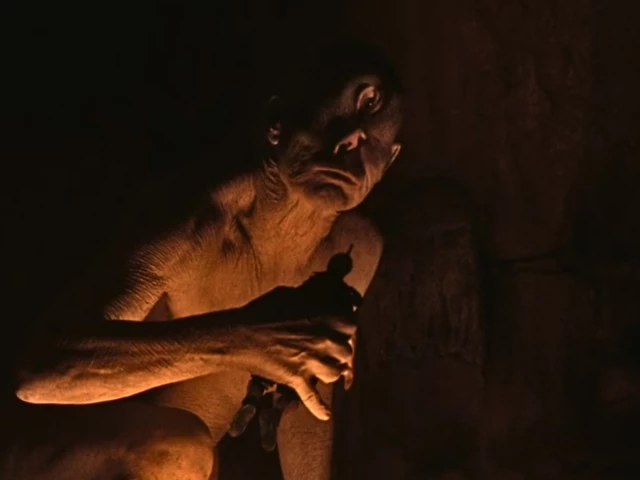
Christopher Nolan stayed remarkably faithful to Homer's ancient epic in The Odyssey, but the Oscar-winning director also made several significant changes to the story, reshaping characters, mythology and the ending to suit a modern cinematic audience.
One of the film's biggest departures is its opening. Rather than beginning with Odysseus already stranded on Calypso's island, Nolan starts with the Trojan Horse, showing the fall of Troy in full. In Homer's poem, those events are only recounted through flashbacks and stories told by Odysseus. By bringing the battle to the screen, Nolan establishes the trauma that will haunt his hero throughout the film.
The director also reduces the role of the Olympian gods. While divine intervention drives much of Homer's narrative, Nolan largely shifts the focus toward human choices and consequences. Characters are portrayed as shaping their own destinies rather than acting as pawns of Zeus, Athena or Poseidon, giving the story a more grounded and psychological tone.
Another notable change concerns Penelope. In the original epic, she spends much of the story waiting faithfully for Odysseus' return while cleverly delaying her suitors. Nolan expands her role, giving Anne Hathaway's character greater emotional agency and a stronger presence throughout the narrative.
The adaptation also softens some of the poem's most brutal moments. One of the most controversial scenes in Homer's work, the execution of the enslaved women accused of betraying Odysseus' household, is significantly altered. Rather than depicting the punishment as it appears in the original text, Nolan reframes the sequence to focus on betrayal and justice through a smaller number of characters.
Several mythological episodes are streamlined or reinterpreted. Characters such as Circe, Calypso and the Sirens remain central to Odysseus' journey, but their encounters place greater emphasis on psychological conflict than supernatural spectacle. Nolan also incorporates elements from later Greek literature, including Virgil's Aeneid, by expanding the role of Sinon, whose deception makes the Trojan Horse possible.
Perhaps the most significant alteration comes in the ending. Homer's epic concludes with Odysseus reclaiming his throne and restoring order in Ithaca. Nolan instead leaves his protagonist with a more reflective conclusion, emphasising the emotional cost of war and the burden of survival over simple triumph. The ending recasts Odysseus as a man seeking redemption rather than merely celebrating his homecoming.
Despite these changes, scholars have noted that Nolan preserves the epic's central themes of identity, perseverance, homecoming and hospitality. While some classicists have questioned certain omissions and reinterpretations, many have praised the film for introducing Homer's story to a new generation and sparking renewed interest in the original text, particularly Emily Wilson's acclaimed modern translation.















This material may not be published, broadcast, rewritten, redistributed or derived from. Unless otherwise stated, all content is copyrighted © 2026 The Express Tribune.






COMMENTS
Comments are moderated and generally will be posted if they are on-topic and not abusive.
For more information, please see our Comments FAQ