PSX slips 200 points in volatile session
Updated 3 hours ago

High rates punish compliance while farms, wholesale trade stay outside the net
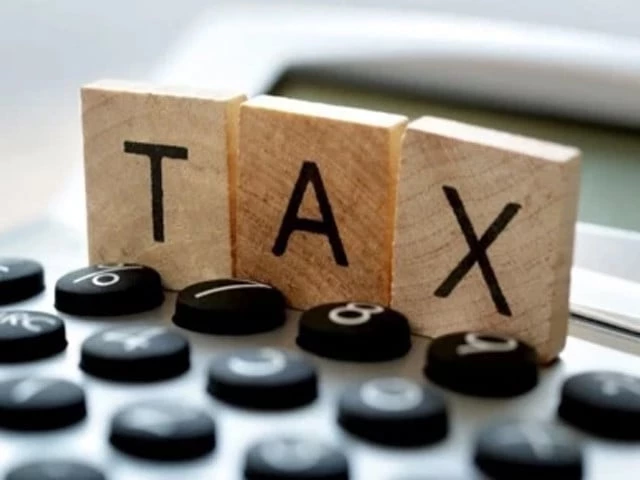
Pakistan's taxation debate returns every year pre- and post-budget with the same predictable outcome: higher taxes, harsher enforcement, and deeper pressure on an already shrinking formal economy. Yet despite repeated fiscal tightening, the country continues to face low compliance, weak documentation, capital flight, and slowing economic activity.
Finance Minister Muhammad Aurangzeb in his budget speech said "the government had not imposed any new taxes in the federal budget for FY2026-27 and would instead focus on broadening and deepening the tax net through improved compliance and enforcement measures." This statement carries a loud and clear message spreading fear and apprehensions amongst compliant taxpayers.
The government has set an ambitious tax target of Rs15.264 trillion and non-tax revenue including Petroleum Development Levy target to Rs5.336 trillion. These measures may satisfy fiscal arithmetic on paper, but for ordinary citizens and businesses, they signal another year of inflationary pressure and economic strain. Pakistan's real tax crisis lies in the design of the system itself which is based on extortion.
The formal economy is being taxed to exhaustion. Tax collections growth during the last decade has increased over 300%, yet the structure remains fundamentally flawed. The state continues to extract more revenue from a very narrow documented segment while vast portions of the economy remain outside the tax net. Measures for documentation of economy and increasing the tax base are missing in the budget. In FY2025, 5.2 million returns were filed in a country of 252 million population. About 39% out of total returns were filed nil with zero taxable income, indicating the existing taxation system has failed, adding more poverty, making taxpayers poorer, with no enough savings to reinvest, create jobs, earn and pay taxes to the government.
Most of the tax burden falls repeatedly on the salaried class, individuals, manufacturers, exporters, retailers operating formally, and documented service sectors. This imbalance has created a dangerous incentive structure: compliance is punished while concealment is rewarded. Formal businesses face multiple layers of taxation, complicated return filing, advance taxes, withholding tax regime, audits, refunds and costly delays. Extensive discretionary powers of tax officials create harassment. Meanwhile, large sections of wholesale retail trade, commodity markets, agriculture, and informal supply chains continue functioning largely outside meaningful documentation.
The result is predictable. Firms increasingly prefer informality over compliance. Investment slows, productivity suffers, and the trust deficit between taxpayers and the state continues. Pakistan now requires a fundamentally different fiscal philosophy – one built on simplicity, automation, and broad participation rather than fear-based enforcement. A "Simple Tax System" could provide the starting point for such a transition.
The principle is straightforward: lower rates, simplify procedures, digitise transactions, and widen participation. Instead of repeatedly squeezing compliant taxpayers, the government should create an integrated tax system to record transactions where entering the formal economy becomes commercially beneficial. One possible framework could involve a uniform 10% General Sales Tax (GST) or Value Added Tax (VAT) combined with a 5% adjustable advance income tax integrated into commercial transactions.
Pakistan's current indirect tax regime is excessively fragmented. High sales tax rate, exemptions, sector-specific treatments, and complicated, corrupt refund systems increase compliance costs and create room for manipulation. Businesses spend enormous time managing tax procedures instead of focusing on business and production. Smaller enterprises often avoid tax registration and prefer to pay field staff because the compliance burden outweighs the perceived benefits of becoming formal.
A simplified low-rate structure can reverse those incentives. When tax rates become moderate and filing procedures predictable, businesses become more willing to document transactions voluntarily. Consumers also become less resistant to invoiced purchases because the visible tax burden appears reasonable rather than punitive. Documentation then grows organically instead of through coercive crackdowns.
Automation and digitisation can significantly reduce corruption and administrative harassment. The proposed adjustable advance income tax could be integrated directly into banking channels and digital payment systems. Instead of yearly advance tax demands, aggressive audit campaigns, and arbitrary notices, the state could collect adjustable taxes gradually at transaction points through automated systems. This approach would reduce leakages while improving predictability for businesses. More importantly, it would limit discretionary interaction between taxpayers and tax authorities – one of the biggest sources of mistrust in Pakistan's fiscal environment. Excessive human intervention in taxation has long encouraged rent-seeking, role of tax brokers, negotiated settlements, and selective enforcement. Digital integration offers a practical alternative.
Modern economies increasingly connect invoicing, banking systems, digital payments, and taxation into unified documentation networks. Pakistan already possesses sufficient banking penetration and digital infrastructure to begin moving in that direction gradually. The real advantage of such a model is political as much as economic. Successive governments have struggled to expand taxation into politically sensitive sectors such as wholesale retail markets, commodity trading, and distribution chains. Direct taxation efforts often trigger resistance before implementation even begins.
A simplicity-based model offers a less confrontational path toward documentation. Wholesale traders, fertiliser suppliers, commodity dealers, and commercial agricultural operators could gradually become part of the documented economy through banking-linked payments and digital invoicing. Documentation would emerge indirectly through commercial activity rather than through politically explosive direct tax campaigns. This distinction is critical. Pakistan's economy already operates through layered supply chains where nearly every major transaction leaves some financial footprint. The challenge is not absence of economic activity; it is absence of integration between commerce, banking, and taxation. Smart automation can bridge that gap.
Critics may argue that lowering rates could initially reduce revenue collection, which is incorrect. Yet Pakistan's experience over decades demonstrates that extremely high rates on a narrow base have also failed to deliver sustainable outcomes. Informality, under-invoicing, smuggling, and cash-based undocumented transactions continue to undermine collection efforts despite repeated increases in tax rates. A broader, moderate-rate structure may ultimately produce more stable and sustainable revenues because it encourages participation instead of avoidance.
Most importantly, simplicity can help rebuild public trust. Citizens are more willing to comply when the system appears fair, understandable, and transparent. Businesses need predictability rather than constant policy shocks. Consumers need transparency instead of hidden indirect taxes embedded across supply chains.
Pakistan does not need an endless cycle of mini-budgets, forced emergency levies, and punitive taxation every fiscal year. Nor does it need a larger enforcement bureaucracy chasing an increasingly exhausted formal sector. What the country requires is a smarter fiscal compact – one based on lower rates, wider participation, digital integration, and reduced human discretion.
The future of Pakistan's economy will depend not merely on how much tax is imposed, but on how intelligently the taxation system is designed. The central challenge is no longer whether Pakistan can raise taxes. The real question is whether it can build a tax system that people are willing to join voluntarily. Lower the rates. Broaden the base. Automate the state. That may be the only sustainable path toward a more documented, productive, and modern economy.
THE WRITER IS A FORMER VICE PRESIDENT OF KCCI






This material may not be published, broadcast, rewritten, redistributed or derived from. Unless otherwise stated, all content is copyrighted © 2026 The Express Tribune.



COMMENTS (1)
Comments are moderated and generally will be posted if they are on-topic and not abusive.
For more information, please see our Comments FAQ