Govt pushes governance reform in digital age
Updated 4 hours ago

Exports near zero despite Rs250b subsidies, while JF-17 gains global acclaim
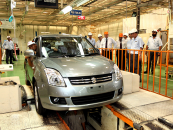
Few industries contribute more to international trade, economic growth, skilled employment, and technological innovation than the automobile industry. Countries proudly showcase their automotive achievements at major international motor shows. Yet Pakistan has never enjoyed that distinction, despite assembling cars since the 1950s and devoting substantial national resources to the sector.
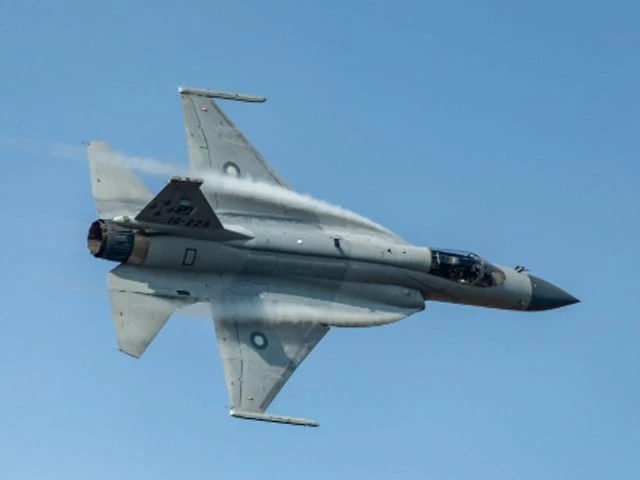
In stark contrast, Pakistan's experience in aircraft manufacturing tells a very different story. Within a relatively short period, Pakistan has successfully developed the world-class JF-17 Thunder multirole fighter aircraft in collaboration with China.
Contrary to common perception, this is not merely an assembly operation. Approximately 60% of the aircraft's components are produced locally, giving Pakistan considerable control over its production, maintenance, and future development.
Unlike the auto industry, the aerospace sector has earned an international reputation for quality, reliability, and cost-effectiveness. Priced between $25 million and $40 million, the JF-17 costs roughly one-third as much as competitors such as the Eurofighter, Rafale, or F-16. It is regularly showcased at leading international airshows and has received widespread praise and export orders, including at the Dubai Airshow, particularly in comparison with India's Tejas programme, which has faced repeated setbacks.
What explains such sharply different outcomes? The answer lies largely in the contrasting policy approaches adopted in the two sectors. The auto industry evolved primarily as a protected domestic business. Foreign assemblers have long regarded Pakistan as a highly profitable market, benefiting from limited competition and generous policy support. They faced neither meaningful export obligations nor pressure to meet global standards, while domestic prices remained largely insulated from international competition.
Government policy compounded these weaknesses. Rather than encouraging integration into global value chains, policymakers focused on narrow localisation targets, allowing agencies such as the Engineering Development Board and Customs authorities to micromanage production by determining which components could or could not be imported. As automotive technology advanced rapidly through innovations in electronics, materials science, and manufacturing, Pakistan's industry remained locked into outdated technologies because of restrictive import policies.
The result was predictable. Innovation stagnated, product quality suffered, and exports remained virtually non-existent. Recognising that Pakistani assemblers exported almost nothing while similar manufacturers in other developing countries built substantial export industries, the government introduced export targets under the 2021-26 Auto Policy based on annual imports. Yet none of the assemblers complied, choosing instead to obtain court stay orders to avoid these requirements. Despite this, they continue to enjoy substantial benefits, including subsidies exceeding Rs250 billion under SROs 655 and 656 of 2006.
After decades of pursuing import substitution, Pakistan has fallen far behind comparable developing economies. Countries such as Turkiye, Thailand, Morocco, and Mexico each export more than $10 billion worth of vehicles and automotive components annually, while exports of auto parts alone run into billions of dollars. Pakistan, by contrast, exports no passenger vehicles, while auto parts exports, excluding tyres, amount to little more than $20 million, roughly one-hundredth of Indonesia's level.
Yet this gap also represents an opportunity. Pakistan should fundamentally rethink its localisation strategy, focusing on sectors such as auto parts where it has a comparative advantage and integrate more deeply into global automotive value chains. The success of China's Long Tyre collaboration, which helped transform Pakistan into a meaningful tyre exporter, demonstrates what is possible when international partnerships are aligned with export markets. Similar models should be pursued across the broader automotive components industry.
Entrepreneurs such as Shahid Khan, who built a global business manufacturing high-quality automotive bumpers, illustrate what Pakistani talent can achieve when connected to international supply chains. If India and Vietnam can each export more than $7 billion worth of auto parts annually, and relatively recent entrants such as Indonesia exceed $2 billion, there is no reason Pakistan should remain constrained to exports of auto parts worth less than $20 million.
The National Tariff Policy 2025-30 provides a timely opportunity to accelerate the transition from import substitution to export-led growth. While most industries have begun adjusting to this new direction, the auto industry continues to resist change as it has always done in the past, seeking to preserve high tariff protection, wide tariff cascading, and preferential treatment through special SROs. This resistance is particularly difficult to justify at a time when the global industry is rapidly shifting towards electric vehicles, driven by the need to reduce dependence on imported fuels and address growing environmental concerns.
For Pakistan's auto industry to become internationally competitive, it must embrace this transformation rather than resist it. Moving towards an export-led model, integrating into global value chains, and adopting new technologies will strengthen competitiveness and ensure long-term sustainability. The aerospace sector has demonstrated what Pakistan can achieve when policy rewards innovation, quality, and global integration. The same principles should now guide the automotive industry.
Above all, the government must resist granting fresh exemptions to the sector. Any retreat would weaken the credibility of tariff reform and encourage other industries to seek similar protection, undermining Pakistan's broader transition towards a more competitive economy.
THE WRITER IS CURRENTLY SERVING AS AN INTERNATIONAL TRADE ARBITRATOR. PREVIOUSLY HE HAS SERVED AS PAKISTAN'S AMBASSADOR TO THE WORLD TRADE ORGANISATION





This material may not be published, broadcast, rewritten, redistributed or derived from. Unless otherwise stated, all content is copyrighted © 2026 The Express Tribune.


1727268465-0/Untitled-design-(42)1727268465-0-208x130.webp "more units a panacea or a can of worms")

COMMENTS (5)
Comments are moderated and generally will be posted if they are on-topic and not abusive.
For more information, please see our Comments FAQ