Gaza 'humanitarian catastrophe' undermining support even in 'pro-Israel' nations: Poland
Updated 3 hours ago

Biggest typhoon in decades nears Taiwan
Fifteen people were killed in landslides in the Philippines, and more than 2,000 in Taiwan were evacuated from their homes, as the biggest typhoon in decades neared the region on Friday.
Typhoon Bavi is expected to pound Taiwan's north and east, as well as Japan's remote southwestern islands, on Friday and Saturday before smashing into China, which has been hit by deadly storms this week.
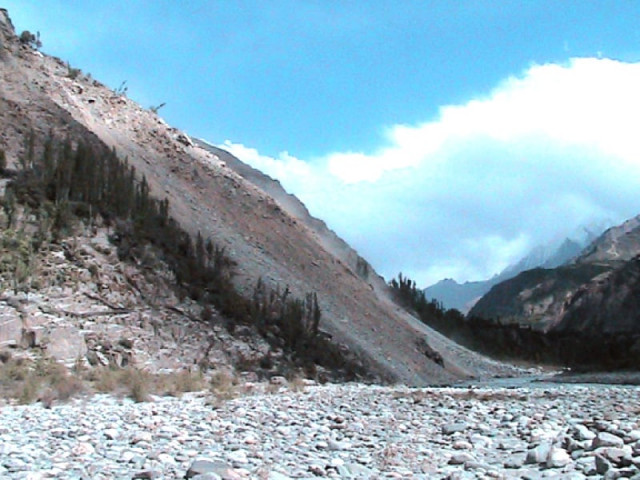
Two landslides triggered by heavy rains driven by Bavi killed at least 15 people and left six others missing on the Philippines' southern island of Mindanao, authorities said.
Locals in Taiwan's port city of Keelung, which is expected to be one of the hardest hit areas on the island, stocked up on food, taped windows, and stacked sandbags along shop fronts, heeding warnings from authorities to take precautions.
"They're saying it's going to be huge; of course that's scary, right?" Keelung grocery store owner Chang Shih-huo, 76, told AFP.
"We've stocked up on some instant noodles and bread and stuff like that. Once the wind and rain really start picking up, we'll have to close the shop."
After hitting Guam and the Northern Marianas on Monday as a super typhoon, Bavi was downgraded to a typhoon as it moved across the Pacific Ocean.
Bavi's maximum sustained wind speeds slowed to 155 kilometres (96 miles) per hour, with gusts of around 190 kilometres per hour, on Friday, the Central Weather Administration (CWA) said.
"The typhoon is likely to continue weakening because environmental conditions are not favourable," CWA forecaster Wang Ping-hsiang told AFP.
"The greatest impact is expected in Taipei, New Taipei, Keelung and Yilan, while the heaviest rainfall is forecast for mountainous areas in central and northern Taiwan."
Bavi's strong-wind radius of 380 kilometres will make it the largest typhoon to hit Taiwan in more than 30 years.
Many schools and businesses were shuttered on Friday across northern and eastern Taiwan, and hundreds of flights were cancelled.
In Keelung, locals flocked to a fresh food market to buy fruit and vegetables, street vendors secured their stands, and a temple covered and tied down an outdoor statue ahead of the storm.
Read More: Twelve killed, 19 missing in one of Spain's deadliest wildfires
"What you're seeing now is the most remarkable sight we haven't seen in 10 years," Keelung restaurant owner Penny Pan, 48, said as her husband placed sandbags at the entrance to their eatery.
"In the past we never used sandbags to prepare for typhoons. But this time they're forecasting Force 10 gusts, so the captains and fishermen have all been saying we need to be better prepared," Pan said.
'Strong winds and heavy rain'
Bavi is expected to dump up to nearly a metre of rain, raising concerns about potential flooding and landslides.
People were ordered to stay away from the shore as the typhoon whipped up to nine metre (30 foot) waves.
More than 2,000 people have been evacuated from their homes, mostly in the mountainous county of Hualien in Taiwan's east, where authorities are monitoring two barrier dams.
Taiwanese President Lai Ching-te urged people in areas likely to be most affected by Bavi to remain on "high alert".
More than 28,000 troops, along with machinery, equipment and vehicles, were on standby to respond to emergencies.
















This material may not be published, broadcast, rewritten, redistributed or derived from. Unless otherwise stated, all content is copyrighted © 2026 The Express Tribune.






COMMENTS
Comments are moderated and generally will be posted if they are on-topic and not abusive.
For more information, please see our Comments FAQ