Israeli minister under fire over 'inhumane' Gaza remarks
Updated 3 hours ago

Qatar urges US-Iran to honour deal, protect Strait of Hormuz
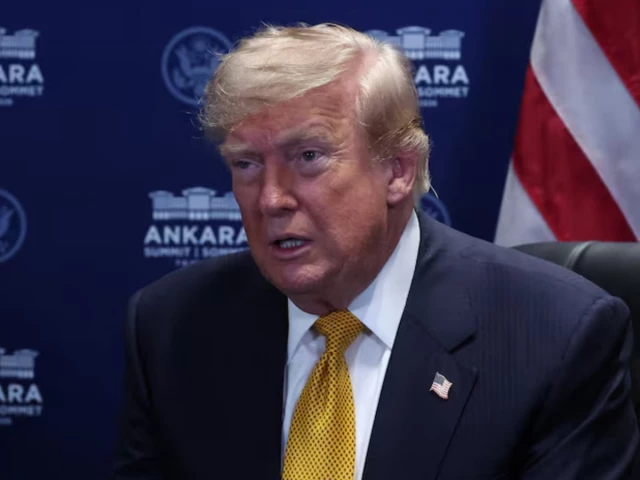
US President Donald Trump on Friday said the United States had agreed to talks with Iran after Tehran asked to continue negotiations, while stressing that the June ceasefire between the two nations was over.
"The Islamic Republic of Iran has asked us to continue 'talks.' We have agreed to do so, but the United States has stated to them, in no uncertain terms, that the Cease Fire is OVER!" Trump wrote in a post on Truth Social.
— Rapid Response 47 (@RapidResponse47) July 10, 2026
The US and Iran traded strikes this week, with the Iranian armed forces launching attacks on US military infrastructure in Gulf states on Thursday following US strikes on Iran's southern coastal and eastern provinces.
The two nations reached an interim deal last month to end a four month conflict that has throttle worldwide energy supplies.
Trump's inability to end the war has frustrated the president, whose Republican Party faces midterm elections later this year amid high gas prices and voter discontent.
Qatar urges US-Iran to honour deal, protect Strait of Hormuz
Qatar has called on the United States and Iran to honour their memorandum of understanding and continue dialogue to prevent further escalation, according to Al Jazeera.
Qatari Prime Minister and Foreign Minister Sheikh Mohammed bin Abdulrahman bin Jassim Al Thani said in a post on X that he made the appeal during a phone call with Egypt's Foreign Minister, Badr Abdelatty.
He also emphasised the importance of safeguarding freedom of navigation through the Strait of Hormuz, warning that maintaining safe passage is vital for regional security.
UPDATE: Qatar PM urges US and Iran to uphold deal and protect Strait of Hormuz shipping
— Al Jazeera Breaking News (@AJENews) July 10, 2026
🔴 LIVE updates: https://t.co/sza88g84Fr pic.twitter.com/9YZmHimEgz
IRGC commander vows revenge for 'cowardly assassination' of supreme leader
The IRGC’s top commander has pledged vengeance against the US and Israel for the killing of Supreme Leader Ayatollah Ali Khamenei, saying it won’t “be erased from the historical memory”.
According to Al Jazeera, Brigadier-General Ahmad Vahidi called for the “full realisation of justice and a fitting response to the criminals, especially the child-killing American army”.
“The criminal leaders of America and all enemies of the Islamic Revolution and the Resistance Front must know that by the cowardly assassination of this divine leader they will never … bring the flag of resistance to the ground,” Vahidi said in a statement carried by Sepah news agency.
“Avenging the martyrs and the punishment of the perpetrators … will remain a definitive, legitimate, and an unforgettable demand.”
Vahidi’s comments come after Khamenei was buried in his hometown of Mashhad on Thursday, four months after he and four family members died in US-Israeli air strikes.
Additionally, the Secretary of the Supreme National Security Council stated in a post carried by Fars that retaliation "will be carried out against attacks on infrastructure, and the criminal Zionist regime will not be safe from the response of the fighters either."
🔴 دبیر شورایعالی امنیت ملی: با حمله به زیرساختها مقابلهبهمثل خواهد شد و رژیم تبهکار صهیونی هم از پاسخ رزمندگان در امان نخواهد بود. pic.twitter.com/YWsinFC2G5
— خبرگزاری فارس (@FarsNews_Agency) July 10, 2026
US pauses strikes on Iran to let diplomacy work: CNN report
Diplomacy is happening behind the scenes right now to ease tensions in the US-Iran conflict, CNN reported Friday, citing US officials.
The US has been deliberately striking and then pausing to avoid escalation and let diplomacy work, one US official said. It is maintaining a target list as leverage.
Multiple officials reportedly said there were preparations for potential US strikes if needed tonight, but they are currently letting diplomacy take the lead.
Earlier today, aboard the USS Abraham Lincoln in the Arabian Sea, flight crews armed fighter aircraft while pilots conducted training exercises to prepare for any potential strike missions.
The carrier’s captain informed the thousands of sailors on board that regional tensions were increasing and emphasised the importance of remaining prepared, as is standard practice.
Alongside strike preparations, fighter pilots continued routine defensive operations, launching sorties throughout both the day and the night.
US officials said Iranian claims that there had already been more US strikes tonight were inaccurate. However, the situation is dynamic, and strikes could resume if needed, they added.
Maritime threat level in Strait of Hormuz remains ‘severe’: UK maritime agency
The maritime security threat level in the Strait of Hormuz remains “severe” following recent attacks on commercial vessels, the UK Maritime Trade Operations (UKMTO) said on Friday.
In a notice issued by its Joint Maritime Information Center, UKMTO said the southern route through the strategic waterway had been expanded and remains available to all maritime traffic.
“Notwithstanding recent unprovoked attacks on merchant vessels, mariners are reminded that the southern route of the Strait of Hormuz has been expanded and remains available for all traffic,” it said.
The center warned vessels transiting the area to expect radio contact over very high frequency channels from naval forces and to remain alert for a designated mine-danger area.
Egypt, Qatar urge efforts to contain regional tensions, prevent wider conflict
The foreign ministers of Egypt and Qatar on Friday stressed the need to contain escalating regional tensions and prevent the conflict from widening, Egypt's Foreign Ministry said.
According to a ministry statement, Egyptian Foreign Minister Badr Abdelatty and his Qatari counterpart Sheikh Mohammed bin Abdulrahman Al Thani discussed the latest regional developments during a phone call as part of ongoing coordination between the two countries.
The ministers underscored the importance of containing tensions and preventing further escalation across the region.
They urged all parties to prioritise diplomacy and dialogue and return to negotiations to implement the memorandum of understanding signed between the US and Iran as a step toward reaching a final agreement that will help reduce tensions and strengthen regional security and stability.
Abdelatty also renewed Egypt's condemnation of recent attacks targeting several Gulf states and Jordan, stressing the need to respect the sovereignty, unity and territorial integrity of those countries and all Gulf states.
Global oil production recovers as Hormuz shipments resume, IEA says
Global oil supply posted its largest monthly increase in months in June as the recovery of shipments through the Strait of Hormuz lifted Gulf production, although output remained well below pre-war levels because of lingering security disruptions, the International Energy Agency (IEA) said on Friday.
The agency also raised its oil supply and demand outlooks, citing improving market conditions following the US-Iran framework agreement, while warning that geopolitical risks in the Gulf continue to cloud the market outlook.
According to the IEA's latest Oil Market Report, global oil production nevertheless remained around 9.4 million bpd below levels recorded before the US-Israel-Iran war, despite the sharp recovery in June.
The report said oil supply from Gulf producers rose by around 3.5 million bpd during the month after output partially recovered following the framework agreement between the US and Iran. However, intermittent disruptions to shipping through the Strait of Hormuz persisted because of security concerns and continued reliance on US naval escorts, leaving regional oil production about 11.4 million bpd below pre-war levels.
Production from the OPEC+ group, comprising the Organisation of the Petroleum Exporting Countries (OPEC) and its allies, increased by around 2.45 million bpd in June to 38.39 million bpd.
Saudi Arabia accounted for roughly 900,000 bpd of the increase, while Kuwait contributed around 630,000 bpd.
Output from non-OPEC+ producers rose by around 1.63 million bpd to 60.37 million bpd, with the United Arab Emirates accounting for more than half of the increase at approximately 940,000 bpd.
LNG tankers resume Hormuz transits despite renewed Iran-US fighting
Liquefied natural gas (LNG) tankers and other commercial vessels continue to transit the Strait of Hormuz despite renewed military exchanges between Iran and the US and attacks on merchant shipping in the strategic waterway.
At least five LNG carriers sailing in ballast entered the strait in recent days, according to ship-tracking data.
The vessels included the GasLog Shanghai, operated by Greek shipping company GasLog, and four QatarEnergy-linked carriers: Al Samriya, Al Dafna, Al Gattara and Al Rayyan.
The movements indicate that some LNG operators are returning empty vessels to the Persian Gulf to load new cargoes despite heightened security risks.
Twenty-two Japan-linked vessels exited the strait between July 7 and July 9, including six large crude oil tankers, Japanese Transport Minister Yasushi Kaneko said at a news conference.
Maritime intelligence company Windward recorded 35 vessel crossings on July 8, comprising 17 inbound and 18 outbound transits.
Inbound traffic included six tankers, two bulk carriers and nine general cargo vessels, while outbound traffic included five tankers, five bulk carriers and eight cargo vessels.
Most vessels used the northern corridor closer to Iran. Of the 35 vessels, 11 operated without transmitting Automatic Identification System (AIS) signals during the monitoring window, according to Windward.
Windward said 861 cargo and tanker vessels remained in the Persian Gulf at its latest assessment, with 112 vessels operating without AIS signals.
Commercial shipping risks have risen after Iranian attacks on vessels transiting the strait prompted new US strikes on targets inside Iran. Tehran subsequently launched attacks against US-linked targets in Bahrain and Kuwait, effectively ending a ceasefire reached last month.
The US also revoked a 60-day waiver permitting Iranian oil sales, restoring full sanctions enforcement as Iran’s crude exports were estimated at about 1 million barrels per day.
Windward said around 24 tankers were waiting near Iran’s Kharg Island export terminals, with most believed to be fully laden.
The Strait of Hormuz is one of the world’s most important energy routes, carrying oil and LNG exports from major Gulf producers, including Saudi Arabia, the United Arab Emirates, Kuwait and Qatar.
Regional mediators seek to defuse US-Iran tensions: Axios
Regional mediators are trying to ease escalating tensions between the US and Iran while calling for further negotiations on a nuclear deal, the Axios news site reported late Thursday.
Multiple sources -- two from mediating countries and the other a US official -- told the media outlet that the regional governments have been trying to defuse tensions between the two countries.
A regional source from one of the mediating countries said the mediators believe the recent Iranian attacks in the Strait of Hormuz were carried out by elements within the Iranian regime opposed to the memorandum of understanding between the US and Iran and were seeking to undermine it.
Sources said officials from Qatar, Pakistan, Egypt and Saudi Arabia held multiple phone calls with US and Iranian officials on Wednesday in an effort to reduce tensions.
"There are extensive diplomatic efforts to first agree with both sides on de-escalation and then set a date for another round of negotiations between the technical teams," one regional source involved in the mediation said.
Israeli forces conduct extensive demolitions in south Lebanon
The National News Agency (NNA) reports Israeli forces continue to conduct demolitions in southern Lebanon with extensive blasts inside the town of Khiam, according to Al Jazeera.
Multiple consecutive explosions were heard shaking the area throughout the night, according to the NNA.
Israel has been accused of carrying out a deliberate policy of destroying homes and infrastructure in the south – much like it did in Gaza – to make it uninhabitable for Lebanese residents.
Qatar official says ‘diplomacy & mediation’ path to conflict resolution
Qatar’s Foreign Ministry spokesman has said that Qatar is committed to diplomacy and dialogue as the path to resolve conflicts and advance lasting security and stability in the Middle East, as per Al Jazeera.
Majed al-Ansari made the remarks in London, where he participated in a roundtable discussion at Chatham House during the London Conference 2026, which focused on the new geopolitical realities in the region.
‘Defective status of inconclusive negotiations’: US congressman slams Trump’s strategy on Iran
Democratic Congressman Jimmy Panetta criticised Donald Trump over the ongoing military conflict with Iran, warning that the administration’s actions demonstrate a failure of both diplomacy and strategic planning in a post on X on Friday.
Although we can’t rely on what the President says about it, we can rely on the renewed U.S. strikes and Iranian drone attacks to determine the defective status of the inconclusive negotiations and ineffective ceasefire. This is the continued effect of entering into war without a…
— Rep. Jimmy Panetta (@RepJimmyPanetta) July 9, 2026
“Although we can’t rely on what the President says about it, we can rely on the renewed US strikes and Iranian drone attacks to determine the defective status of the inconclusive negotiations and ineffective ceasefire,” he wrote.
He said that the current crisis is “the continued effect of entering into war without a clear strategy, congressional approval, or the consensus of the American public”.
“Congress must continue our efforts, with or without the Speaker, to end the Iran War, open up the Strait of Hormuz, and lower prices for Americans,” Panetta said.
Iran says it hits US military targets in Gulf, buries slain leader Khamenei
Iranian armed forces launched attacks on US military infrastructure in Gulf states on Thursday following US strikes on Iran's southern coastal and eastern provinces, further eroding a three-week-old ceasefire.
Iranian media later reported multiple explosions across southern Iran, including Bushehr, where one of the country's nuclear plants is located, along with Konarak, Choghadak and Bandar Abbas.
A US official said there had been no American strikes in recent hours.
The attacks came as Iran buried its slain Supreme Leader Ayatollah Ali Khamenei at a shrine in Mashhad, capping a week of funeral processions and rallies.
Read: Iran holds mass funeral prayer for slain supreme leader
Khamenei was killed in an airstrike on the first day of the war on February 28, as part of a US-Israeli barrage against Iran that set off a months-long conflict killing thousands and throttling worldwide energy supplies.
Attacks on Qatari and Saudi shipping vessels earlier this week upended the ceasefire, with US President Donald Trump declaring the truce "over."
Washington was still committed to finding a resolution with Iran, and "technical talks continue", according to a second US official.
Trump's inability to end the war has frustrated the president, whose Republican Party faces midterm elections later this year amid high gas prices and voter discontent.
Khamenei's funeral procession reached the country's holiest shrine with a huge crowd packing the courtyard, some bearing banners denouncing the US president and reading, "We Will Kill Trump."
Iran's Revolutionary Guards Navy said the US attacks and intervention in redirecting shipping through the Strait of Hormuz were disrupting the waterway's reopening.
The Guards said the number of vessels transiting the strait under Iranian supervision had recovered to about 50% of pre-war levels over the past two weeks, adding that permission was being granted only to ships using routes designated by Tehran.
Any further US intervention will draw a "crushing response", the Guards said.
The US military said its strikes were aimed at keeping the strait open after it accused Iranian forces of attacking three tankers in the area.
The military said on Thursday the United States had helped facilitate the transit of more than 800 commercial vessels and 380 million barrels of crude oil through the strait since early May and that Iran does not control the waterway.
Oil prices fell back on Thursday after spiking on concerns the fighting would disrupt global supplies.
Targeting US bases in Gulf states and Jordan
US Central Command said on Wednesday its forces had struck approximately 90 Iranian military targets, including air defence systems, coastal surveillance assets, and missile and drone storage sites.
Read more: US military carries out fresh strikes on Iran, prompting Iran attacks on Kuwait and Bahrain
"This is in retribution for yesterday’s bombing of ships by Iran. If it happens again, it will get much worse!" Trump wrote on his Truth Social platform.
The US attacks had killed 14 people and injured 78 across five provinces on July 8 and 9, Iranian state media reported. The Fars news agency said one US strike had hit a rail bridge used for trade with Russia and China.
Bushehr is home to a Russian-built nuclear power plant and a local official later told state media that a US projectile had hit the perimeter area of the facility. The perimeter had already been hit several times before an April 8 ceasefire.
Iran's army said in a statement released by state media that it had launched attacks on US Patriot systems in Kuwait, an early-warning site in Qatar and a U.S. Army fuel depot in Bahrain.
Kuwait said its armed forces had engaged a cruise missile, three ballistic missiles and 10 drones in its airspace, and that one person had been injured by falling shrapnel.
Sirens also sounded in Jordan after missiles launched from Iran were detected, the state news agency reported. Eight were intercepted, with no injuries or damage reported.
The Revolutionary Guards later said Iran had fired 10 ballistic missiles at Jordan's Azraq military base, used by US forces, and also at a US military control centre in the Middle East, without elaborating.
Qatar, which hosts the largest US base in the region and has often mediated between Washington and its adversaries, including Tehran, condemned attacks on commercial shipping but also called for a return to diplomacy.
The foreign ministers of Turkey and Oman also stressed the need to avoid further military escalation in separate calls with their Iranian counterpart, Abbas Araghchi.
In a call with Chief of Army Staff Field Marshal Asim Munir, who has also mediated in the conflict, Araghchi condemned what he called US "warmongering policies".
The Strait of Hormuz handled about a fifth of global oil supplies before the war. Tehran has since largely taken control of the strait, forcing a stalemate in its confrontation with the world's most powerful military.
"The Strait of Hormuz will be reopened only under Iranian arrangements, not through US threats," Iran's top negotiator, Mohammad Bagher Ghalibaf, wrote on X.









This material may not be published, broadcast, rewritten, redistributed or derived from. Unless otherwise stated, all content is copyrighted © 2026 The Express Tribune.






COMMENTS (1)
Comments are moderated and generally will be posted if they are on-topic and not abusive.
For more information, please see our Comments FAQ