FM Dar welcomes 'positive momentum' in Islamabad-Moscow relations
Updated 42 minutes ago

PM's K-P information aide criticises bill, says PTI promised equality but giving lawmakers perks
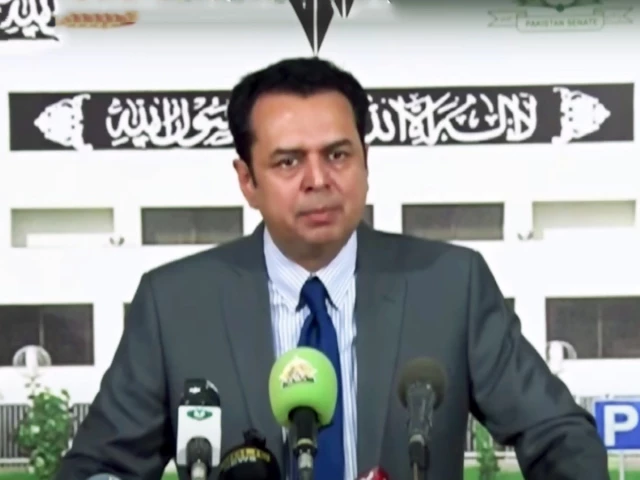
State Minister for Interior Talal Chaudhry on Wednesday accused the Khyber-Pakhtunkhwa Assembly and the Pakistan Tehreek-e-Insaf of promoting the very “VIP culture” it once pledged to abolish, describing recently approved privileges for provincial lawmakers as a form of “political bribery.”
More than two months after the assembly quietly enacted a package of laws expanding lawmakers' salaries, allowances and legislative privileges, the legislation has come under renewed public scrutiny after excerpts from the acts resurfaced on social media, triggering criticism over enhanced benefits, official passport entitlements and provisions relating to assembly privileges.
The controversy centres on two of the three laws passed on April 30, the KP Province (Salaries and Allowances of Members) Act and the KP Assembly Powers, Privileges and Immunities (Amendment) Act, 2026. Although the legislation received the governor's assent in early May and largely escaped public attention at the time, screenshots of the enacted laws began circulating online this week, reigniting debate over the scope of the benefits granted to legislators and the implications of some of the new provisions.
Speaking to PTV News, Chaudhry said the party that had promised to eliminate elite privileges had instead enacted legislation granting unprecedented benefits to its own members.
“They have one face for the public and another for themselves. They tell people one thing but do something entirely different,” he said.
He said successive governments and assemblies in Pakistan had introduced various benefits for legislators, but he claimed no previous legislature had approved a package of privileges comparable to those recently passed by the K-P Assembly.
Chaudhry recalled that the party had once promised modest governance, with leaders claiming they would travel by bicycle and dismantle VIP culture. Instead, he alleged, its leadership had embraced official privileges while extending new benefits to lawmakers.
He said the legislation granted assembly members exemptions from toll taxes, free accommodation at government rest houses, lifetime official (blue) passports for legislators and their immediate families, and firearms licences without fees, among other benefits.
The minister, however, maintained that the provincial legislation was not binding on the federal government, particularly in matters such as the issuance of official passports and prohibited-bore firearms licences, which fall under federal jurisdiction.
پی ٹی آئی کا معیار دہرا ہے، طلال چوہدری#TalalChaudhry #PTI #PakistanPolitics #PMLN pic.twitter.com/Kk8p9tbJzS
— APP (@appcsocialmedia) July 8, 2026
Chaudhry said the federal government, under the directives of the prime minister and the interior ministry, had reduced the number of official (blue) passports issued by nearly half over the past two years.
"Such passports are now reserved strictly for individuals travelling on official government duty. No additional blue passports will be issued merely because of this provincial legislation or to extend political favours,” he added.
Addressing the issue of firearms licences, Chaudhry said the federal government had reduced the issuance of prohibited-bore weapons licences by 95 per cent compared to previous administrations. He added that such licences were now issued only in exceptional cases after strict scrutiny and primarily to those entitled under the law.
He further claimed that licences for non-prohibited firearms had also been reduced by 60 to 65%, adding that the government intended to tighten the policy even further.
The minister argued that the provincial legislation amounted to “political bribery”, alleging that the ruling party in K-P was rewarding its own lawmakers despite earlier promises to end preferential treatment for politicians.
He questioned whether ordinary citizens received benefits such as free accommodation at government rest houses, complimentary firearms licences, special vehicle number plates, tinted vehicle windows, state-provided security, or official passports.
Chaudhry also referred to a previous incident involving a PTI lawmaker, alleging that the son of a National Assembly member had misused an official passport by travelling to Europe and later surrendering it while seeking political asylum, an episode he said had damaged Pakistan’s international image.
Highlighting federal reforms, the minister said the government had strengthened passport security features, improved the passport issuance process, curtailed fraudulent documentation, and significantly reduced the number of official and diplomatic passports issued to ineligible individuals.
He claimed these measures had contributed to an improvement in Pakistan’s passport ranking over the past two-and-a-half years and had helped facilitate visa-free arrangements for holders of official and diplomatic passports with several countries.
The minister reiterated that the federal government would not implement any provincial measures relating to official passports, prohibited-bore weapons licences, or other privileges that it considered unjustified.
He concluded by calling the K-P Assembly legislation “ridiculous,” saying it exposed the political contradiction of a party that came to power promising to end VIP culture but had instead, in his words, created “a new example of VIP culture through legislation.”
Prime Minister’s Coordinator on Information for K-P Ikhtiar Wali Khan also criticised the laws, saying the PTI, which had promised to eliminate elitism and establish equal justice, was instead introducing legislation that would create special privileges for lawmakers.
Addressing a press conference, Khan said that the legislation granted sweeping powers and lifelong privileges to members of the provincial assembly, ministers and advisers.
He said that the bill provided lifetime blue passports to provincial lawmakers and their spouses, granted members exemption from court appearances, and protected them from arrest, adding that members of the K-P Assembly would be allowed to possess licences for up to eight Kalashnikov rifles, compared with two licences permitted for members of the NA.
Khan further added that no case could be registered against a provincial lawmaker without the approval of the speaker of the K-P Assembly, adding that such provisions were contrary to democratic accountability and the rule of law.
He also criticised clauses which would restrict parliamentary coverage by the media, adding that only journalists approved by the provincial government or the speaker would be allowed to cover assembly proceedings.
“The freedom of the press is being curtailed through this legislation,” he said, demanding the immediate withdrawal of the bill.
خیبر پختونخوا اسمبلی کے متنازع بل کے تحت تاحیات بلیو پاسپورٹ فرار کا ایک راستہ ہے، اختیار ولی خان#IkhtiyarWaliKhan #KPAssembly #KhyberPakhtunkhwa #BluePassport pic.twitter.com/AlyWYWwfXF
— APP (@appcsocialmedia) July 8, 2026
Khan said that the provincial government was prioritising privileges for elected representatives instead of addressing key public issues, including education, healthcare, infrastructure development and law and order.
Referring to the financial situation in K-P, he added that several public universities were facing severe financial difficulties and called on the provincial government to allocate greater resources for education, hospitals and development projects.
He also urged federal accountability institutions, including the Federal Investigation Agency, to investigate financial irregularities and corruption cases in the province.
Speaking on the occasion, MNA Shaista Khan expressed concern over restrictions on media freedom through this legislation. “I am deeply saddened that freedom of the press is being taken away,” she said.
Criticising the provincial government’s health policies, Shaista said that the health card programme had created serious administrative problems and placed doctors in difficult situations.
Read More: Laws bestowing perks on K-P legislators spark backlash
She said that patients from Haripur were routinely being referred to hospitals in Abbottabad because of inadequate healthcare facilities and urged the provincial government not to compromise public health and human lives.
Shaista urged the provincial government to focus on improving education, healthcare and public welfare instead of introducing legislation that would grant special privileges to elected representatives.
Criticism has focused primarily on the K-P Province (Salaries and Allowances of Members) Act and the K-P Assembly Powers, Privileges and Immunities (Amendment) Act, which expand a range of benefits available to lawmakers while also extending certain legislative privileges.
Among the provisions drawing criticism are enhanced allowances and benefits for lawmakers, including access to government rest houses, airport VIP lounges, exemption from toll tax, security arrangements, and entitlement to an official passport for members, with the same facility extended to their spouses for life, subject to applicable federal law.
Separately, the KP Assembly Powers, Privileges and Immunities (Amendment) Act has also come under scrutiny over provisions relating to legislative privilege. One of its most debated clauses prescribes imprisonment of up to six months, a fine, or both, for publishing proceedings or evidence that the Assembly has directed to be kept confidential. The provision has fuelled concerns online over its potential implications for media reporting and transparency.



This material may not be published, broadcast, rewritten, redistributed or derived from. Unless otherwise stated, all content is copyrighted © 2026 The Express Tribune.






COMMENTS (1)
Comments are moderated and generally will be posted if they are on-topic and not abusive.
For more information, please see our Comments FAQ