Trump was 'joking' about declaring Strait of Hormuz US territory: US media
Updated 19 minutes ago

Iran's Ghalibaf says Tehran not at peace with US, implementation of MoU difficult but possible.
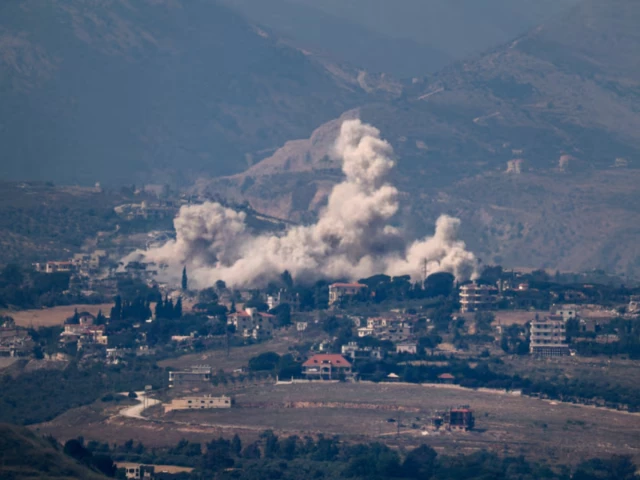
Israeli Prime Minister Benjamin Netanyahu denied reports on Sunday that the US had restricted Israeli military operations in Lebanon.
"I heard it was said in the media that President Trump asked not to act against terror tunnels in Lebanon. This is a legend, fake news. He didn't say anything to me about it, and I didn't ask him. We operate according to our considerations," Netanyahu said during a weekly Cabinet meeting.
His remarks contradicted an earlier report by Israel's public broadcaster KAN late last month that Israel had provided US officials with detailed intelligence on alleged Hezbollah tunnels in the Ali al-Taher Heights in southern Lebanon in an effort to obtain US approval for military operations in the area.
The report suggested Israel sought a US green light to continue its military activities in Lebanon, contrary to Netanyahu's assertion that Israeli military decisions are made independently.
Turning to Gaza, Netanyahu said there would be no reconstruction in the enclave before it is disarmed, a position that departs from the sequencing outlined in US President Donald Trump's plan to end the war.
"There will be no reconstruction in Gaza without dismantling and demilitarising the Strip," he said in his comments carried by the daily Yedioth Ahronoth.
Under the second phase of Trump's plan, a broader Israeli military withdrawal from Gaza and the launch of reconstruction are to proceed in parallel with the beginning of the disarmament of Palestinian factions.
According to the paper, Netanyahu's remarks came amid reports that Trump’s Board of Peace intends to move ahead with reconstruction in areas under Israeli military control without linking it to the disarmament of Hamas.
Iranian Parliament Speaker Mohammad Bagher Ghalibaf said that Tehran remained at odds with the US despite a recently signed memorandum of understanding (MoU), describing implementation of the agreement as "difficult but achievable".
Ghalibaf made the remarks during a meeting in Tehran with Mohammad Darwish, head of Hamas's leadership council, who was attending funeral ceremonies for the late leader of the Islamic Revolution, Ayatollah Seyyed Ali Khamenei.
"We have no peace with the US and we will not recognise Israel," Ghalibaf said.
The Iranian parliament speaker, who also serves as Tehran's chief negotiator in talks with Washington, said Iran remained committed to supporting Muslim nations and the "resistance front" in accordance with the guidance of the country's leadership.
"If needed with missiles, and if political pressure is required, pressure through negotiations," he said.
Ghalibaf stressed that negotiations should not become an end in themselves and warned against engaging in "negotiation for the sake of negotiation".
He said talks between Tehran and Washington had been suspended on the eve of signing a Pakistan-brokered memorandum of understanding after Israeli military strikes targeted Beirut's southern suburb of Dahiyeh.
"We told the American side that the territorial integrity of regional countries and the cessation of war against Iran's allies in the resistance groups must be part of the memorandum, and it was added to the text," he said.
"Today, this memorandum is being implemented, and its enforcement is difficult, but possible."
Ghalibaf said diplomacy should be used to consolidate military achievements rather than replace them.
"This can only be realised when the country, alongside diplomacy, remains prepared for defence," he said.
He also argued that Muslim countries had come to realise that cooperation with the US and Israel would not guarantee their security.
Iran says military using ceasefire to strengthen combat capabilities
Iran’s military says it is using the ceasefire to strengthen its combat capabilities, warning that any “enemy mistake” would be met with a “crushing and decisive response”, Al Jazeera reported.
Brigadier-General Mohammad Akraminia said the army was using the pause in hostilities to strengthen its armed forces.
“We will not waste a single moment or neglect this,” he said.
“If the enemies make a mistake, they will definitely face a crushing and decisive response from the Iranian armed forces,” he said.
Thousands of US and Israeli air attacks hit a range of military targets, energy facilities and civilian infrastructure during weeks of war that began with the killing of Ayatollah Ali Khamenei on February 28. The attacks killed more than 3,000 people in Iran, according to state media.
OPEC+ approves further oil output increase as Hormuz exports start to recover
OPEC+ has agreed a further increase in output targets from August, the group said in a statement on Sunday, adding to global supply at a time when oil prices are falling due to the gradual reopening of the Strait of Hormuz for oil exports.
The oil-producing group agreed during an online meeting to increase quotas by 188,000 barrels per day from August, on top of similar increases for June and July.
Seven core members of OPEC+, which groups OPEC and allied producers including Russia, have hiked their output quotas from April through July by almost 800,000 bpd.
Yet the increase has remained largely on paper because of the US-Israeli war on Iran, which closed the Strait of Hormuz to tanker traffic for some of the most important OPEC+ members, including Saudi Arabia, Kuwait and Iraq.
Production begins to recover
OPEC+ output fell to 33.13 million bpd in May, according to OPEC data, from 42.77 million bpd in February. It began to recover in June thanks to US efforts to help the UAE and other OPEC+ nations export more oil, but is still below pre-war levels.
Despite persisting supply disruptions, oil prices have returned to pre-war levels, pressured by lower Chinese imports, higher exports from non-Middle East producers, and a record global strategic stock release coordinated by the International Energy Agency.
A memorandum of understanding between Washington and Tehran to end the war has also helped convince traders that supply will ultimately return to normal levels.
Iraq pressing for higher quotas
Brent crude prices traded near $72 per barrel on Friday, down from recent peaks of more than $120 per barrel and back to levels traded just before the US and Israel attacked Iran on February 28.
Besides agreeing on production targets, OPEC+ is also facing other challenges after the United Arab Emirates left the group and Iraq signaled it wants higher quotas.
OPEC+ includes 21 members, including Iran, but in recent years only the seven nations — and the UAE until its departure — have been involved in monthly production management.
Those seven producers — Saudi Arabia, Russia, Iraq, Kuwait, Algeria, Kazakhstan and Oman — are boosting output as part of the phased rollback of a 1.65 million bpd supply cut agreed in 2023, when the group still included the UAE.
The UAE quit the alliance in late April because it wanted to align its capacity more closely with its production, free of production restraints imposed by the group.
From August, taking into account the UAE's exit from May 1, the seven core members will still have about 379,000 bpd of the original cut to return to the market, according to Reuters calculations.
With the August increase now decided, they will have fully unwound the 2023 cut if they make one more hike of around the same size for September at their next meeting on August 2.
Iran and Qatar resume maritime trade, Iranian state media reports
Maritime trade between Iran and Qatar has resumed after a roughly five-month suspension, Iran’s commercial attaché in Doha told state media on Sunday.
Abbas Abdolkhani said shipping between Iran’s Dayyer port and Qatar’s Al Ruwais port had resumed following coordination between the Iranian embassy in Doha and Qatari authorities.
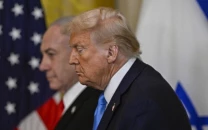
"Netanyahu knows who the boss is," Trump says
US President Donald Trump told Axios on Saturday that Israeli Prime Minister Benjamin Netanyahu asked him for a meeting at the White House and it could take place as early as next week.
"We get along very good. (Netanyahu) knows who the boss is," Trump said in a brief phone interview.
This would be the first meeting between the two leaders since their February Situation Room meeting, when Netanyahu presented his plan for a joint war against Iran.
An Israeli official said next week could be too soon because of Trump's trip to Türkiye for the NATO summit on July 7-8, saying the meeting “might take place the week after”.
Netanyahu's office said the prime minister called Trump on Friday to congratulate him on the 250th US Independence Day, noting that the two leaders “agreed to meet soon in the United States”.
Read: Hormuz not a theatre for military display of extra-regional powers: Gharibabadi
Trump said he was following the funeral of former Iranian Supreme Leader Ali Khamenei, who was assassinated on the first day of the war in a joint US-Israeli operation.
Trump claimed the Iranians "are begging to make a deal," but said both sides decided to take a week off from the talks until the events around Khamenei's funeral end. In the meantime, he said, neither side will shoot at the other.
"They are all there. One shot (and we can take them all out), but we are not going to do that because then we would have nobody to negotiate with," Trump said.
He added that he was surprised to see some Iranians crying at the funeral, saying he thought people hated Khamenei. "Maybe it's fake tears," Trump said.
UKMTO receives report of incident 30 nautical miles southwest of Yemen's Hodeidah
The United Kingdom Maritime Trade Operations received a report on Sunday of an incident 30 nautical miles southwest of Yemen's Hodeidah, where a cargo vessel triggered a distress alert stating it was under attack by unknown armed assailants.
Authorities were investigating, and vessels were advised to transit with caution and report any suspicious activity to UKMTO, the agency said.
Qatar says all maritime activities will resume immediately
Qatar said on Sunday that maritime activities would resume with immediate effect, according to a Transport Ministry statement posted on X.
This reverses a June 29 advisory that had urged the temporary suspension of sailing and fishing boats until further notice, though commercial shipping was exempted.
The ministry on Sunday urged all maritime vessel operators and users to "abide by the maritime regulations and instructions in effect, to ensure the highest levels of safety and security for all trips".
Qatar did not provide a reason behind the June 29 measure, but it came a day after it said one of its nationals had been killed after sustaining injuries from shrapnel due to "military operations in the region", following the disappearance of his vessel.
Four ships alter course while transiting Strait of Hormuz
Four vessels transiting the Strait of Hormuz altered course, according to ship-tracking firm Windward, as maritime traffic through the strategic waterway remained below pre-conflict levels.
Windward said two ships travelling along the southern route off Oman’s coast turned back, while two others diverted to the central shipping corridor, Al Jazeera reported.
Although ship-tracking firms have reported a modest recovery in traffic through the Strait in recent days, volumes remain well below levels seen before the recent conflict.
Meanwhile, Tehran has said it will assume sole responsibility for managing traffic through the Strait of Hormuz during the 60 days outlined in its memorandum of understanding (MoU) with the United States. It has also indicated that, in coordination with Oman, it intends to introduce fees for services in the waterway once that period expires.
OPEC+ agrees in principle to raise oil targets by 188,000 bpd from August, source says
OPEC+ has an agreement in principle to raise oil output quotas by 188,000 barrels per day in August, one source familiar with the group's talks said ahead of their meeting later on Sunday.
Two other sources said an increase of this amount was the most likely decision.






This material may not be published, broadcast, rewritten, redistributed or derived from. Unless otherwise stated, all content is copyrighted © 2026 The Express Tribune.






COMMENTS
Comments are moderated and generally will be posted if they are on-topic and not abusive.
For more information, please see our Comments FAQ