Contraceptive project hit by planning gaps
Updated 1 hour ago

Warns that 'any attempt to divert or stop Pakistan's water will be met decisively'

Information Minister Attaullah Tarar on Tuesday said Pakistan's 240 million people had an "inalienable right" to the waters of the Indus River, describing water as "not simply a resource, it is a matter of life itself".
For over six decades, India and Pakistan have amicably managed the Indus River system through the IWT transboundary water-sharing agreement signed on September 19, 1960. Last year in April, India suspended the treaty in the wake of the Pahalgam attack.
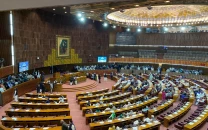
Addressing the inaugural session of an international seminar titled "The Indus Waters Treaty: A Key Instrument for Peace and Regional Stability" at the Jinnah Convention Centre in Islamabad, Tarar said, "We are talking about our lifeline, not a treaty."
He added that the conference was "not merely discussing a treaty" but the lifeline of more than 240 million Pakistanis.
"As they say, water is life; the Indus has given life to Pakistan," he said.
Addressing the inaugural session of the International Indus Waters Treaty Seminar in Islamabad, Information Minister Attaullah Tarar said Pakistan’s history is deeply intertwined with the Indus River, describing it as the nation’s lifeline and the foundation of its… pic.twitter.com/OorT60ljY1
— Pakistan TV (@PakTVGlobal) June 30, 2026
Tarar said Pakistan's history was deeply intertwined with the Indus River, describing it as the country's lifeline and the foundation of its agriculture-based economy. He said the Indus Valley Civilisation represented Pakistan's "true identity", adding that the Indus River had sustained great civilisations for millennia and remained central to the country's heritage.
Referring to the IWT, the minister said it reflected "a historic agreement between two countries" and could not be suspended unilaterally. He added that "rivers should connect nations, not divide them".
Tarar also warned against attempts to interfere with Pakistan's water resources, saying that "any attempt to divert or stop Pakistan's water would be met decisively". "The weaponisation of water undermines regional peace, stability and cooperation," he said.
"International agreements cannot be suspended or disregarded at convenience. Respect for treaties is indispensable for maintaining confidence among nations and preserving global order." Tarar said Pakistan remained committed to dialogue and the implementation of the treaty but would safeguard its water rights.
"Pakistan has consistently demonstrated its commitment to peaceful engagement and constructive dialogue," he said. "But if an attempt is made to stop the water of Pakistan, our national leadership stands resolved to respond effectively to restore the water for the people of Pakistan."
Concluding his address, the minister said Pakistan would continue to pursue the issue at international forums.
Pakistan TV brings you exclusive coverage of the International Seminar on the Indus Waters Treaty from Islamabad https://t.co/CmhM2ir55o
— Pakistan TV (@PakTVGlobal) June 30, 2026
"We will do all that we can at all international forums, legally and otherwise, to ensure that the right to water of the Pakistani people is protected," he said, adding that Pakistan remained "firm in its determination to protect the livelihoods and the lives of the people of Pakistan, which are linked to the Indus River".
Principle meets practice
Following the Information Minister, Pakistan's Indus Waters Commissioner, Mehr Ali Shah, addressed the seminar next, stating that the Indus Waters Treaty was "a conflict prevention system" rather than merely a water-sharing arrangement, warning that attempts to suspend its implementation or weaken its institutions risked undermining regional stability.
Shah said he would not revisit the political, legal or humanitarian aspects discussed by other speakers, but would instead explain "what the treaty requires, what Pakistan has done, and what happens when the routine channels are blocked".
Pakistan’s Commissioner for Indus Waters, Mehar Ali Sah while addressing the International Seminar on the Indus Waters Treaty, said the IWT is vital for Pakistan’s water security and serves as a key mechanism to keep water out of conflict.@MoIB_Official #IndusWatersTreaty… pic.twitter.com/5PH4Ltolu7
— Pakistan TV (@PakTVGlobal) June 30, 2026
"This is where the principle meets the practice," he said. Describing the treaty as central to Pakistan's national security, Shah said water flow predictability was "not a luxury of planning" but "part of the survival architecture of the state".
"When the lives and livelihoods of 240 million people are tied to the Indus basin, when more than 80% of the arable land depends on these waters and agriculture contributes almost a quarter of GDP and one-third of employment, water uncertainty becomes national uncertainty," he said.
"Pakistan's restraint has been deliberate, but water, food, livelihood and social stability are not negotiable abstractions."
Shah said the treaty had created a binding legal framework by allocating the eastern rivers to India while granting Pakistan unrestricted use of the western rivers — the Indus, Jhelum and Chenab — subject only to limited exceptions for India.
"Pakistan accepted that bargain, rebuilt its irrigation life around that bargain and planned its national water economy on the assurance that the western rivers would be allowed to flow," he said.
"The bargain remains the bargain. It was not a favour; it was a binding settlement, binding on both parties."
Calling the treaty "engineering for peace", Shah said its effectiveness rested on four pillars: allocation, cooperation, institutions and dispute resolution. "Remove just one element and the peace function starts to fail," he said. "The abeyance is not a diplomatic slogan; it is an attempt to disable the stabilising architecture."
He described the Permanent Indus Commission as "the treaty's early warning system". "It is not a mailbox or a post office. It is the operating mechanism that keeps water out of conflict."
"The Commission converts suspicion into data, data into verification and verification into settlements," he said, adding that its meetings, inspections, data exchanges and annual reports were "not merely rituals or formalities" but "the treaty's first safety device".
Shah devoted a significant part of his address to Article IX of the treaty, saying it established "a very elaborate dispute resolution mechanism" that progressed from bilateral discussions to third-party forums when required. "It is a progressive ladder," he said. "Pakistan has used this ladder in the past and is using it presently."
"The point to be highlighted is that non-response cannot be a reason to destroy the ladder."
Referring to proceedings before the Court of Arbitration, Shah said the tribunal had strengthened, rather than weakened, the treaty. He said two awards issued by the court had confirmed that India's non-participation did not prevent proceedings from continuing, that the treaty could not be rendered ineffective through a unilateral suspension, that the court's decisions were "final, binding and controlling", and that India remained obliged to allow the western rivers to flow in accordance with the treaty.
"This is not political rhetoric, and it is no more Pakistan's position paper," Shah said. "It is the treaty speaking through its own voice." He said Pakistan did not oppose hydropower projects that complied with the treaty. "Lawful hydropower is not the problem for Pakistan," he said. "The unlawful control, excessive discretion and opaque operation are the problem."
According to Shah, Pakistan had continued to fulfil its treaty obligations despite what he described as India's decision to hold the treaty "in abeyance". He said Islamabad had continued sharing data, sending official correspondence, requesting meetings, inspections and consultations under Article IX, and preparing annual reports.
"There has been no response from the other side," he said.
Shah added that there had been no meeting of the Permanent Indus Commission since May 2022, no general or special inspections, monthly hydrological data had remained outstanding since August 2023, and multiple treaty communications had gone unanswered.
"This is precisely what increases the risk of avoidable escalation," he said.
Calling hydrological data "an operational necessity", Shah said a lack of information left downstream states unable to distinguish between natural river conditions and upstream operations.
"Only last night I was writing to my Indian counterpart when I observed significant fluctuations in the flows of the Chenab yet again," he said, describing it as the fourth such occurrence since April 2025.
"That is not a technical inconvenience. It is a strategic hazard." He said sudden changes in river flows reduced flood forecasting capability, disrupted irrigation scheduling and undermined confidence in reservoir operations.
"Data sharing is the line between natural risk and manufactured vulnerability," he said.
Shah also referred to fluctuations in flows at Marala Barrage, saying Pakistan had repeatedly sought operational data and explanations through treaty mechanisms but had received no response.
"When flows at Marala move from a peak of 78,000 cusecs to only 1,500 cusecs in May 2025, when December 2025 shows a movement from 58,000 cusecs down to 870 cusecs, and when May 2026 records another sharp fall, no responsible downstream commissioner can treat that as routine and move on," he said.
He said that these are precisely the events the Commission exists to examine with data, inspection and consultation. He argued that Pakistan's concern was not individual hydropower projects but "accumulated upstream control without the treaty discipline".
"One project may be a question under Article IX, but a cluster of accelerated works with no data, no inspection and no Commission engagement becomes a strategic pattern."
Shah added that Pakistan says yes to lawful run-of-river generation, but Pakistan says no to unlawful control, diversion, opacity and fait accompli.
Shah also raised concerns over the reported Chenab–Beas link and the reopening of low-level outlets at the Salal project, arguing that both required examination under the treaty and existing bilateral agreements.
He said Pakistan had pursued the matter through diplomatic and international legal channels, including correspondence with the United Nations Security Council, the United Nations General Assembly and the United Nations Secretary-General.
He added that UN special procedure mandate holders had recognised concerns relating to water, food security, livelihoods, the environment and development. "We are taking the matter to the world not only to internationalise the issue, but to prevent a treaty breakdown from becoming a security crisis," he said.
Shah said Pakistan was also strengthening water management at home through improvements in storage, reservoir safety, sediment management, telemetry, canal rehabilitation, groundwater regulation, climate resilience and agricultural productivity. "We protect every drop we receive, and we will not accept coercion over any drop we are entitled to receive," he said.
Concluding his address, Shah called for an immediate meeting of the Permanent Indus Commission, restoration of regular data sharing, inspections, project disclosures and adherence to the treaty's dispute resolution framework.
He said that the Indus Waters Treaty “is alive” and that the Commission must therefore be allowed to work. "No unilateral abeyance, no data blackout, no diversion, no fait accompli."
A crisis of justice
Taking the stage next, Climate Minister Musadik Malik shifted the focus from the legal dimensions of the Indus Waters Treaty to its human impact, arguing that control over shared rivers affects the lives and livelihoods of millions of people, not only in Pakistan but across the world.
He described the water dispute with India as "a crisis of justice" rather than simply one of climate change or water scarcity. Malik opened his speech with the story of a Sindh farmer, Iqbal Sulangi, whose family had farmed for seven or eight generations before repeated floods forced him to abandon agriculture.
Addressing the International Seminar on IWT 2026 in Islamabad, Climate Change Minister Musadik Malik said India’s violation of the Indus Waters Treaty is not just a water crisis but a crisis of justice.@ClimateChangePK@DrMusadikMalik#IndusWatersTreaty #WaterSecurity… pic.twitter.com/RuCQ3XoSLW
— Pakistan TV (@PakTVGlobal) June 30, 2026
"He got wiped out in the floods of 2010," Malik said. "He barely survived, came back to his farmland and got wiped out again in 2012." Sulangi later returned to farming after the floodwaters receded, but "was hit again in 2022".
"His livestock was washed away. His house was washed away. His children's schools were washed away. His family was displaced," the minister said, adding that Sulangi had eventually left farming and was now "probably doing some labour work somewhere in Karachi".
"Generations of farming lost to water," he said.
Malik said Sulangi's experience reflected a much wider global problem, drawing parallels with farmers in Bangladesh, women walking miles each day to collect water in Africa, the shrinking of the Aral Sea and water challenges affecting communities along the Mekong River, the Nile and the Tigris.
"This is not a crisis in her life. This is her life," he said of a woman forced to walk four miles every day to fetch a single bucket of water after the river near her village receded.
"It is the exact same story of Iqbal Sulangi."
He argued that the central issue was not simply floods or droughts but “the danger is that someone else who is not you controls the tap through which your water is going to flow."
Referring to the fluctuations in water flows at Marala highlighted earlier by Pakistan's Commissioner for Indus Waters, Mehr Ali Shah, Malik said river flows had risen from 1,500 cusecs to 78,000 cusecs before falling back again "without one drop of rain to explain that".
"The only thing that explains this phenomenon is that someone else who is not Iqbal Sulangi has his hand on the tap that controls his water," he said.
Malik said around half of Pakistan's population — approximately 120 million people — depended on agriculture, while nearly a quarter of the country's GDP and "100% of our food security" relied on the Indus river system.
"So, ladies and gentlemen, this is neither a crisis of climate nor a crisis of water," he said. "This is a crisis of justice. And that's how we would like the world to see it."
"Sulangi didn't build the dams. Sulangi didn't break any treaty. Sulangi didn't elect the man who controls the tap. And yet it's his life that gets devastated."
The minister also linked climate change with water management, saying the same country that "controls the tap" was also "the third largest polluter in the world".
"The country that has created the furnace which is burning the skies and burning the glaciers... is the same country that then controls the tap."
Malik said Pakistan had lost around 6,000 lives to floods over the past 15 years, while 19,000 people had been injured or disabled and 40 million displaced. "If they're displaced for three months, given our demography, 1.8 billion school days are lost," he said.
"Imagine your child not going to school for one month."
Turning to the treaty itself, Malik described the Indus Waters Treaty as "one of the strongest treaties in the world", noting that it had survived three wars between two nuclear-armed neighbours.
"If this treaty doesn't hold, no treaty in the world is worth the weight of the paper on which it's published," he said.
He questioned what value international agreements retained if "one powerful country" could simply decide that a treaty no longer applied to it.
Referring to the legal principle pacta sunt servanda — that treaties must be honoured — Malik argued that recent developments had exposed broader weaknesses in the international legal system. "The treaty has been revealed to the world."
The minister said the Court of Arbitration had ruled on technical aspects of the treaty, including limits on project design and river flows, but criticised India's rejection of the tribunal's jurisdiction.
"So what is the jurisdiction of international courts? ... Does it mean tomorrow any nuclear state can get up and say, 'I don't accept the world order. I don't accept treaties. I don't accept rights. I don't accept justice?"
Malik argued that the implications extended far beyond South Asia and that this is the case, and a test for water rights for the billions of people that live in downstream countries.
Pointing to transboundary rivers in Europe, he said water flowing into the Netherlands passed through France, Switzerland and Germany, while Portugal depended on rivers flowing from Spain.
"So what about that?" he asked.
Malik said the debate over the Indus Waters Treaty was ultimately about the rights of downstream nations everywhere.
"This new order that has been proposed is that no downstream country in the world has any water rights," he said, calling the issue "the test for water rights for all the billions of people".
The Indus Waters Treaty
After years of negotiations, facilitated by the World Bank, the IWT was signed in September 1960 by then-Indian PM Jawaharlal Nehru and former Pakistani President Ayub Khan. India was given control over the three eastern rivers—Ravi, Sutlej, and Beas—while Pakistan was assigned control over the three western rivers—Indus, Jhelum, and Chenab. According to the treaty, India is legally bound to allow the waters of the western rivers to flow into Pakistan, with only a few exceptions.
According to the treaty, Pakistan has unrestricted use of these rivers, while India is permitted to construct hydroelectric facilities on them under specific conditions. These projects must conform to design constraints outlined in the treaty’s annexures, ensuring that they are "run-of-the-river" and do not significantly alter water flow or storage to Pakistan’s detriment.
Pakistan, which receives roughly 80 per cent of the water in the Indus river system, relies heavily on these rivers. Of the 16.8 crore acre-feet of water in the system, India is allocated around 3.3 crore acre-feet. At present, India uses slightly more than 90 per cent of its permitted share, leaving Pakistan deeply dependent on the remainder.
This dependence is profound. The Indus river network—comprising the Jhelum, Chenab, Ravi, Beas, and Sutlej—forms the backbone of Pakistan’s agricultural sector. It sustains a population of tens of millions, fulfilling 23 per cent of the country's agricultural water needs and directly supporting nearly 68 per cent of rural livelihoods. Any disruption to this supply could trigger widespread consequences: reduced crop yields, food insecurity, and further economic instability, particularly in regions already burdened by poverty and an ongoing financial crisis.
Compounding the issue is Pakistan's limited water storage capacity. Major dams such as Mangla and Tarbela have a combined live storage of just 14.4 million acre-feet (MAF)—a mere 10 per cent of the country’s annual entitlement under the treaty. In times of reduced water flow or seasonal variability, this shortfall in storage leaves Pakistan acutely vulnerable.
Despite Pakistan’s heavy reliance on the Indus waters, the treaty does afford India certain rights. It allows the development of 13.4 lakh acres of irrigation in Jammu and Kashmir and Ladakh. However, as of now, only 6.42 lakh acres are being irrigated in these Union Territories. Furthermore, the treaty permits India to store up to 3.60 million acre-feet of water from the western rivers—although little to no such storage infrastructure currently exists in Jammu and Kashmir.
Relations between the two nations took a marked downturn after India revoked Jammu and Kashmir’s special autonomy in 2019, followed by the Pahalgam attack in 2025. Since then, trust between New Delhi and Islamabad has eroded further.
Early June this year, Indian Minister of Water Chandrakant Raghunath Patil told the media that India was strategising the disruption of Indus River flow into Pakistan - an action backed by PM Narendra Modi.
"It is certain, not a single drop of water will go (to Pakistan) in the coming years," the Indian minister had told ANI news agency.
Meanwhile, Pakistan had warned the Modi-led government against any such measures.













This material may not be published, broadcast, rewritten, redistributed or derived from. Unless otherwise stated, all content is copyrighted © 2026 The Express Tribune.






COMMENTS (4)
Comments are moderated and generally will be posted if they are on-topic and not abusive.
For more information, please see our Comments FAQ