PAC seeks list of firms supplying meds worth billions
Updated 20 hours ago

A centuries-old Imambargah complex in Kharadar preserves the city's earliest Muharram heritage
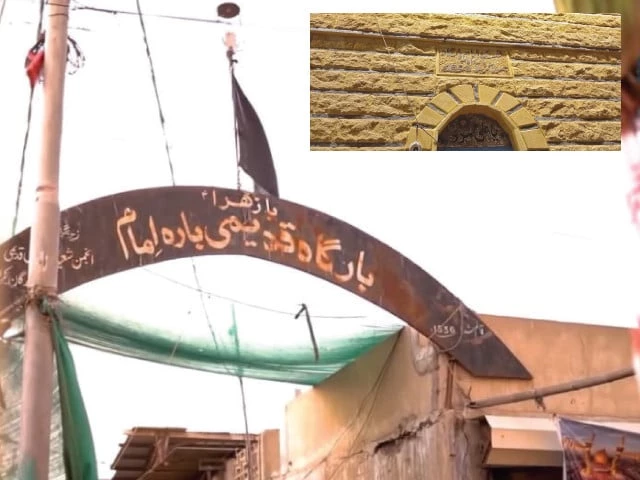
Hidden within the narrow lanes of Karachi's historic neighbourhoods of Kharadar, Mithadar and Nishtar Road are stories that have survived the city's transformation from a small port town into a sprawling metropolis.
Among these stories lies a question few Karachiites may know the answer to: where was Karachi's first live Zuljanah procession taken out?
Every Muharram, thousands of mourners make their way through these old streets. What they witness is not merely a religious gathering, but a living history spanning more than two centuries, intertwined with memories of Karbala, colonial-era Karachi and the migration of communities across the Indian subcontinent.
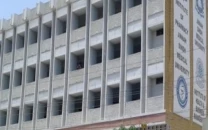
Near Nishtar Road stand the historic Qadeemi Imambargahs of Barah Imam and Safeena-e-Najaf, surrounded by several other centuries-old religious centres.
Some of the buildings still bear inscriptions dating back to 1803, 1836 and 1901, offering a glimpse into Karachi's early history.
According to local historians and caretakers, nearly a dozen Imambargahs once existed around Safeena-e-Najaf and Qadeemi Imambargah, though around nine remain today. The locality itself derives its name from the Twelve Imams.
These institutions were already active when Karachi was still a small port settlement, and the areas stretching from Kharadar to Soldier Bazaar formed the heart of the city.
Jawad Allah Ditta, son of the late Qamar Allah Ditta, former chairman of Imambargah Safeena-e-Najaf, while speaking to The Express Tribune, explained that the area became known as Barah Imam due to the concentration of Imambargahs surrounding the central site.
"This is the central Imambargah. Here are nine to twelve Imambargahs. That is why the area came to be known as Barah Imam," he said.
According to him, wooden Zuljanahs were traditionally taken out in Karachi. However, in 1971, Safeena-e-Najaf became the first Imambargah in the city to receive official permission for a live Zuljanah procession.
"First, we were granted a permit for a live Zuljanah, then permission for loudspeakers, and later approvals for other processions followed," he recalled.
He said the live symbolic Zuljanah began appearing regularly after 1972 and remains part of the area's Muharram traditions.
The first live Zuljanah in Karachi
For decades, Karachi's mourning processions featured symbolic wooden representations of Zuljanah, the horse associated with Imam Hussain.
Jawad Allah Ditta says the city's first official permit for a live Zuljanah was issued to Safeena-e-Najaf in 1971.
"After receiving the permit, the live symbolic Zuljanah started being taken out regularly from 1972 onwards," he said.
Even today, some neighbourhoods in Kharadar continue the centuries-old tradition of taking out wooden Zuljanahs on the fourth of Muharram, preserving customs believed to be 150 to 200 years old.







This material may not be published, broadcast, rewritten, redistributed or derived from. Unless otherwise stated, all content is copyrighted © 2026 The Express Tribune.






COMMENTS
Comments are moderated and generally will be posted if they are on-topic and not abusive.
For more information, please see our Comments FAQ