Iraq wins Iran nod for tanker passage in Hormuz
Updated 2 hours ago

Khudmukhtar Khatoon facility targets MSMEs underserved by formal banks
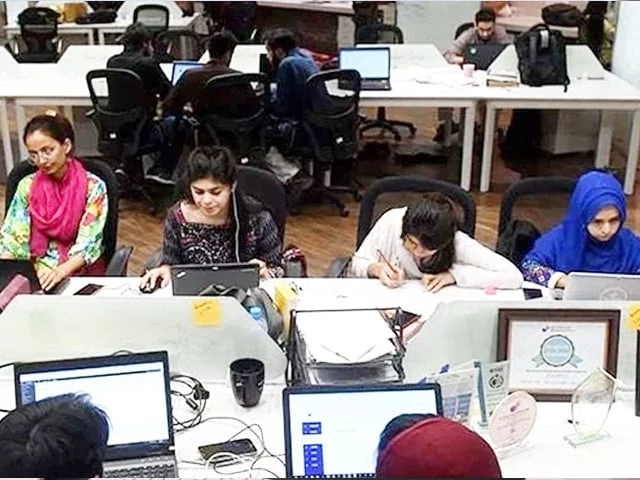
In a country where women-owned businesses remain significantly underserved by formal financial institutions, the Securities and Exchange Commission of Pakistan's (SECP) approval of the country's first digital financing product exclusively for women-led micro, small and medium enterprises (MSMEs) could mark an important test for financial inclusion efforts.
The newly approved "Khudmukhtar Khatoon" financing facility will enable women entrepreneurs to obtain asset financing ranging from Rs100,000 to Rs1.5 million through a fully digital and Shariah-compliant platform operated by Walee Financial Services.
While the financing size may appear modest, experts say access to credit, rather than the amount itself, remains the biggest hurdle facing women entrepreneurs in Pakistan. Many women-led businesses operate informally, lack collateral or face difficulties navigating traditional banking procedures, leaving them dependent on personal savings or family resources to fund expansion.
The new product seeks to address some of these barriers by digitising the entire financing process, from application to disbursement, and linking borrowers to an integrated marketplace for the purchase of machinery, equipment and other productive assets.
According to the SECP, women will be able to complete the financing process through a mobile application and repay the facility in monthly instalments over a period of up to one year.
"The initiative comes at a time when policymakers are increasingly focused on expanding financial access for women, who remain underrepresented in Pakistan's formal economy despite their growing participation in entrepreneurship. Industry observers note that limited access to credit has long constrained the ability of women-owned enterprises to scale up operations, create jobs and contribute more meaningfully to economic growth," IBA Centre for Excellence in Islamic Finance (IBA CEIF) Founding Director Ahmed Ali Siddiqui told The Express Tribune.
Women-led startups and enterprises in Pakistan can significantly influence the country's economic development. However, one of the main challenges faced by these businesses is limited access to finance, he added.
Siddiqui added that while Pakistan has achieved remarkable progress in women's financial inclusion, with over 17 million new women-owned bank accounts opened since 2021, the next challenge is enabling women-led SMEs to scale beyond microfinance.
"Expanding access to Shariah-compliant SME financing, credit guarantees and cash-flow based lending solutions can unlock a significant untapped segment and contribute meaningfully to economic growth, job creation and women's economic empowerment," he remarked.
The launch also reflects the regulator's broader push towards digital finance. Non-banking finance companies (NBFCs) are emerging as an alternative source of funding for underserved market segments. SECP data shows lending NBFCs disbursed around Rs7.5 billion to approximately 1.7 million micro and small businesses during the six months ended December 2025.
However, its success will depend on adoption and accessibility, especially for women outside major cities, and could potentially serve as a model to reduce Pakistan's gender financing gap and expand formal financial inclusion.










This material may not be published, broadcast, rewritten, redistributed or derived from. Unless otherwise stated, all content is copyrighted © 2026 The Express Tribune.





1727268465-0/Untitled-design-(42)1727268465-0-208x130.webp "a tale of two ledgers")



COMMENTS
Comments are moderated and generally will be posted if they are on-topic and not abusive.
For more information, please see our Comments FAQ