'Spider-Man: Brand New Day' surges past $1b in six days
Updated 32 minutes ago

Veteran actor calls for richer female characters, challenges television's reliance on tired stereotypes
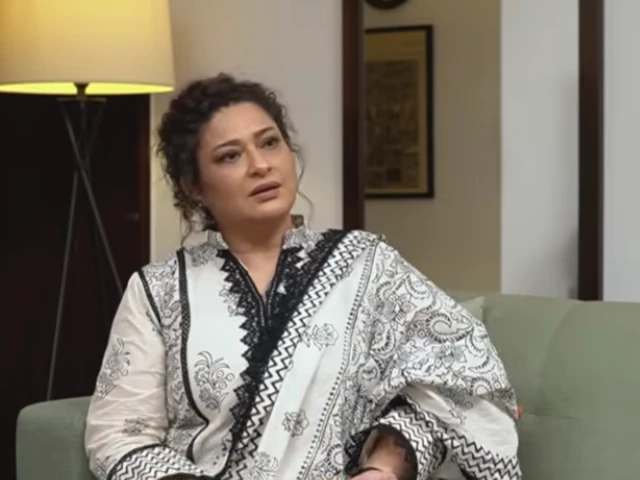
For decades, Pakistani prime-time television has largely confined female characters to an exhausting binary. Women on screen are often portrayed as either the helpless, tearful victim (mazloom) or the scheming, venomous antagonist bent on destroying families.
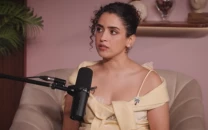
Actor Sania Saeed recently sat down with Aamna Haider Isani to examine the systemic shortcomings of Pakistani television, the dangers of underestimating audiences, and society's discomfort with complex, imperfect women.
Drawing inspiration from the iconic feminist poem We Sinful Women, Isani questioned why mainstream television remains so reluctant to embrace characters who exist in moral grey areas.
Saeed, known for deliberately choosing roles that challenge conventional stereotypes, credited progressive writers such as Bee Gul for dismantling these simplistic archetypes. "She [Bee Gul] is incapable of writing a straight, simple character," Saeed remarked.
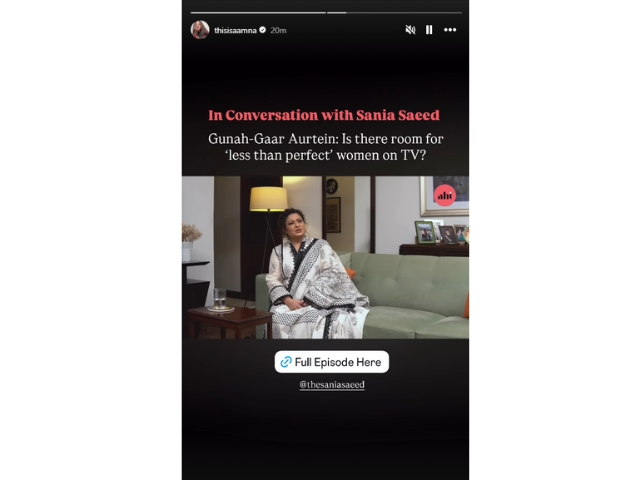
Screengrab: Aamna Haider Isani/Instagram
One of the conversation's most striking moments centred on a common justification offered by television networks: that they simply produce what audiences want to watch. Industry insiders often argue that because daily life in Pakistan is stressful, viewers prefer light, uncomplicated content—sometimes dismissively referred to as khichdi television or background noise.
Saeed strongly rejected this argument, contending that reducing entertainment to passive consumption ultimately weakens audiences' emotional and intellectual engagement. "Our definition of entertainment itself has become about just passing the time. 'Let me do five other tasks while having this on in the background,'" she said.
Explaining the problem with overly simplistic storytelling, she added: "It creates characters that are so simple that whether I watch the first episode, the fifth, or the eighth, I understand everything immediately."
When Isani asked whether offering "simple narratives" could be justified out of sympathy for a heavily stressed public, Saeed responded with a sobering counterpoint. "The problem is, they are trapped in those stressful situations precisely because they lack the awareness, the understanding, and the ability to articulate what they are going through," she said.
Saeed also highlighted the importance of working with directors who are willing to challenge formulaic storytelling. She credited filmmakers such as Kashif Nisar and Mazhar Moin for helping preserve artistic integrity within an increasingly commercial television landscape.
According to Saeed, even when scripts lean into familiar tropes, perceptive directors and committed actors can still create authentic, deeply human moments between the lines.
The discussion also explored broader structural issues within society. Saeed argued that television frequently normalises oppressive social dynamics because many creators themselves have internalised those beliefs. "It's not just a few writers; there are many writers, both men and women, whose entire ideology reinforces the notion that 'this is just the way the system is,'" she observed.
In an era dominated by instant online commentary, audiences are often quick to condemn fictional characters who display toxic, weak, or deeply flawed behaviour. Saeed urged viewers to approach such characters with curiosity rather than judgement, arguing that compelling storytelling should reflect the complexities of human nature rather than offer simplistic moral role models.
"When you tell a story, and this is our fundamental argument with all those people who claim 'the audience only wants to see this', alongside your own integrity and the story's integrity, you must keep respect for your audience in mind," she said.
Ultimately, Saeed's message was that great stories trust the intelligence of their audiences rather than manipulating them through cheap emotional shortcuts. Art, she suggested, functions as a mirror. If viewers refuse to engage with complicated, flawed and even "sinful" women on screen, they may also be refusing to understand the real women around them.











This material may not be published, broadcast, rewritten, redistributed or derived from. Unless otherwise stated, all content is copyrighted © 2026 The Express Tribune.





COMMENTS
Comments are moderated and generally will be posted if they are on-topic and not abusive.
For more information, please see our Comments FAQ