'Spider-Man: Brand New Day' surges past $1b in six days
Updated 39 minutes ago

Veteran actor says meaningful social change must begin at an individual level through honesty, creativity
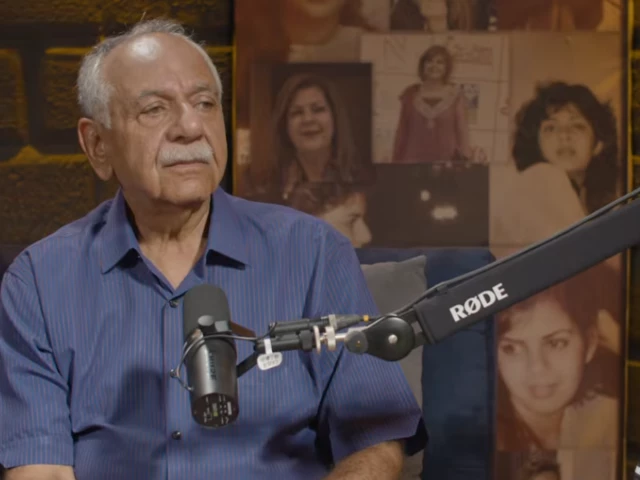
Veteran actor and composer Arshad Mehmood offered a thoughtful reflection on Pakistan's social challenges, arguing that meaningful change begins not with political slogans but with investing in young people, embracing honesty, and reconnecting with the country's cultural roots.
Speaking on a recent podcast, Mehmood expressed concern over what he described as the lack of opportunities available to Pakistan's youth. Reflecting on his own entry into the entertainment industry more than five decades ago, he said young people today are often denied the mentorship, encouragement and space to learn that his generation received.
He also challenged the tendency to dismiss the arts as a secondary pursuit, insisting that creative work remains a vital part of society's intellectual and cultural development. "People often call this work frivolous, but that simply isn't true," he said. "There is an immense, rich history to grow into, and there is so much room to grow within it."
The conversation later turned to the values that have sustained his passion throughout a career spanning more than 50 years. Mehmood recalled listening to a speech by businessman Hussain Dawood, who argued that a lack of truthfulness had become one of Pakistan's greatest obstacles.
Soon afterwards, he said, he opened a book by poet Qatal Shifai and found a verse that felt like a personal message. "I felt like I was being commanded because I am a composer; I must write music for it now," he recalled. "Even if nobody wants to hear the truth, our job is still to speak it. You and I must try to speak it anyway."
Drawing on the philosophy of Allama Iqbal, Mehmood argued that human beings are naturally inclined towards goodness but are often driven towards harmful actions by fear and insecurity.
"Almighty God created humans with an infinite capacity to do good," he said. "Human beings naturally want to do good work. Iqbal's view is that when you become terrified and full of fear, that is when you do wrong actions. If you are not afraid, you are only capable of doing good."
He urged those with public platforms to use podcasts, interviews and conversations to promote honesty, kindness and empathy, describing truth as one of society's most powerful yet neglected values.
The interview also offered a nostalgic look back at the making of the classic PTV drama Ankahi, widely regarded as one of the most beloved productions in Pakistan television's history.
Recalling the atmosphere on set, Mehmood said the cast and crew functioned less like colleagues and more like an extended family. "We gelled together very well," he said. "We had a lot of fun. There was storytelling, there were arguments, and afterwards we would all go together and make up."
Reflecting on the beginnings of his musical career, Mehmood revealed that he started composing in 1972 after being encouraged by the late writer Shoaib Hashmi to create songs for a children's programme hosted by Farooq Qaiser.
His first experience behind the microphone, however, left him embarrassed. "I sang it, and I sang it terribly," he recalled. "I felt deep embarrassment because it wasn't in tune at all."
Determined to improve the project, he suggested that a female friend perform the song instead. That friend was Nayara Noor, who would later become one of Pakistan's most celebrated singers. What began as a single assignment soon developed into a demanding creative routine, with Mehmood writing two to three new songs every week for several years.
The veteran artist also reflected on Pakistan's literary heritage, arguing that society's growing distance from literature has weakened its connection to history and identity.
Reciting Faiz Ahmed Faiz's iconic poem Aaj Bazaar Mein, he described poetry as a source of wisdom and cultural continuity. "Poetry is what joins us," he said. "There is an immense amount of wisdom in it."
He also encouraged people to learn Persian, noting the deep historical and linguistic links between Persian and Urdu. "I believe today that everyone should learn the Persian language. If you learn Persian, understanding Urdu becomes much easier because both languages are interconnected."
When the discussion turned to Pakistan's future, Mehmood argued that lasting reform begins at the individual level rather than through grand political promises.
According to him, anyone seeking change must first become conscious of their daily choices, step beyond their comfort zone and commit to small acts of kindness within their family and community. "No country exists without its citizens," he said. "If we work for the betterment of people, that is how the world moves forward."
For Mehmood, the foundation of such change is faith. He argued that fear, particularly fear surrounding livelihood and survival, often prevents people from acting honestly and compassionately. "It's His divinity that provides for us, no one else," he said, adding that strong faith enables people to overcome fear and act in service of others.
Ultimately, Mehmood's message was less about politics than personal responsibility: a belief that societies improve when individuals choose truth over fear, nurture creativity, and remain connected to the cultural traditions that shape them.











This material may not be published, broadcast, rewritten, redistributed or derived from. Unless otherwise stated, all content is copyrighted © 2026 The Express Tribune.






COMMENTS (1)
Comments are moderated and generally will be posted if they are on-topic and not abusive.
For more information, please see our Comments FAQ