Green CPEC offers Pakistan a win-win
Updated 6 hours ago

Trade deficit widens as economic recovery lifts imports
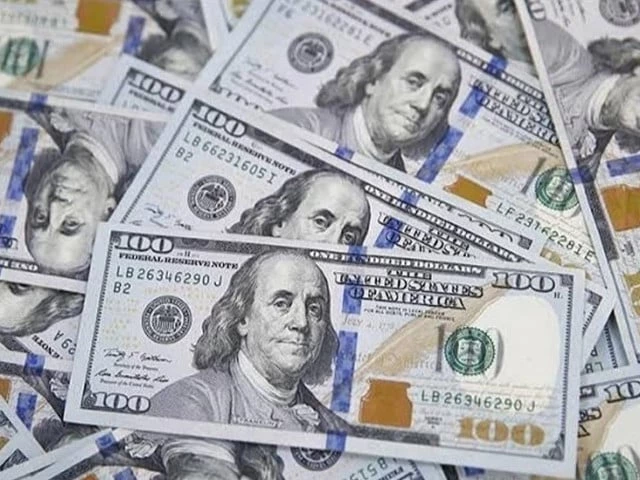
Pakistan's current account surplus narrowed sharply in May 2026 as rising imports offset gains from remittances and services exports, signalling that external account pressures are beginning to re-emerge amid an economic recovery.
According to data released by the State Bank of Pakistan (SBP), the country recorded a current account surplus of $255 million in May, significantly lower than the $459 million surplus posted in April and well below the stronger monthly surpluses recorded during most of the fiscal year. Despite the slowdown, the current account remained in surplus for the July-May period of FY26 at $1.62 billion.
The moderation in the surplus was largely driven by a widening trade deficit as imports continued to outpace exports. Pakistan's goods imports climbed to $58.46 billion during the first 11 months of FY26, up 8% compared to the same period of last year, while goods exports declined 5% to $28.25 billion. As a result, the trade deficit in goods widened to more than $30.2 billion during July-May.
Data suggests that increasing industrial activity and easing import restrictions are translating into higher demand for foreign goods and raw materials, which is good for the economy on the one hand because industrial activity is expanding. Nobel laureate economist Paul Krugman contends that the true benefit of trade is the ability to acquire useful goods and services that other countries provide.
On the other hand, imports place pressure on the country's external financing requirements. Yet, the real question is whether Pakistan is improving its industrial efficiency with the hike in imports to balance payments and income of the country.
The broader trade deficit in goods and services reached $32.21 billion during July-May FY26, compared to $27 billion in the corresponding period of the previous year. However, the impact of the widening trade gap was partly offset by record inflows of workers' remittances, which have remained the key pillar supporting the external account for at least the last five decades.
Workers' remittances rose to $38.11 billion during July-May FY26, an increase of more than $3 billion compared to the same period of last year. Total secondary income inflows, which largely comprise remittances, reached $40.11 billion and continued to provide a substantial cushion against Pakistan's structural trade deficit.
Economists note that remittances have once again emerged as the principal factor preventing the current account from slipping back into deficit. The sustained growth in inflows from overseas Pakistanis has helped offset rising imports and external debt servicing obligations.
Another positive development came from the services sector. Services exports increased to $9.1 billion during July-May FY26, up from $7.75 billion a year earlier, supported by growth in information technology and business services exports. Telecommunications, computer and information services generated exports worth $4.18 billion during the period, a milestone in Pakistan's IT export sector, even though far behind neighbouring country India, but still reinforcing the sector's growing role in Pakistan's export basket.
Meanwhile, the primary income deficit, which reflects profit repatriation and interest payments abroad, remained substantial at $7.65 billion during July-May FY26, continuing to weigh on the overall external account.
Despite the narrowing current account surplus, Pakistan's foreign exchange reserves continued to strengthen. The State Bank's reserves, excluding mandatory reserves held by commercial banks, increased to $17.27 billion by the end of May compared to $11.62 billion a year earlier. The improvement has been supported by multilateral financing, bilateral inflows, remittances, and portfolio investments.
The balance of payments data also showed that Pakistan attracted net foreign direct investment of $1.62 billion during July-May FY26, while portfolio investment recorded net inflows of $1.14 billion. Although these figures indicate improving investor sentiment, analysts argue that significantly higher investment inflows will be needed to sustain stronger economic growth and reduce reliance on debt financing.
Meanwhile, the Pakistani rupee posted a marginal gain of 0.01% against the US dollar in the inter-bank market on Wednesday, closing at Rs278.27, up Rs0.03 from Tuesday's rate of Rs278.30. The dollar eased ahead of the Federal Reserve's first policy meeting under Chair Kevin Warsh, while the yen also remained weak.
Furthermore, gold prices in Pakistan rose, following an increase in the international market. In the local market, the price of gold per tola reached Rs455,236 after gaining Rs100 during the day. Likewise, 10-gram gold was priced at Rs389,685, up Rs85, according to rates released by the All-Pakistan Gems and Jewellers Sarafa Association.
The association did not announce gold and silver rates on Tuesday after calling for protest against alleged raids on jewellery shops. On Monday, the price of gold per tola had climbed to Rs455,136 following a sharp increase of Rs10,800. Internationally, gold rose by $1 to $4,328 per ounce. Meanwhile, silver prices dropped by Rs6 to Rs7,503 per tola.













This material may not be published, broadcast, rewritten, redistributed or derived from. Unless otherwise stated, all content is copyrighted © 2026 The Express Tribune.







COMMENTS
Comments are moderated and generally will be posted if they are on-topic and not abusive.
For more information, please see our Comments FAQ