Jaffer denied relief in Noor murder case
Updated 7 hours ago

Chairman committee says no testimony of moon sighting has been received from anywhere in the country
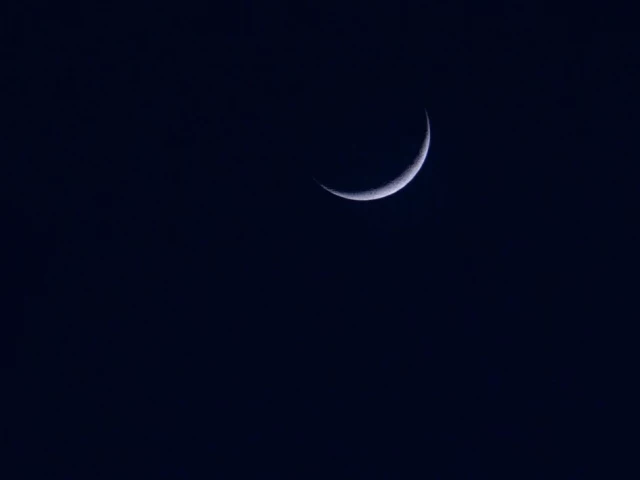
The Central Ruet-e-Hilal Committee announced on Monday that the Muharram moon had not been sighted in the country. Therefore, 1st Muharram 1448 Hijri would fall on June 17, while Ashura would be observed on June 26.
The announcement was made by Central Ruet-e-Hilal Committee Chairman Maulana Abdul Khabeer Azad after a meeting at Badshahi Mosque in Lahore.
“Today, a meeting was held at Badshahi Mosque to make the Shariah decision on sighting the moon for Muharram. No testimony of moon sighting was received from anywhere in the country; therefore, 1st Muharram 1448 will be on Wednesday, June 17, and Ashura will be observed on Friday, June 26,” Azad said while addressing a press conference.
Azad said meetings of other zonal committees were also held in their respective cities, while officials from the Pakistan Meteorological Department and other relevant departments were also present.
He said Mufti Fazal Jameel, Allama Yaseen Zafar, Mufti Muhammad Yousuf Kashmiri, Mufti Sameer Ahmad Sajid and other committee members attended the meeting.
According to the Pakistan Meteorological Department, the moon was born at 7:54 am today, but its age at 7:52 pm would be 11 hours and 45 minutes, which was insufficient for sighting.
“In June, the moon should be 21 hours and 20 minutes old for sighting,” the Met Office said.
Earlier in the month, the Ruet-e-Hilal Research Council had stated that Muharram 1448 AH was likely to begin in Pakistan on Wednesday, June 17, as the new moon was not expected to be visible anywhere in the country on the evening of June 15, according to astronomical calculations.
Read More: Muharram likely to begin on June 17
Khalid Ejaz Mufti, Secretary General of the council, said the new moon was born at 7:54 am Pakistan Standard Time (PST) on June 15. However, by sunset on the same day, the moon’s age was less than 12 hours across Pakistan, significantly below the minimum age generally required for crescent sighting.
He explained that the interval between sunset and moonset was another important factor in moon visibility. On June 15, the difference was expected to be 37 minutes in Karachi and 42 minutes in Peshawar. Despite this, the moon’s young age made crescent sighting unlikely.
According to Mufti, the crescent was not visible on the evening of June 15 even under clear weather conditions, whether with the naked eye, binoculars, or telescopes.














This material may not be published, broadcast, rewritten, redistributed or derived from. Unless otherwise stated, all content is copyrighted © 2026 The Express Tribune.









COMMENTS
Comments are moderated and generally will be posted if they are on-topic and not abusive.
For more information, please see our Comments FAQ