Trump confirms USS Abraham Lincoln to be replaced in Middle East
Updated 1 hour ago

Word of UAE move to seek de-escalation coincides with the final stages of broader negotiations
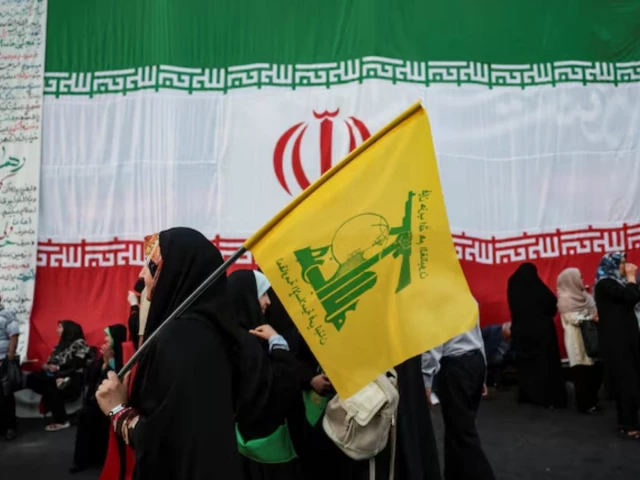
The United Arab Emirates has agreed to unlock billions of dollars for Iran, four sources said, in a tactical shift after weeks of Iranian attacks on the wealthy Gulf Arab state during the US-Israeli war with the Islamic Republic.
Word of the move by the UAE to seek de-escalation and which has not been previously reported, coincides with the final stages of broader negotiations between Tehran and Washington on ending the war, talks that diplomats say could involve the release of tens of billions of dollars in Iranian oil revenues frozen in foreign banks under US sanctions.
In the past month, the UAE, which was heavily targeted by Iran at the height of the war, has been spared fresh strikes, while Iran has trained its missiles and drones on Kuwait and Bahrain. The last known direct attack by Iran on the UAE was more than a month ago - a May 4 strike on the Gulf state's Fujairah port on the Gulf of Oman.
Two regional sources told Reuters the UAE had agreed to release a total of $10 billion, more than $3 billion of which had already been delivered.
Two other sources with knowledge of the arrangement put the total funds involved at $20 billion, adding that the move had been agreed in return for a halt to Iranian attacks on the UAE.
Read: Iran peace deal looms while new military action flares near Strait of Hormuz
One of the sources with knowledge of the arrangement also said a first tranche of $3 billion had already been made available.
Reuters could not establish whether the funds earmarked for the transfers belong to the UAE or originate in long-blocked Iranian accounts in the UAE banking system, or elsewhere.
The UAE foreign ministry issued a statement early on Saturday categorically denying reports of the transfer “including allegations concerning $3 billion”.
The UAE statement “affirmed that these allegations are entirely false and unfounded, stressing that no frozen Iranian funds have been released, transferred or facilitated through the UAE.”
The UAE statement did not provide any further specifics.
Earlier, when asked by Reuters to comment on the transfer, a UAE official said the country was trying to ease tension and foster peace.
"The UAE's foreign policy is guided by promoting de-escalation and reducing tensions across the region, while advancing lasting peace and stability," the official said. "The UAE supports efforts, including those undertaken by the United States, to protect the peoples of the region from the repercussions of conflict."
Iran last attacked UAE's US military bases on May 4
The White House did not immediately respond to a request for comment on the move.
In Washington, Vice President JD Vance said on Friday that funds would not be released to Iran for signing a deal with the US or attending a meeting, adding that the potential deal is structured to ensure that economic benefits would flow to Tehran if it meets its obligations.
There was no immediate response from Iranian authorities to a Reuters request for comment on the move.
None of the sources cited in this article would agree to be identified due to the sensitivity of the matter.
The arrangement signals a striking pivot from the open animosity of UAE-Iran relations through much of the war, when Iranian attacks emptied Dubai's hotels, drove some expatriates to flee and shook the reputation for safety that is central to the country's position as a premier business hub.
One of the sources with knowledge of the arrangement said the move offered a way to help solve the conflict between the US and Iran without either side crossing its red line: Iran can claim it extracted compensation for war damages, Washington can insist it paid nothing, and Abu Dhabi obtains its own security and Dubai's hub status, while framing the move as an investment in rebuilding regional trust.
Read more: Dar, Egypt’s Abdelatty discuss regional situation, peace efforts: MoFA
The other source with knowledge of the arrangement said that in return for the disbursement, Iran would halt missile and drone attacks on the UAE, and there would be a rebuilding of bilateral ties, including intelligence sharing and economic cooperation.
The source added that Iran had approached at least two other Gulf Arab countries to make a similar arrangement.
The first source with knowledge of the arrangement said talks had started several weeks ago but quickened pace when officials of Iran's powerful Revolutionary Guards visited Abu Dhabi last week to meet Sheikh Tahnoun bin Zayed al Nahyan, the UAE's national security adviser and deputy ruler of Abu Dhabi, and stayed at his guest house.
That trip was followed by a visit by UAE officials to Tehran to negotiate the details of the mechanism.
Sizeable Iranian assets in Dubai
The UAE-Iranian arrangement is set to unfold against a complex financial backdrop potentially involving Dubai, the UAE's main commercial hub and one of Tehran's most critical economic lifelines.
Dubai's banks have long held substantial Iranian-linked deposits, much of them now immobilised under US sanctions that police the global dollar-clearing system and expose any foreign bank dealing with blacklisted Iranian entities to being cut off from the American financial network.
On April 11, a senior Iranian source said that the US had agreed to release Iranian frozen assets held in Qatar and other foreign banks, although a US official swiftly denied the assertion.
The source, who declined to be named due to the sensitivity of the matter, told Reuters that unfreezing the assets was "directly linked to ensuring safe passage through the Strait of Hormuz", a key issue in talks aimed at ending the conflict.













This material may not be published, broadcast, rewritten, redistributed or derived from. Unless otherwise stated, all content is copyrighted © 2026 The Express Tribune.






COMMENTS
Comments are moderated and generally will be posted if they are on-topic and not abusive.
For more information, please see our Comments FAQ