Govt raises petrol price by 39 paisas, HSD by Rs2.40 per litre for Aug 25
Updated 3 hours ago

NJPMC meets today as lawyers call for urgent reforms to 'safeguard judicial independence'
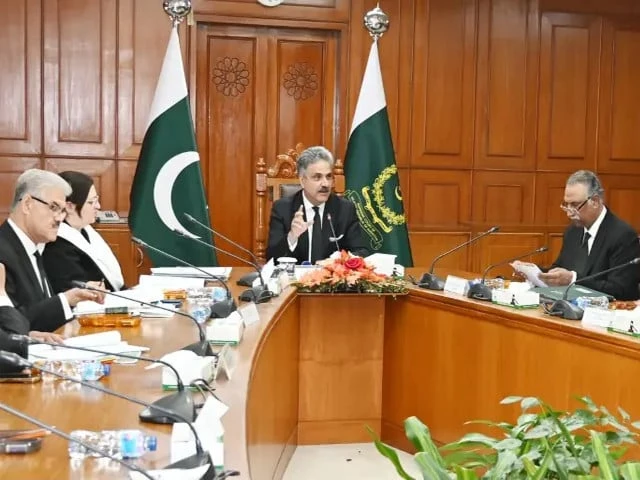
As all the chief justices will meet on Thursday (today), legal experts believe the biggest challenge for the superior judiciary is to curb the increasing executive influence on it.
Chief Justice of Pakistan (CJP) Yahya Afridi has been consistently holding meetings of the National Judicial Policy Making Committee (NJPMC), a body comprising all chief justices of the superior courts. The committee reviews court performance as well as the implementation of various reforms.
However, since the passage of the 26th Constitutional Amendment, the executive has been playing a crucial role in key decision-making within the judiciary.
A majority of appointments and transfers of judges in different high courts are reportedly being made on the government's desire. Despite strong opposition, the CJP could not halt the transfer of an Islamabad High Court (IHC) judges to different high courts.
Likewise, no effort has been made to reduce executive influence in the internal decision-making of the judiciary.
It is also being observed that judicial orders of the superior courts are not being fully complied with by the present regime.
In May last year, the Supreme Court held that civilians tried in military courts should be given the right of appeal in high courts. Despite the passage of more than a year, neither the executive has challenged the order nor taken steps for its implementation.
Interestingly, there is complete silence within the judiciary on the non-implementation of this order.
Last month, the Supreme Court directed the IHC to decide applications filed by lawyers Imaan Mazari and Hadi Ali Chattha seeking suspension of their sentences within two weeks. Despite the passage of one month, the IHC has not complied with the order. The case has also been adjourned for an indefinite period.
During its last meeting in April, the NJPMC announced that it would organise a national conference on the "Prison Reforms Action Plan" in June to promote stakeholder engagement and policy dialogue as part of an inclusive reform process.
It is learnt that the conference will now be held next month.
The superior judiciary is planning to organise the national conference on jail reforms at a time when former prime minister Imran Khan, through his counsel, has alleged that he and his wife are being kept in "torturous solitary confinement" for almost 24 hours, with no access to books, TV, family, or lawyers.
Barrister Taimur Malik, counsel for several incarcerated political prisoners including Shah Mahmood Qureshi, Ejaz Chaudhry, and Dr Yasmin Rashid, said that while it is positive that a Prison Reforms Action Plan is being considered, any such proposal would be inadequate if it does not address timely fixation of bail, suspension, and appeal applications of inmates.
He further said that prisons across Pakistan are overcrowded and that most issues the reform plan seeks to address stem from this condition.
Malik said there is a need to reduce the prison population, adding that many under-trial prisoners or those eligible for bail in bailable offences could be released pending trial.
Similarly, inmates eligible for suspension of sentence on grounds such as age or health could also be released to ease pressure on the prison system.
He cited the example of Ejaz Chaudhry, who has been diagnosed with stage-three kidney disease and whose health condition is not compatible with prison conditions, yet whose suspension applications and appeals have not been fixed for hearing.
He also highlighted that Shah Mahmood Qureshi has been acquitted in all cases in the past three years but remains imprisoned due to a couple of pending bail matters.
Last year, the Supreme Court, led by CJP Afridi, directed trial courts to conclude proceedings in May 9 cases within four months. Hundreds of PTI activists have since been convicted following that order. However, their applications for suspension of sentences are still pending in high courts, and they remain behind bars. Even female political activists are still in custody awaiting relief.
Former additional advocate general Punjab Chaudhry Faisal Hussain said that at present, the problem is not only judicial reforms but also the perception that the judiciary is at its lowest ebb and has failed to check executive excesses.
He also said that despite two constitutional amendments, pendency in courts has not been reduced. Except for the Sindh High Court (SHC), no constitutional bench has been established in other high courts, he added.
Another lawyer believes that civil liberties are not on the agenda of the present judiciary.
Commenting on the upcoming NJPMC meeting, Hafiz Ahsaan Ahmad Khokhar Advocate stated that the committee, being the apex policy-making body of Pakistan's justice system, bears a profound responsibility for strengthening and improving the delivery of justice across the country. He noted that while certain recent initiatives undertaken by the judiciary deserve appreciation, the challenges confronting Pakistan's justice sector require deeper, more coherent, and comprehensive reforms across all tiers of the judiciary.
He observed that despite a series of reform efforts over decades, public satisfaction with the justice system remains below the desired standard. Persistent delays in adjudication, rising case pendency, repeated adjournments, inconsistent case management practices, escalating litigation costs, outdated procedural frameworks, and difficulties faced by ordinary litigants continue to erode public confidence in judicial institutions.
According to Khokhar, the NJPMC must move beyond routine monitoring and incremental adjustments and instead adopt bold, result-oriented solutions, including conclusive hearings at every tier aimed at addressing the root causes of systemic inefficiency. As a first step, he proposed a comprehensive and independent forensic audit of all tiers of the justice system, including the Supreme Court, Federal Constitutional Court (FCC), high courts, special courts, tribunals, and the district judiciary.











This material may not be published, broadcast, rewritten, redistributed or derived from. Unless otherwise stated, all content is copyrighted © 2026 The Express Tribune.





COMMENTS
Comments are moderated and generally will be posted if they are on-topic and not abusive.
For more information, please see our Comments FAQ