Green CPEC offers Pakistan a win-win
Updated 7 hours ago

Textiles stuck at $15-18b despite subsidies; remittances hit $4.25b in May alone
Every year, as Pakistan's federal budget approaches, a familiar circus begins. Industrialists, manufacturers, retailers, farmers and multinationals all rush towards Islamabad with the same message: help us. Tax cuts, duty reductions, cheaper energy, level playing fields – the demands pile up, each lobby louder than the last, each arguing that without relief, the economy will suffer. The government, squeezed from every direction, sits in the middle of this noise with limited fiscal space and an impossible task of pleasing everyone.
Lost in all this noise, as always, is the common person. Before the budget has even been announced, prices of everyday commodities have already begun creeping up. Artificial shortages appear in markets. Households that were already stretched thin find themselves stretched further. For ordinary Pakistanis, budget season is not a time of hope; it is a time of bracing for the worst.
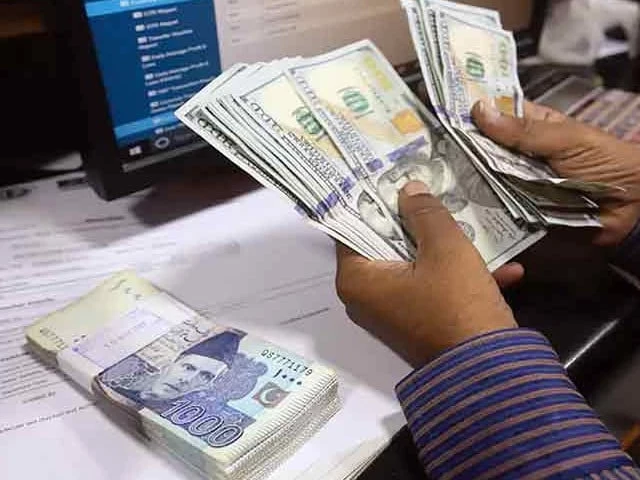
And yet, while every organised sector lines up for government handouts, there is one group quietly doing more for Pakistan's economy than all of them combined. They do not hold press conferences. They do not send delegations to the prime minister's office. They do not demand cheap electricity or reduced import duties. They are Pakistan's overseas community, and in the first 11 months of the current fiscal year alone, they sent home $38 billion in remittances. In May 2026 alone, that figure touched $4.25 billion, roughly equal to what the entire Pakistani nation spends in a single month on its import bill.
Let that number sink in. No export sector comes close. The textile industry, long considered the backbone of Pakistan's export economy, has been stuck between $15 billion and $18 billion in annual exports for years, despite receiving consistent government support, subsidised energy, and repeated calls for a level playing field. The information technology sector, often celebrated as the economy's future, is growing but nowhere near the scale it could be. Meanwhile, overseas Pakistanis, without a single formal lobby or government concession, have nearly doubled what the country earns from its most favoured industries.
The textile sector's stagnation is particularly telling. For all the complaints about energy prices and unfair competition, a handful of forward-thinking textile groups have managed to grow their exports and diversify their product portfolios under the exact same conditions that others claim make growth impossible. If some can do it, the problem is not entirely external. The question worth asking is whether the sector's energy is better spent demanding government favours or investing in modernisation and product diversification.
The same logic applies more broadly. Pakistan's economy in 2026 operates in a world already deep into the fourth industrial revolution. Artificial intelligence and automation are reshaping industries globally. Western technology companies are committing hundreds of billions of dollars to building the future. In Pakistan, too many businesses, and too many people, are still hoping that yesterday's model will carry them through tomorrow. The nine-to-five job, the annual increment (which are not guaranteed, especially in the private sector), the government subsidy – these are not survival strategies for the era we live in.
This is not to say that industries face no genuine challenges. They do. But there is a pattern worth recognising. When raw material prices rise, companies pass the cost to consumers. When energy prices go up, the consumer absorbs it. When taxes increase, it is the end buyer who actually pays. The companies themselves rarely suffer the consequences they so dramatically describe during budget lobbying season. Many have long since recovered their initial investments and continue to expand even as they cry poverty. Multinationals especially have developed a habit of seeking relief every few months, and governments have developed an equally bad habit of listening.
The real question Pakistan's economic managers should be asking this budget season is simple: who is actually holding this economy together? Remove every subsidy from the textile sector tomorrow and the economy would struggle. Remove all remittances, and the economy would not just struggle; it would collapse. Real estate, automobiles, consumer electronics, retail – entire booming sectors are quietly being funded by money sent home by a Pakistani working in Dubai, Manchester, Riyadh or Toronto.
Overseas Pakistanis ask for almost nothing in return. No tax breaks, no duty concessions, no subsidised gas connections. What little they have consistently asked for – dignity, respect, ease of sending money home, and fair treatment when they invest in their country – has often been given only partially and grudgingly. That needs to change.
This budget should be different. It should prioritise people over corporations, and among people, it should honour those who have given the most without asking for the most. The overseas Pakistani community is not a line item in a budget speech. They are the budget.






This material may not be published, broadcast, rewritten, redistributed or derived from. Unless otherwise stated, all content is copyrighted © 2026 The Express Tribune.







COMMENTS (6)
Comments are moderated and generally will be posted if they are on-topic and not abusive.
For more information, please see our Comments FAQ