Gold prices decline by Rs3,500 per tola in local market
Updated 1 hour ago

In consultation process, province outlines priorities, defends fiscal management
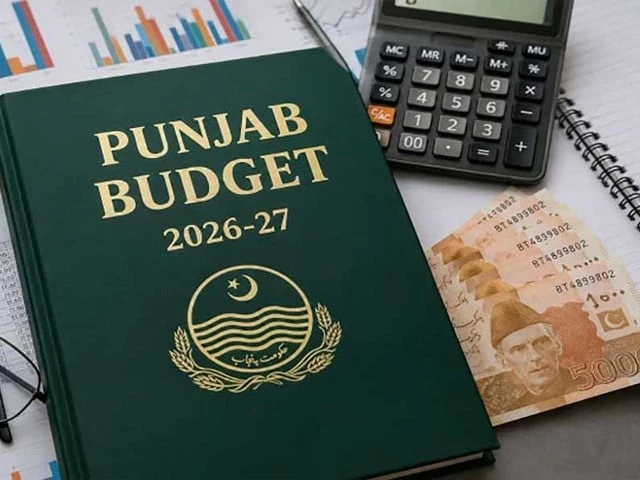
The Punjab government is signalling a development strategy built around fiscal discipline, infrastructure expansion, social protection, climate resilience and economic empowerment as the provincial government prepares to unveil its budget for fiscal year 2026-27.
Addressing representatives from industries, trade bodies, academia, media and civil society during a pre-budget consultation session on Monday, Punjab Finance Minister Mian Mujtaba Shujaur Rehman outlined the government's priorities and defended its fiscal management amid a challenging economic environment.
Punjab's finances have come under pressure in recent years due to multiple challenges, including inflation, economic uncertainty, climate-related disasters and the limited fiscal space. The devastating floods and extreme weather events that had affected large parts of the province forced the government to divert significant resources toward relief, rehabilitation and reconstruction efforts, he said.
Despite these pressures, the provincial administration claims to have maintained development momentum while simultaneously pursuing austerity measures. The government reduced discretionary expenditures, curtailed administrative costs and introduced restrictions on non-essential spending in an effort to channel resources toward public welfare and development projects, the minister added. A major focus of the development agenda remains housing and regional uplift. Under the "Apni Chhat, Apna Ghar" programme, the government allocated more than Rs206 billion, with Rs140 billion earmarked for low-income families to build their own homes. Officials said over 133,000 loans have been released, resulting in tens of thousands of completed and under-construction housing units.
Rehman said that infrastructure development is another cornerstone of the provincial strategy. The Lahore Development Programme, launched with an estimated cost of nearly Rs148 billion, seeks to upgrade civic amenities and urban infrastructure. Simultaneously, the "Suthra Punjab" initiative has expanded sanitation and municipal services across urban and rural areas.
Education continues to receive a significant share of public spending. The government highlighted investments in school infrastructure, additional classrooms, modern laboratories and learning facilities. Programmes such as the Chief Minister's Laptop Scheme and the Honhaar Scholarship are being promoted as tools to improve educational access and equip students with skills needed in a technology-driven economy, he said.
Agriculture, the backbone of Punjab's economy, also occupies a prominent place in the government's plans. Through the Kisan Card, farmers have received easier access to financing and agricultural inputs. Subsidies for modern machinery, tube-well solarisation and mechanisation programmes are intended to improve productivity while reducing production costs. It is believed these measures will help farmers cope with rising input prices and changing climatic conditions.
Youth employment and entrepreneurship feature heavily in the province's economic strategy. Under various business financing programmes, billions of rupees in concessional loans have been extended to young entrepreneurs and small businesses. Officials argue that easier access to capital can stimulate economic activity, create jobs and strengthen the province's small and medium enterprise sector. Perhaps the most notable shift in policy direction is the growing emphasis on climate adaptation and environmental protection. Punjab has announced initiatives related to climate observatories, air-quality monitoring stations, enhanced environmental surveillance systems and water-quality monitoring mechanisms. These measures reflect increasing recognition that climate change is no longer a future threat but a present economic and public health challenge.
The government's green transport programme also aims to transform urban mobility through electric buses. More than 1,400 e-buses are planned to be introduced, which seeks to reduce emissions, improve public transport and lower commuting costs for citizens.
The provincial government faces a delicate task of balancing fiscal constraints with growing public expectations as the budget is approaching. The success of the FY27 budget will ultimately depend not only on the size of allocations but also on the government's ability to translate ambitious promises into measurable outcomes, the minister added.









This material may not be published, broadcast, rewritten, redistributed or derived from. Unless otherwise stated, all content is copyrighted © 2026 The Express Tribune.






COMMENTS (1)
Comments are moderated and generally will be posted if they are on-topic and not abusive.
For more information, please see our Comments FAQ