
Social media limits and privacy
Updated 4 hours ago

.

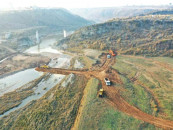
As Pakistan grapples with shrinking water availability and some of the highest electricity costs in its history, one would expect water infrastructure to sit at the top of the government's development agenda. Instead, the federal government's proposed allocation of just Rs179 billion for the water sector under the Public Sector Development Programme 2026-27 once again falls well below what is required to fast-track dams and hydropower projects that are essential for the country's long-term survival.
The proposed allocation has sparked concern among water and energy experts, who argue that at least Rs500 billion is needed to accelerate ongoing projects and begin work on new storage facilities. Their concerns are not misplaced. Pakistan is among the most water-stressed countries in the world, with per capita water availability having declined sharply over the decades. Climate change is compounding the challenge by increasing the frequency of both devastating floods and prolonged dry spells. Yet the country's ability to store water remains dangerously limited. While political leaders routinely acknowledge the importance of water security, investment has failed to keep pace with the scale of the crisis. No country dependent on agriculture can afford water vulnerability. At a time when consumers and industries alike are burdened by high power tariffs, hydropower offers one of the few avenues for affordable and sustainable energy generation.
The urgency is further heightened by cross-border concerns over upstream developments on rivers covered under the Indus Waters Treaty. Regardless of the diplomatic and legal dimensions involved, Pakistan's most effective response lies in strengthening its own water storage and river management capacity. The proposed Chiniot Dam on the Chenab, along with other planned reservoirs, deserves urgent attention rather than indefinite delays caused by inadequate funding.






This material may not be published, broadcast, rewritten, redistributed or derived from. Unless otherwise stated, all content is copyrighted © 2026 The Express Tribune.





COMMENTS
Comments are moderated and generally will be posted if they are on-topic and not abusive.
For more information, please see our Comments FAQ