Gold prices decline by Rs3,500 per tola in local market
Updated 1 hour ago

Cabinet body yet to determine whether mills should get another export window
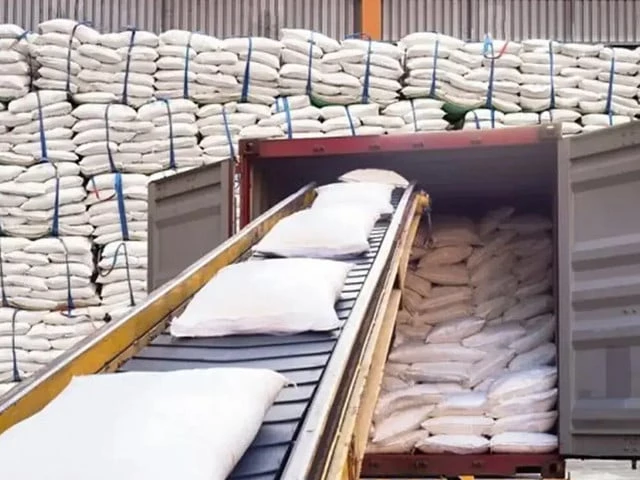
Every year or two, the Pakistan Sugar Mills Association (PSMA) writes a letter to the government. The words change slightly, the numbers grow larger, but the request remains the same, ie, let us export surplus sugar. A fresh letter landed on Deputy Prime Minister Ishaq Dar's desk on May 31 and the cycle has begun again.
PSMA Chairman Chaudhry Zaka Ashraf argues the case is urgent. Total domestic sugar stocks stand at 7.9 million metric tons against annual consumption of 6.6 million tons, leaving a surplus of 1.3 million tons. The industry, he says, is bleeding. Mills cannot service bank loans. Farmers are waiting for payments. Allowing export would earn Pakistan nearly $500 million in foreign exchange at a time when every dollar counts.
Any common Pakistani after observing the buffer stocks can agree with what PSMA is saying as it sounds like a reasonable argument. The problem is that Pakistanis heard the same argument last year and paid dearly for it.
When the government allowed sugar exports in 2024, retail prices across Pakistan climbed from around Rs140 per kilogramme to Rs190, with some markets briefly touching Rs210. The government, caught off guard, reversed course and announced plans to import 750,000 metric tons to stabilise supply, buying back at higher international prices the same commodity it had just waved goodbye to. The foreign exchange gains from exports were largely offset by the cost of emergency imports.
The wholesale market of sugar says that when export opens, mills divert stock to the export quota because international prices are more attractive. "Local supply quietly tightens and stockists in the chain hold back what they have. Within a fortnight, the retailer has no choice but to charge more. And when the government panics and starts importing, some of the same people earn on the import side too. It is the same pocket, front and back," said Ashraf Ali, working in a sugar wholesale market for over a decade.
Ali's views are backed by a Federal Investigation Agency (FIA) inquiry, conducted on the orders of the prime minister after a sudden hike in sugar prices. A high-profile inquiry following the 2025 price surge found that major sugar mill owners had colluded to engineer artificial shortages and inflate prices, with investigators also uncovering fraudulent accounting and speculative hoarding. Several political heavyweights were identified as beneficiaries. Despite the findings, the cartel largely remained intact and accountability was limited.
The industry's political insulation is a significant part of the sugar price hike story. Pakistan's sugar mills are concentrated in the hands of a small number of families with deep ties to every major political party, like the Tareen group, the Zardari-linked Omni Group, mills associated with the Sharif family and others who together control a dominant share of the country's 91 operational mills. Since 2003, Punjab has not issued new sugar mill licences, effectively freezing new competition while existing players have quietly expanded.
Even the government's attempt to manage last year's exports through a formal agreement with PSMA backfired. The deal set the maximum ex-mill price at Rs165 per kg, significantly higher than the pre-export level of around Rs140 and allowed monthly increases on top of that. Critics noted this effectively handed millers a guaranteed price floor, potentially in violation of Competition Commission rules that prohibit collective pricing.
The Competition Commission of Pakistan (CCP) had, at one point, scheduled hearings for over 80 sugar mills on cartelisation allegations; however the progress has been slow or almost stalled. The CCP in 2021 also penalised PSMA by imposing a Rs44 billion penalty on the back of an inquiry, which revealed that sugar mills were prima facie engaged in price fixing and controlling supply through coordinated actions facilitated by the association. However, that penalty is largely offset by the Supreme Court and the matter is still in a limbo.
Now the mills are back, this time claiming an even larger surplus. They warn that another record sugarcane crop is expected next season, which could add nearly 2 million tons of additional surplus worth $1.5 to $2 billion. Without timely export permission, they argue, farmers will suffer as mills lose the capacity to pay fair cane prices.
The government is not taking the numbers at face value this time around. Authorities suspect that roughly 300,000 tons of previously imported sugar may have been folded into the stock figures the industry submitted, which would shrink the actual exportable surplus considerably, said an official of the Ministry of Commerce.
Ishaq Dar's cabinet committee has yet to meet. Its decision will likely determine whether consumers spend the coming months hunting for affordable sugar or not. If history is any guide, the mills will get their export window, the foreign exchange will briefly look good on paper and ordinary households will absorb the cost, just as they have before.










This material may not be published, broadcast, rewritten, redistributed or derived from. Unless otherwise stated, all content is copyrighted © 2026 The Express Tribune.











COMMENTS (1)
Comments are moderated and generally will be posted if they are on-topic and not abusive.
For more information, please see our Comments FAQ