The women who helped shape Pakistan's independence movement
Updated 4 hours ago

Veteran actor reflects on childhood trauma, emotional challenges behind some of her most memorable roles
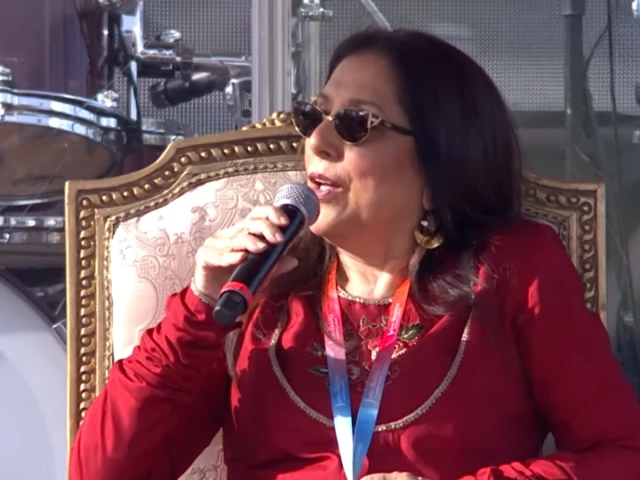
Veteran actor Samina Peerzada offered a candid look into the emotional and psychological demands of acting during a recent event in Dubai, reflecting on creative integrity, script discipline, and the evolving landscape of television.
Addressing the audience in her signature reflective style, the Shehr-e-Zaat actor discussed the psychological depth required in performance, the manipulation of scripts in the industry, and what she described as the need for “creative rebellion” in contemporary storytelling.
She recalled joining Shehr-e-Zaat, sharing a personal moment from the set that convinced her to take on the role of the grandmother. Meeting co-star Mahira Khan helped solidify her decision. “When I read the script and knew Mahira was in it, it had to be a yes,” she said.
Peerzada strongly emphasised the importance of actors reading full scripts, calling it not a privilege but a professional necessity. “Getting a complete script is an actor’s right. They should read it not just once, but two or three times. They need to see how the character relates to others in the story and what they can personally bring to the narrative,” she explained.
Discussing the connection between lived experience and art, the actor reflected on her directorial debut Inteha (1999), which addressed marital rape and domestic violence. She recalled the emotional response from audiences, many of whom identified deeply with its themes.
“Whatever you experience in childhood gets buried in your subconscious. Art emerges from exactly that,” she said, adding that the film was shaped by painful personal memories, including witnessing domestic violence in her early life.
Peerzada also shared how audiences reacted strongly to the film, with many viewers emotionally connecting with its portrayal of hidden household trauma.
Addressing the evolution of television content, she observed that the industry is currently dominated by long-running soap operas, which often prioritise duration over depth. However, she remained hopeful about the future of storytelling.
“People are writing. There will be better opportunities for actors to do quality work,” she said, noting that digital platforms and OTT services are opening space for more meaningful content.
Reflecting on her role in Shehr-e-Zaat, Peerzada described the creative effort involved in shaping her character into something layered and universal, rather than a stereotypical elderly figure.
She credited director Sarmad Khoosat for encouraging that approach. “To do universal work, you have to fight a little bit. You have to be a bit of a rebel,” she said. She added that she hopes writers and directors continue to challenge conventional storytelling norms.
Discussing her experience in the drama Balaa, Peerzada revealed the emotional toll of filming while dealing with a personal family crisis, as her mother’s declining health closely mirrored her on-screen character’s journey. “When I was doing Balaa, my mother was going through exactly that… I would see her in that state in the morning and then go straight to set,” she said.
The actor emphasised the importance of maintaining emotional boundaries on set to preserve performance integrity. “When we are acting on set, it is our right that no one interferes. It should remain between the actors, the camera, and the director,” she concluded.









This material may not be published, broadcast, rewritten, redistributed or derived from. Unless otherwise stated, all content is copyrighted © 2026 The Express Tribune.



COMMENTS
Comments are moderated and generally will be posted if they are on-topic and not abusive.
For more information, please see our Comments FAQ