Parties favour stronger LGs over new provinces
Updated 3 hours ago

Order directs circulation to district judiciary, bar to ensure uniform compliance
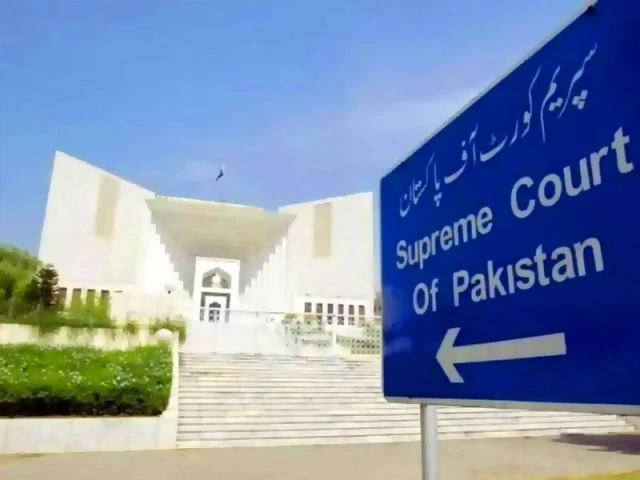
The Supreme Court has issued detailed guidelines for drafting pleadings before trial courts in civil cases to promote uniformity, improve the quality of pleadings, and facilitate the efficient administration of civil justice.
In a 26-page judgment authored by Justice Shahid Bilal Hassan in response to a review petition in a civil case, the court observed that the issues highlighted in the case, particularly concerning drafting of pleadings and compliance with mandatory procedural requirements, merit consideration in legal education.
It said it would be beneficial if such principles are incorporated and emphasized in the teaching of civil procedure and legal drafting modules in law colleges, so as to equip future members of the bar with requisite skills at the threshold of their professional careers.
The order further noted that, in view of deficiencies in civil pleadings and recurring non-compliance with mandatory procedural requirements, it was necessary to involve bar councils in addressing the systemic issue.
"The bar councils may consider the formulation and issuance of standardized or model formats for plaints, written statements, and other essential pleadings.
"While such formats cannot substitute the application of legal mind required in each case, they may serve as guiding templates to ensure compliance with basic legal requirements, proper structuring, and inclusion of all necessary particulars.
"This would not only promote uniformity and clarity in pleadings but also assist younger members of the bar in developing sound drafting practices," it said.
The court stated that it is equally imperative to recognize that the responsibility in this regard is shared by both the bench and the bar.
"While the courts must ensure vigilant scrutiny and enforcement of procedural law, advocates, as officers of the court, are under a corresponding duty to present pleadings that are legally sound, properly structured, and compliant with statutory mandates," it said.
Explaining the guideline, it stated that a written statement shall ordinarily be filed at or before the first hearing, and adjournments for this purpose shall be granted only for sufficient cause.
"The period for filing shall not ordinarily exceed thirty days, and failure to comply shall entail consequences in accordance with law," the order said.
It directed that, for effective implementation of the guidelines, the order be circulated to all district and sessions judges, who shall ensure its dissemination to all civil judges under their administrative control.
"A copy shall also be forwarded to all concerned bar associations to apprise members of the bar of the procedural requirements and guidelines relating to pleadings, so as to secure uniform compliance across the province."
The court further directed that the district judiciary shall monitor compliance of these directions in letter and spirit, and that necessary administrative measures may be adopted to ensure procedural discipline is maintained.
According to the guidelines, the written statement shall be accompanied by all documents in the possession or power of the defendant on which reliance is placed, along with a list of documents not in possession but intended to be relied upon.
"The defendant shall also furnish an address for service during the pendency of proceedings.
"The written statement must conform to the general rules of pleadings as contained in Orders VI and VIII of the Code of Civil Procedure, 1908," it said
In cases involving multiple defendants, separate written statements shall ordinarily be filed unless the defence is identical. "The court shall ensure that distinct or conflicting defences are not improperly combined or obscured in a joint pleading."
It said where a set-off is claimed, it must relate to a definite and ascertained monetary sum, be between the same parties in the same capacity, and the written statement shall, to that extent, be duly stamped as a plaint.
"The court may, where necessary, require replication or additional pleadings for the purpose of clarifying the controversy and properly framing issues," the guidelines add.














This material may not be published, broadcast, rewritten, redistributed or derived from. Unless otherwise stated, all content is copyrighted © 2026 The Express Tribune.








COMMENTS (6)
Comments are moderated and generally will be posted if they are on-topic and not abusive.
For more information, please see our Comments FAQ