China's FM Wang Yi reiterates appreciation for Pakistan’s constructive role amid US-Iran talks in meeting with Dar
Updated 5 hours ago

Long-delayed underpass opens as critics question narrow lanes and limited capacity
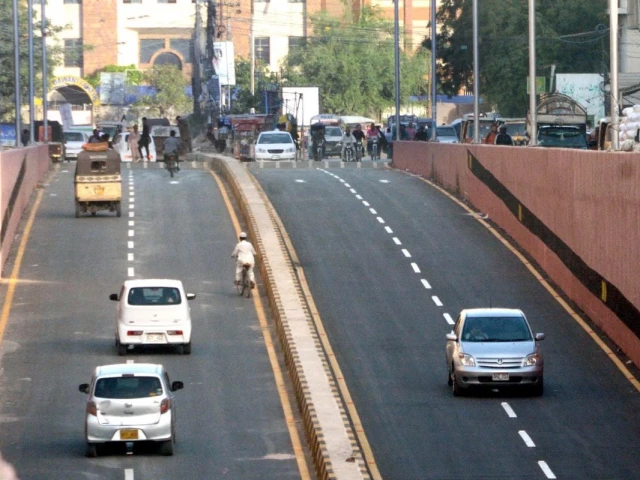
The new underpass in Karachi’s busy Karimabad area has finally been opened to traffic after nearly three years of slow construction. Although traffic is currently flowing smoothly, transporters and experts have warned that the narrow design of the underpass and surrounding road network may create future bottlenecks and safety risks.
The two-way project began in June 2023 with a planned completion date of June 2025 but was delayed. Built at a cost of Rs3.46 billion, it was opened to traffic on May 3rd, while finishing work is still ongoing. Development on the Meena Bazaar side is complete, while work on the Musa Colony side continues.
Muhammad Ilyas, General Secretary of the Karachi Transport Alliance, felt that Route 7C - linking Liaquatabad and Musa Colony with Buffer Zone - will face serious operational issues once full traffic resumes. “The road near Musa Colony and APWA Girls College is too narrow, and encroachments plus Qingqi rickshaws will worsen congestion. This 50-year-old route serves around 25 buses daily, carrying thousands of passengers. Conditions may deteriorate further once all traffic returns to normal,” said Ilyas.
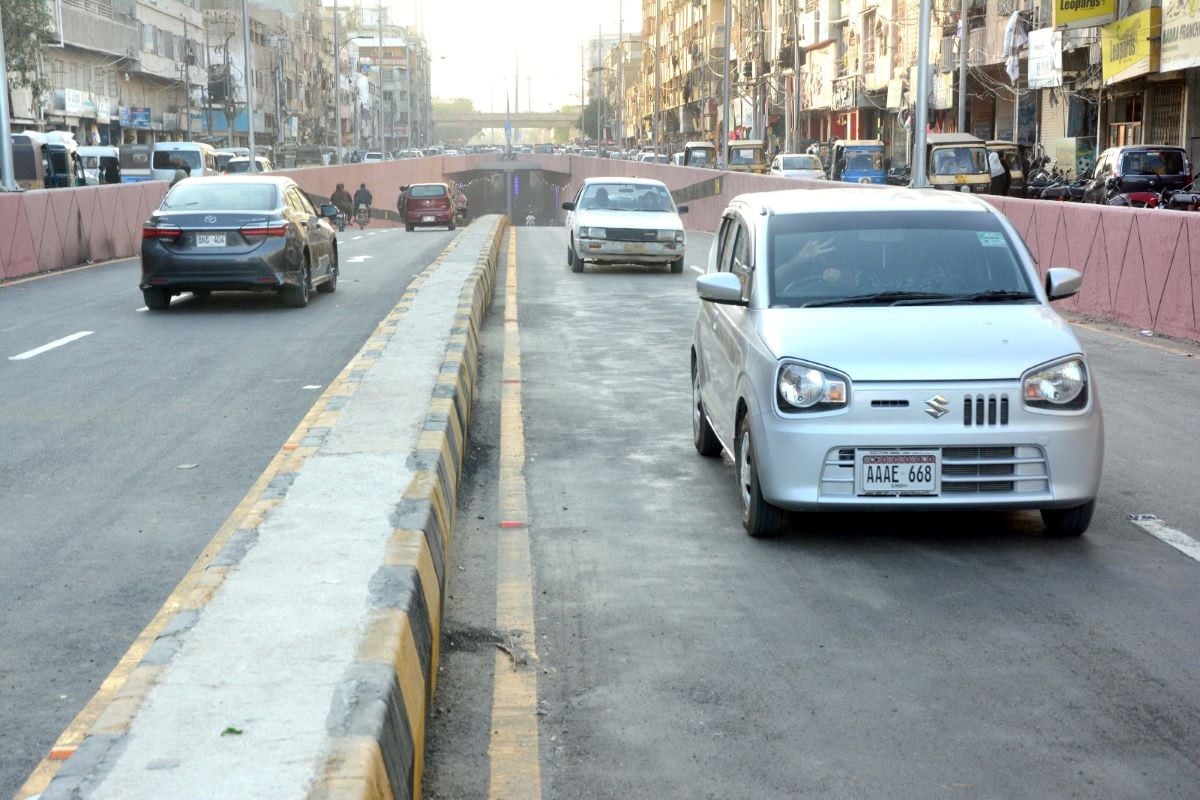
Development on the Meena Bazaar side is complete, while work on the Musa Colony side continues. PHOTO: JALAL QURESHI
The project is being executed under the supervision of the Karachi Development Authority (KDA). KDA Chief Engineer Abdul Samad Jamlani told the Express Tribune that delays were mainly caused by utility service departments. K-Electric, Sui Southern Gas Company, and the Karachi Water and Sewerage Corporation took considerable time in shifting their utility lines, which significantly slowed down construction progress.
“The underpass was designed according to the available right-of-way and constructed with two lanes in each direction. This was the maximum feasible design given site constraints and surrounding infrastructure,” claimed Jamlani.
Read More: Karachi water theft unit lands in hot water over corruption claims
Zahid Farooq, Joint Director of the Urban Resource Centre, opined that the Karimabad intersection did not require an underpass from a planning perspective. However, once the decision was made, it should have been built according to proper engineering standards.
“The underpass is unusually long, but only has two lanes in each direction, and critically, there is no emergency lane. If a vehicle breaks down inside the underpass, it will immediately cause a complete traffic standstill and serious public inconvenience,” he warned, while adding that such design limitations increase long-term operational risks.
According to surveys conducted by the Express Tribune and information from site engineers, the underpass is 1,080 meters long, making it the longest underpass in Karachi, and it is also being referred to as a tunnel-type underpass. Each side has a width of 6.1 meters and supports two-way traffic between Ziauddin Hospital, Karimabad, and Hussainabad.
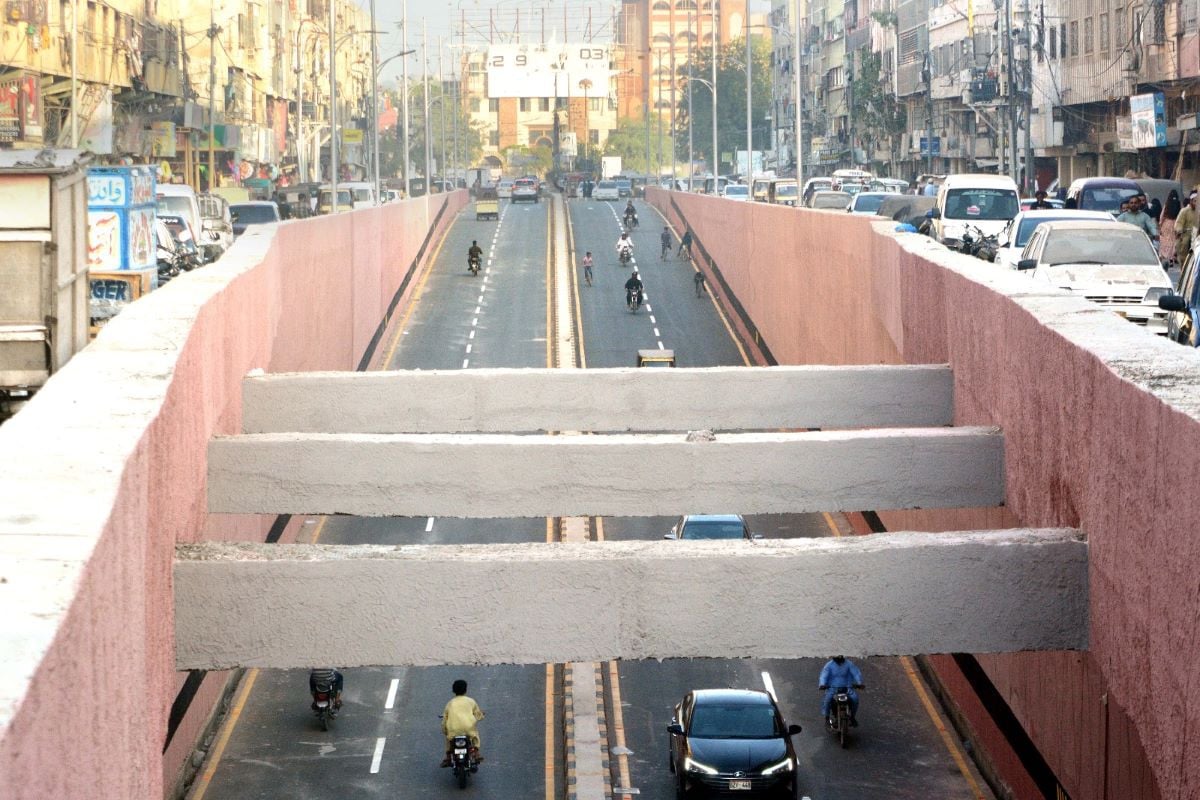
The two-way project began in June 2023 with a planned completion date of June 2025 but was delayed. PHOTO: JALAL QURESHI
Gulberg Town Chairman Nusratullah criticized the project, stating that elected representatives were not properly consulted during planning. “The absence of alternative routes during construction caused daily traffic disruptions and significant hardship for citizens,” he noted.
Karimabad UC-7 Chairman Zubair Wali also alleged that utility lines were not relocated properly. “Residents and shopkeepers along the main road had to carry out repairs of water and sewerage lines themselves, reflecting poor coordination among departments,” said Wali.
KDA engineers stated that before construction, a detailed traffic and feasibility survey was conducted, including data on cars, motorcycles, and heavy vehicles. They claimed that the design was finalized based on the available right-of-way. They also explained that additional space was allocated on the Meena Bazaar side to facilitate parking and market access, while the Musa Colony side had limited space availability, restricting expansion.
However, the engineers acknowledged that only two heavy vehicles can pass simultaneously, and there is no dedicated emergency lane, which could create challenges in case of breakdowns or peak-hour congestion.











This material may not be published, broadcast, rewritten, redistributed or derived from. Unless otherwise stated, all content is copyrighted © 2026 The Express Tribune.






COMMENTS (1)
Comments are moderated and generally will be posted if they are on-topic and not abusive.
For more information, please see our Comments FAQ