Trade deficit narrows 39% as imports fall
Updated 8 hours ago

Steel makers demand duties only on value addition in export zones
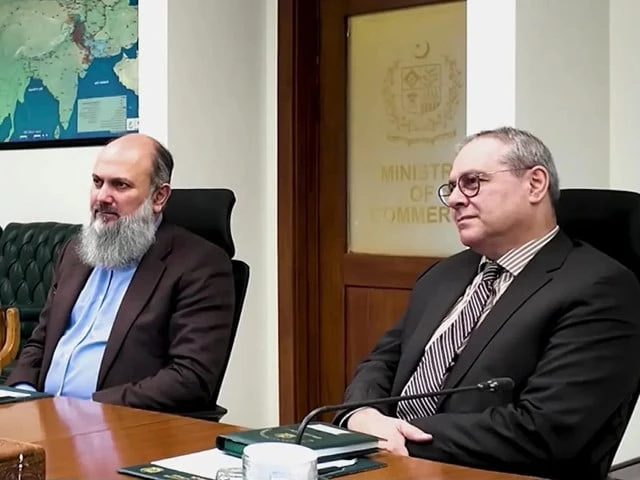
A delegation of National Steel Complex Limited met Federal Minister for Commerce Jam Kamal Khan to discuss issues relating to industrial competitiveness, tariff rationalisation, value-added manufacturing, and operational challenges being faced by steel and engineering sectors.
The delegation briefed the minister on concerns arising from the existing duty structure applicable to raw materials, intermediate goods, and products processed through Export Processing Zones (EPZs). Representatives explained that industries importing raw materials into the tariff area are required to pay customs duty at the import stage, while additional duties are again imposed when processed or value-added products return from EPZs to the tariff area.
The delegation said that the current mechanism effectively results in double taxation on industrial products and increases the cost of manufacturing, particularly for industries involved in machining, lining, coating, fabrication, and other value-added industrial activities. They proposed that duties should only apply to the additional value created within the EPZ instead of total value of the finished product.
Participants also highlighted technical complexities related to customs valuation, classification of processed products, and determination of value addition during industrial processing.
It was clarified that the National Tariff Commission (NTC) primarily functions as a technical body for tariff-related matters, providing analytical and advisory support regarding tariff structures and trade remedy measures. The commission is responsible for applying trade protection instruments, including safeguards against unfair trade practices by foreign exporters, to protect local manufacturers.
The delegation further apprised the minister of the challenges being faced by long-term industrial projects due to rising energy costs, evolving tariff structures, and changing economic conditions.






This material may not be published, broadcast, rewritten, redistributed or derived from. Unless otherwise stated, all content is copyrighted © 2026 The Express Tribune.










COMMENTS
Comments are moderated and generally will be posted if they are on-topic and not abusive.
For more information, please see our Comments FAQ