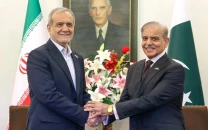
PM Shehbaz hopes of peace deal soon as Iran's Pezeshkian expresses appreciation for Pakistan role in negotiations
Updated 9 hours ago

Ten of 64 centres non-functional; displaced Tirah families overburden Bara's Dogra Hospital

The healthcare infrastructure in Khyber tribal District has once again come under sharp scrutiny, with official records revealing that 10 out of 64 health facilities are either completely or partially inactive, leaving residents of remote mountainous areas struggling for basic medical care.
According to documents from the Khyber Health Department, while 54 health centers remain operational across the district, seven are completely non-functional and three are partially closed. The situation has been drastically worsened by the presence of thousands of displaced families from the Tirah Valley, who have relocated to Bara, causing a more than 50 per cent surge in the local population. This influx has placed unprecedented pressure on the Dogra Type-D Hospital in Bara, which has become the only major state-run facility for over 600,000 people.
The district currently hosts four Type-D hospitals, including the District Headquarters Hospital in Landi Kotal. Among these, three are active, the Dogra Hospital Bara, Bazar Zakhakhel Hospital, and Jamrud Hospital, while the Type-D hospital in Bagh Tirah Maidan remains shuttered.
Additionally, the district's broader health network comprises two Rural Health Centers (RHCs), 12 Basic Health Units (BHUs), 27 dispensaries, and 19 Community Health Centers (CHCs). Facilities in Tirah Valley, including those in Bagh Maidan, Pathai, Babar Kachkol, Binai, Tor Chappar, Sarai, and Tod Khwar, remain closed due to insecurity, security operations, and staff shortages.
Local residents and tribal elders report that the Dogra Hospital, which is in the process of being upgraded to Category C, continues to operate with limited resources, a shortage of medical staff, and a lack of modern diagnostic equipment. Emergency, gynecology, pediatric, surgical, and diagnostic deficiencies force hundreds of patients daily to seek referrals to Peshawar, drastically increasing costs for impoverished families.
Maulana Syed Jalil Haqqani Afridi, a leader of Jamiat Ulema-e-Islam Fazl FATA, told The Express Tribune that upgrading the Dogra Hospital is no longer a necessity but an obligation. "The displacement from Tirah has caused an extraordinary population increase in Bara, yet the hospital's facilities remain antiquated while patient numbers rise daily," he said. He noted with regret that although the hospital is located in the native district of Khyber-Pakhtunkhwa Chief Minister Sohail Afridi, the upgrade to Category C remains incomplete, stalled in paperwork.
Meanwhile, provincial lawmaker and Khyber DDAC Chairman Abdul Ghani Afridi assured The Express Tribune that the government is working on health priorities under the chief minister's directives. He confirmed that a formal notification for Dogra Hospital's upgrade has been issued, with feasibility studies and the PC-1 completed. The project will be included in the Annual Development Program for 2026-27, promising that Bara's residents will soon benefit from a Category C hospital.
Public, social, and tribal circles across Khyber have also demanded the immediate reactivation of all closed health centers, the filling of vacant doctor and staff positions, and the provision of primary health facilities in far-flung areas to prevent residents from seeking treatment in other districts.








This material may not be published, broadcast, rewritten, redistributed or derived from. Unless otherwise stated, all content is copyrighted © 2026 The Express Tribune.




COMMENTS
Comments are moderated and generally will be posted if they are on-topic and not abusive.
For more information, please see our Comments FAQ