PM Shehbaz thanks Qatar for support to Pakistan's peace, de-escalation efforts
Updated 1 hour ago

Gunman opens fire during White House correspondents' dinner President rushed as panic erupts Secret Service offic
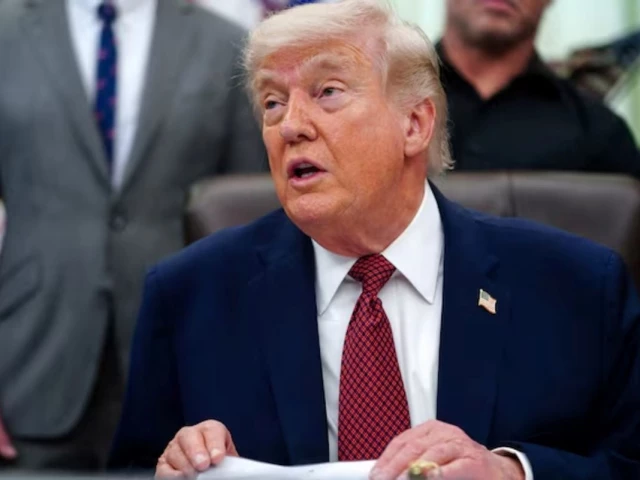
The cavernous ballroom of the Washington Hilton suddenly fell into stunned silence as sharp cracks echoed through the hall, interrupting polite laughter and clinking cutlery, before panicked cries of "get down, get down!" sent hundreds of black-tie guests diving beneath tables in a scene of chaos.
Moments earlier, President Donald Trump and First Lady Melania Trump had been seated on stage at the White House Correspondents' Dinner, engaging with entertainer Oz Pearlman, when the commotion at the rear of the room triggered confusion that quickly escalated into alarm.
Guests, initially unsure whether the noise was accidental, froze as armed security personnel stormed in, rifles raised, signalling a grave threat. Within seconds, Secret Service agents formed a protective cordon around the president, while Vice President JD Vance was pulled away from the head table.
Trump appeared to stumble briefly as he was rushed off stage, before he and the First Lady were escorted to a secure location inside the hotel.
The disturbance inside the ballroom was triggered by a violent confrontation just outside, where a gunman armed with a shotgun charged a security checkpoint, opening fire on a Secret Service agent. Security footage later released showed the suspect sprinting through the hotel with weapons, momentarily catching guards off-guard before being subdued.
Authorities identified the suspect as 31-year-old Cole Tomas Allen, a California resident described in public records as a teacher and independent video game developer. Officials said he had checked into the hotel as a guest and was carrying a shotgun, a handgun and multiple knives at the time of the attack.
The Secret Service confirmed that one of its agents was shot in the chest during the exchange, but survived due to a bulletproof vest. Trump later said the officer was in "great shape," praising law enforcement for acting "quickly and bravely" to neutralise the threat before the attacker could reach the ballroom.
Investigators believe the suspect acted alone and are treating the case as a likely targeted attack on senior government officials. Acting Attorney General Todd Blanche said the gunman appeared to have set out to target members of the administration, "likely including the president," and would face federal charges including assault on a federal officer and attempted murder.
Inside the ballroom, the scale of the danger became apparent as security personnel combed through the packed hall, calling out names and extracting cabinet members scattered across tables. Guests remained pressed to the floor as agents shouted instructions, while some attempted to contact newsrooms and family members despite poor signal inside the underground venue.
The attack unfolded at around 8:30 pm, sending shockwaves through one of Washington's most high-profile gatherings, attended by more than 2,600 journalists, politicians and public figures. Many of those present had taken cover under tables, while others documented the unfolding crisis on their phones.
Despite the confusion, Trump initially expressed a desire to continue with the event. "I fought like hell to stay," he later said, adding that law enforcement ultimately insisted on evacuation in line with protocol. The dinner was subsequently cancelled, with the president calling for it to be rescheduled within 30 days.
Emerging later at the White House briefing room, still in his tuxedo, Trump struck a measured tone, describing the incident as "very unexpected" but praising the response of security agencies. He suggested he may have been the intended target, stating, "I guess," when asked directly, and later adding that it was "a dangerous profession."
Trump also urged restraint in an increasingly polarised political climate. "We have to resolve our differences," he said, noting that the shared danger had briefly united political opponents and members of the press in the room. "There was a tremendous amount of love and coming together."
Investigators are now examining how the suspect was able to bring multiple weapons into a hotel hosting one of Washington's most tightly secured events. While guests entering the ballroom were screened, other parts of the hotel, including upper levels and the lobby, were not subject to the same level of security - a gap that may have been exploited.
Authorities revealed that Allen had travelled across the country by train, moving from Los Angeles to Chicago and then to Washington in the days leading up to the attack. He is believed to have purchased firearms in the months and years prior, and was not cooperating with investigators following his arrest.
Law enforcement officials also uncovered writings attributed to the suspect, including a manifesto sent to family members shortly before the shooting. In it, he expressed grievances against the administration and referred to himself as a "Friendly Federal Assassin," while outlining targets that included government officials.
According to officials, the writings mocked what the suspect described as lax security at the venue, suggesting he was able to enter with weapons without raising suspicion. The contents are now central to understanding motive, though authorities have not ruled out additional factors.
Trump, speaking in subsequent interviews, described the suspect as "a sick guy" with "a lot of hatred in his heart," adding that early assessments pointed to a "lone wolf" attacker. He emphasised that the gunman had been stopped well short of the ballroom, noting that he "never came close" to entering the main event space.
Officials have confirmed that President Trump and other leaders as well as all other guests were unhurt in "the security incident at the annual White House correspondents' dinner" on Saturday. The head of the association, Weijia Jiang, said she was told "everybody's safe".
The incident has also revived concerns about political violence in the United States, coming amid a series of high-profile attacks in recent years. Trump referenced previous threats against him, including an assassination attempt in 2024, suggesting that public figures face heightened risks.
As investigations continue, attention remains focused on security lapses and the suspect's motives, with federal prosecutors preparing formal charges. The episode, unfolding within minutes yet leaving lasting repercussions, has underscored the vulnerability of even the most heavily guarded gatherings.





This material may not be published, broadcast, rewritten, redistributed or derived from. Unless otherwise stated, all content is copyrighted © 2026 The Express Tribune.




COMMENTS
Comments are moderated and generally will be posted if they are on-topic and not abusive.
For more information, please see our Comments FAQ