Harry Styles: from teen heart-throb to global pop icon
Updated 3 hours ago

In an interview with BBC, director says film promotes informed view of Shariah law, women’s rights through legal drama
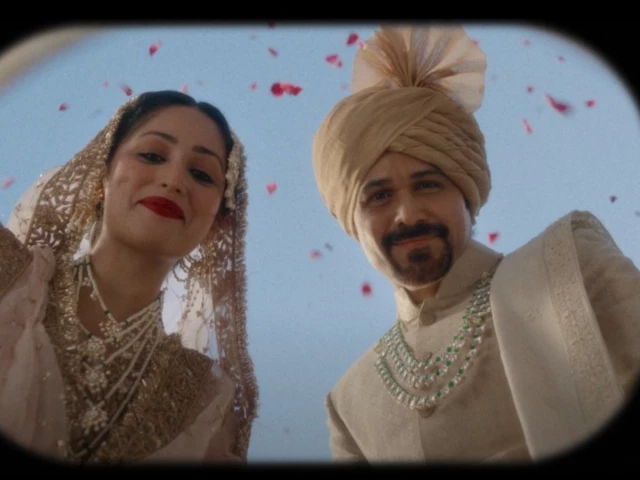
Bollywood filmmaker Suparn Verma sat down with BBC to discuss the success of his movie Haq, expressing that he wanted the film to “be the voice or reason”, a fair portal of faith and a community.
In the interview, Verma stated that he had the lead actor Yami Guatam, who plays Shazia Bano, “learn the Quran”.
“She spent four months understanding the dialect. The way we are using the Quran., we are quoting the Quran. It’s all there. And that’s the reason I had to end the film with one single word: Iqra,” he stated.
Upon questioning if the story resonated with real-life individuals, Verma agreed that many felt some sense of connection with Shazia’s story. “Honestly, you hope for a wave of love. You never expect a tsunami of connection the way Haq has,” he added.
Verma went on to speak about misinformation regarding Islam and the importance of factual knowledge. “There are so many misnomers when it comes to Islam. Today, we live in the age of misinformation. Your world of Andrew Tate’s men and women who understand him, support him. It’s a warped world that we live in,” he said.
He added, “Everybody has information. You don’t know whether it’s right or wrong. In that space, I wanted Haq to be a voice or reason.”
Verma said he has had "Muslim friends" all his life and felt, as an Indian, a responsibility to “dive deep” into the subject. “We spent almost a year and a half understanding Islamic law,” he added.
The filmmaker also spoke on the controversial topic of the film, regarding Shariah law and triple divorce. Verma said, “When we talk about triple talaq (divorce), I wanted to take away the misnomers. I wanted you to understand mahr existed as a prenup for women."
He concluded by stating the purpose of the film: “Somebody asked me, why did you make this film today? It's 40 years old. And I’m like, what’s changed in 40 years for women? They lived in a man’s world then, they live in a man’s world now. They fight the same glass ceiling, the same biases.”
Haq follows a legal battle for alimony and dignity after the lead is abandoned and subjected to a divorce, turning her personal struggle into a national debate for women’s rights.









This material may not be published, broadcast, rewritten, redistributed or derived from. Unless otherwise stated, all content is copyrighted © 2026 The Express Tribune.











COMMENTS
Comments are moderated and generally will be posted if they are on-topic and not abusive.
For more information, please see our Comments FAQ