Kursi Nashin
Updated 9 hours ago

Silence shapes memory as much as violence in forgotten genocides
As the world watches a genocide unfold live on its screens documented in real time, shared in real time, ignored in real time, I find myself asking a harder question: if the world cannot stop what it is watching happen right now in Gaza, who will ever care about what happened to my community in 1971?
Who will investigate what is not being filmed? Who will name what has no powerful lobby, no sympathetic diaspora, no geopolitical inconvenience attached to it?
April is Genocide Awareness Month. It is a good time to sit with that discomfort.
And I will ask the question my Urdu writing keeps returning to:
Khamoshi bhi aik jawab hoti he, magar kis kay haq men?
(Silence is also an answer, but in whose favor?)
Genocide is a political category, not just a legal one.
The Herero and Nama of Namibia were nearly wiped out: an estimated 40,000 to 80,000 Herero and 10,000 Nama were killed. Germany acknowledged it as genocide in 2021 - over a century later. It then declined reparations, offering "development aid" instead, naming costs far less than accountability.
The Holodomor killed millions through engineered famine, yet remains legally disputed. The Yazidis faced systematic sexual enslavement and mass killing. The UN called it genocide in 2016, but accountability remains skeletal. The Rohingya have been driven from Myanmar in waves of ethnic cleansing. The ICJ deliberates while the displaced rot in camps.
The pattern is not complicated. Recognition reflects geopolitical reality far more than moral clarity. When the perpetrator is an enemy, recognition comes. When a diaspora can mobilise resources and votes, recognition comes. When none of these conditions exist, the dead wait. Some wait forever.
I write about one community that is still waiting.
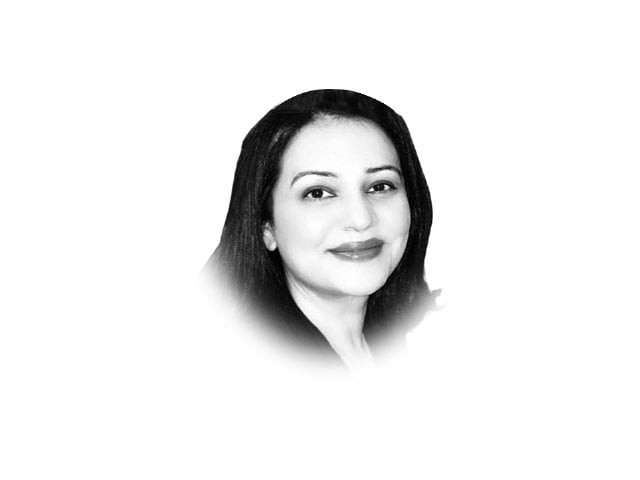
I am a Pakistani Muslim woman. I am also Bihari. I carry all three identities into every word I write about 1971.
Urdu-speaking Muslim communities who migrated to East Pakistan in 1947 were targeted before, during and after the war. Survivors were confined to "camps" across Bangladesh not temporary shelters, but permanent ghettos where generations have lived without citizenship, documentation or political rights. Three to five hundred thousand people. This is not only history. It is an ongoing condition.
Bangladeshi researchers in American and British universities are themselves now publishing on the genocide of non-Bengali Bihari Muslims. The stories are no longer secret. When researcher Sharmila Bose published work challenging dominant claims about 1971, she was not refuted with evidence she was dismissed - by human rights advocates, including, I say with sadness, some of Pakistan's own prominent feminist voices. The acceptable truth, it seems, is only the truth already certified by the West, India or genocide research centres supported by them in Bangladesh. I am not writing this as a distant observer. I am a survivor. I am the record.
Selective memory is still a form of violence.
Every March, the same one-sided stories flood social media. Pakistan's institutions, media intellectuals? Silent. Not a single counter-narrative. Not one official statement. Meanwhile, Pakistani PhD holders from American, British and European universities openly endorse narratives that erase their own community's suffering. When a country's educated class has absorbed someone else's story so completely, one wonders what work is left for external adversaries to do.
After the political shifts in Bangladesh in 2024, Pakistan saw waves of commentary, film screenings, cultural exchanges. The Bihari narrative was absent from almost all of it.
I wrote about this in Urdu. Few responded. Fewer still were Bihari Pakistanis from inside Pakistan or outside. Our own elites kept their careful distance. One voice came: Ehtesham Nezami, a journalist in Chicago. One. The rest: silence from those best positioned to speak. Even the algorithm flagged this word genocide as too uncomfortable to travel freely.
This is my last piece on this.
I have said that before. I motivated myself back each time. Not this time.
I am not an aunty filling hours. I am a woman who must earn for her family, who carries the weight of an unfair life on multiple fronts, and who has spent years writing about a cause that the people most responsible for it in Pakistan treat as a footnote, an embarrassment, or nothing at all. Continued discouragement, institutional indifference, and the cost to my own emotional health have made one thing clear: I cannot keep throwing myself against a wall that has no window.
This was never a topic for me. It was and remains a passion, a mission, a living reality written into my blood and my family's history. That does not change. But I have learned, slowly and painfully, that carrying a truth does not obligate you to keep bleeding in public for people who have decided not to see it.
A state that cannot speak for its own people buried in Bangladesh's soil, that cannot raise a voice for those still living in camp rooms after fifty four years, should reflect on why loyalty feels like a one-way transaction to so many of us.
Gaza is being watched by the entire world and is not being stopped. If that is what full visibility gets you, I hold no illusions about what invisibility gets my community.
Our "crime" was standing on the wrong side of history. That side is still the side no one wants to hear.
Tareekh maaf kar sakti he, bhoolti nahi
(History can forgive. It does not forget)
I am still waiting for someone in Pakistan, in Bangladesh, anywhere to prove that wrong.
But I am done waiting out loud.
Pakistan I still love you. Pakistan Hamesha Zindabaad!





This material may not be published, broadcast, rewritten, redistributed or derived from. Unless otherwise stated, all content is copyrighted © 2026 The Express Tribune.

COMMENTS (4)
Comments are moderated and generally will be posted if they are on-topic and not abusive.
For more information, please see our Comments FAQ