Fact check: Viral video of Imran Khan talking about his legal cases is old from 2023
Updated 55 minutes ago

Iqbal cites PSDP cuts, oil shock and ME tensions
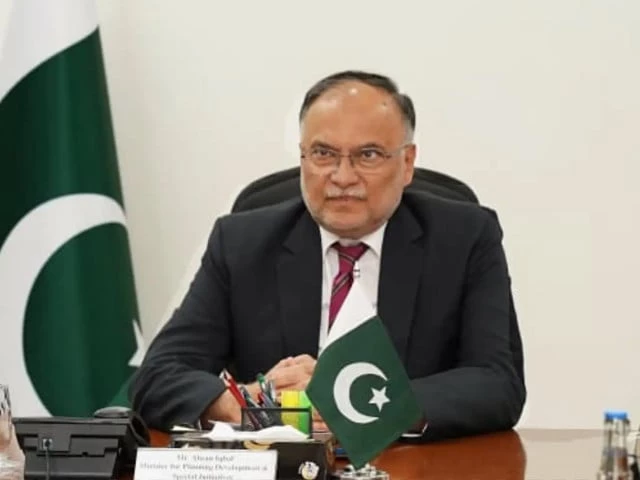
Pakistan's economic growth is expected to come under pressure in the current and next fiscal years, as the government acknowledged that cuts in development spending and global shocks stemming from the Middle East conflict are weighing on the outlook.
Planning Minister Ahsan Iqbal said on Monday that an almost 20 per cent reduction in the development budget, combined with rising oil prices and inflation linked to disrupted global supply chains, would slow economic expansion and jeopardise the 4.2 per cent growth target for the ongoing fiscal year.
"This (cut in development budget) will have a negative impact and, coupled with international oil prices and inflation, will result in economic slowdown and affect our growth target of 4.2 per cent," he said at a press conference, marking the government's first official acknowledgement of growth falling short of projections.
International lenders have already estimated growth between 3.2 per cent and 3.5 per cent.
Explaining the fiscal adjustments, the minister said the Public Sector Development Programme (PSDP) had been reduced by Rs173 billion to Rs837 billion, down from the Rs1.01 trillion allocation.
He said the cut was made to finance the Prime Minister's Austerity Fund, which was used to subsidise fuel, particularly diesel, during the harvesting season.
He added that the impact of the Middle East crisis would be more pronounced in the first half of the next fiscal year, even if hostilities were to end immediately, noting that global supply chains typically take six to nine months to stabilise.
"The negative impact on growth outlook will be lower this year as the Middle East crisis emerged when three quarters of the current fiscal year have already passed, but will be greater in the first six months of next fiscal year even if war comes to an end immediately," he warned.
Responding to questions on diplomacy, Iqbal expressed cautious optimism about the second round of US-Iran talks being facilitated by Pakistan, stating, "Such complex and deep-rooted disputes are difficult to end overnight. Both parties will have to show flexibility to end global tension and threat to the global economy".
He said a peaceful resolution was essential to avoid a broader inflationary shock and the risk of global stagflation.
He said Pakistan's GDP growth had reached 3.8 per cent in the first half of the fiscal year, compared to 1.9 per cent in the same period last year, before an "external shock" from the Middle East crisis affected economies worldwide.
"Oil prices and their smooth supply chain work like oxygen for the global economies, and their higher prices impacted export costs for all," he said, adding that Pakistan had managed to avoid supply disruptions through proactive decisions, though consumption had to be controlled through price adjustments.










This material may not be published, broadcast, rewritten, redistributed or derived from. Unless otherwise stated, all content is copyrighted © 2026 The Express Tribune.





COMMENTS
Comments are moderated and generally will be posted if they are on-topic and not abusive.
For more information, please see our Comments FAQ