'Muslim Met Gala' returns, as celebrities share their Eidul Azha day 1 looks
Updated 9 hours ago

Digital resurrection of Val Kilmer sparks ethical reckoning amid blockbuster showcases
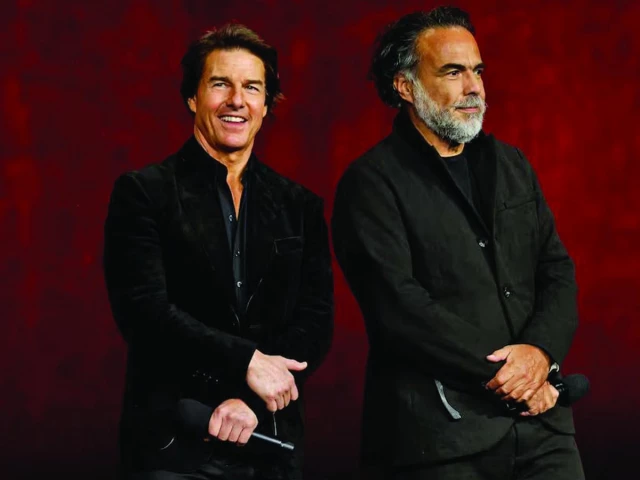
The annual spectacle of CinemaCon unfolded this week as both a celebration of cinema's future and a flashpoint for one of its most contentious debates, with filmmakers unveiling ambitious projects while confronting the ethical limits of artificial intelligence in storytelling.
At the centre of the controversy was the independent feature 'As Deep as the Grave', which drew intense scrutiny after presenting a digitally recreated performance by late actor Val Kilmer. The preview introduced Father Fintan, a complex character portrayed as both a Catholic priest and a Native American spiritual figure.
In one of the trailer's most striking moments, the character delivers a chilling line: "Don't fear the dead, and don't fear me." Kilmer, who died last year at 65 from pneumonia, has since become central to a widening industry debate over AI's role in reviving deceased performers.
Director Coerte Voorhees and producer John Voorhees addressed the issue directly, defending their approach as measured and collaborative. They said the project was developed in close consultation with Kilmer's estate, with permission granted by his children, including Mercedes Kilmer, who also provided archival material.
The filmmakers acknowledged the sensitivity of digitally recreating a late actor but maintained that their process followed guidelines set by SAG-AFTRA, particularly around consent and compensation. Rather than a direct performance, they described the portrayal as an interpretation shaped by Kilmer's artistic legacy.
They drew parallels with established cinematic traditions, noting that actors have long portrayed real-life figures. Kilmer's own role as Jim Morrison in 'The Doors' was cited as an example of how performance has always involved transformation and reinterpretation.
The actor's personal history with technology also informed their decision. After losing his natural voice to throat cancer treatment, Kilmer had worked to digitally recreate it, a process later used in 'Top Gun: Maverick', offering what the filmmakers described as continuity rather than contradiction.
The film's production history adds further complexity. Kilmer had originally been cast years earlier, but declining health forced him to withdraw before filming began in New Mexico in 2020 during the COVID-19 pandemic, leaving the project without its central character.
After multiple disruptions, the creators concluded that Father Fintan remained essential. Discussions with Kilmer's children, Mercedes and Jack, ultimately led to the decision to digitally reintroduce the role, resulting in a significant on-screen presence that signals a bold use of AI in narrative cinema.
While one strand of CinemaCon grappled with technological ethics, another leaned heavily into star-driven spectacle. Tom Cruise took the stage to introduce 'Digger', a dark comedy that marks a sharp departure from his action-hero persona.
In the film, Cruise plays Digger Rockwell, an eccentric oil tycoon whose actions trigger an ecological crisis with global consequences. The footage revealed a transformed actor, complete with greying hair, a heavier frame and a Southern accent.
"It took 40 years to be able to put on the boots of Digger Rockwell," Cruise told theatre owners, describing the film as "wild" and unconventional. Directed by Alejandro Inarritu, the project has been years in development and is set for release in October.
Warner Bros. also showcased 'Dune: Part Three', with Zendaya, Timothee Chalamet and Jason Momoa hinting at a darker narrative set 17 years after the previous instalment, reflecting a harsher, conflict-shaped world.
As presentations unfolded, they mirrored a broader industry moment, with Warner Bros. balancing creative ambition alongside a reported $110-billion sale to Paramount Skydance. The convergence of innovation, spectacle and uncertainty underscored a film landscape in transition.
CinemaCon ultimately highlighted both promise and unease, signalling that while the future of filmmaking is advancing rapidly, it is doing so amid unresolved questions about authorship, performance and the meaning of presence on screen.
















This material may not be published, broadcast, rewritten, redistributed or derived from. Unless otherwise stated, all content is copyrighted © 2026 The Express Tribune.





COMMENTS
Comments are moderated and generally will be posted if they are on-topic and not abusive.
For more information, please see our Comments FAQ