Tariff protection hurts consumers
Updated 5 hours ago

Any strategy must begin with transport that consumes 75-80% of petroleum
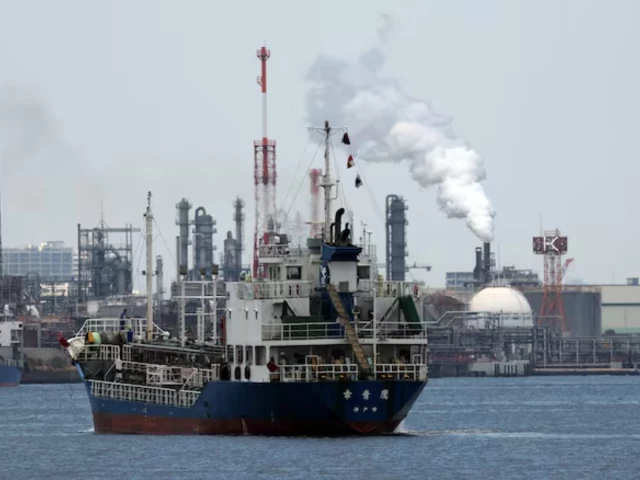
With widespread damage to energy infrastructure in the Middle East, it is unclear how long global oil and gas markets will take to stabilise. What is already evident, however, is that the world will not return to the old normal, particularly for countries heavily dependent on energy imports from the region.
The search for alternatives has effectively begun. For many, the most immediate and viable path lies in accelerating the shift towards renewables and domestic energy sources.
In this context, several energy experts, including Jan Rosenow, Professor of Energy at Oxford University, have pointed to Pakistan's remarkable surge in solar adoption. In just four years, solar penetration has risen from less than 5% to more than a quarter of electricity generation. This is a significant achievement and demonstrates how rapidly countries can respond when incentives align and market forces are allowed to operate.
Yet this success also exposes a critical imbalance. While Pakistan has managed to sustain electricity supply during a severe global energy shock, it simultaneously faced a growing mobility crisis as petrol and diesel supplies tightened. Had the disruption continued for a few more weeks, the consequences could have been far more severe. Transport would have slowed sharply, followed by broader economic disruption, including risks to food security due to shortages of fertilisers and other essential inputs.
This highlights a fundamental lesson. Energy security cannot be defined in terms of electricity alone. A system that is resilient in power generation but vulnerable in transport, agriculture, and industry remains fundamentally exposed. Petroleum alone makes up roughly a quarter to one-third of Pakistan's total import bill, making it the single biggest driver of external vulnerability and balance-of-payments pressure.
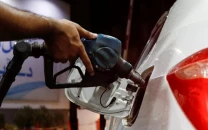
The challenge now is to reduce reliance on imports of petroleum and extend the gains achieved in electricity into the broader energy system, particularly mobility. The starting point is clear. The transport sector consumes nearly 75% to 80% of Pakistan's petroleum worth about $20 billion annually. Any serious strategy to reduce oil dependence must, therefore, begin with transport.
Pakistan remains a laggard in electric vehicle adoption, with EVs accounting for less than 1% of total vehicles and only a small share of new sales. In contrast, countries such as Thailand and Indonesia have moved much faster, with EVs accounting for 10% to 20% of new vehicle sales, supported by targeted policies and investment in charging infrastructure. Even within South Asia, Pakistan has fallen behind. While other developing economies are entering a phase of mass adoption, Pakistan is still at an early stage.
This lag is not due to the lack of potential but owing to policy choices. Persistent reliance on outdated localisation and import substitution has failed to create a competitive auto industry, leaving production limited to basic assembly with minimal value addition. Instead of focusing on the broader gains from reducing fuel imports and pollution, policy has protected a narrow industrial base.
In contrast, leading countries have prioritised scale, openness and integration into global value chains. Pakistan's experience with solar adoption shows that rapid transformation is possible when barriers are removed. Without a similar shift toward EVs, supported by clear policy direction and incentives, the country will remain exposed to costly oil dependence.
Railways must also be brought back to the centre of transport policy. Pakistan's overwhelming reliance on road transport is both inefficient and expensive. By contrast, India has electrified more than 99% of its rail network over the past decade, significantly reducing its dependence on imported fuel. Pakistan has already completed feasibility studies for electrifying key corridors, including ML-1. What is lacking is prioritisation.
A strategic pause in further road expansion, combined with a reallocation of resources toward rail electrification and modernisation, would reduce fuel consumption and lower logistics costs across the economy.
Pakistan should also move quickly to implement ethanol blending, one of the most practical policy options available. Countries such as Brazil and India have successfully reduced oil imports through ethanol-blended fuels. Pakistan, despite having an annual production capacity exceeding 700,000 tonnes, continues to export most of it. With the EU having withdrawn duty concessions, the profitability of these exports has declined. Redirecting ethanol for domestic use would deliver greater economic value.
Diesel use in agriculture and mining must also be addressed. Transitioning machinery toward alternative energy sources can deliver both cost savings and efficiency gains. Early evidence suggests that replacing diesel with locally generated electricity from Thar coal can reduce energy costs by 40% to 60%, highlighting the substantial price gap between imported diesel and domestic power.
Finally, domestic refining capacity must be better utilised. Pakistan continues to import about 30% of diesel requirements despite underutilised refining capacity. Policy and pricing distortions that discourage optimal refinery output need to be corrected so that domestic production can substitute for imports wherever possible.
The current crisis should be treated as a turning point. While short-term adjustments are unavoidable, the real question is whether Pakistan can use this moment to pursue structural reform. A coherent five-year strategy is both necessary and achievable. It should prioritise accelerating electric vehicle adoption, electrifying and modernising rail, expanding mass transit, and implementing ethanol blending without delay, while shifting infrastructure investment away from roads toward more energy-efficient systems.
The cost of inaction is already evident in recurring balance-of-payments pressures, fiscal stress, and limited policy autonomy. Pakistan's exposure to global oil shocks will persist unless decisive action is taken. The choice is clear: continue managing crises, or move toward lasting structural transformation.
The writer is currently serving as a trade arbitrator at WTO, Geneva. He has previously served as the chairman of Pakistan LNG Ltd and as ambassador to WTO




This material may not be published, broadcast, rewritten, redistributed or derived from. Unless otherwise stated, all content is copyrighted © 2026 The Express Tribune.







COMMENTS
Comments are moderated and generally will be posted if they are on-topic and not abusive.
For more information, please see our Comments FAQ