EU says Ebola infection risk in bloc remains 'very low' despite Africa outbreak concerns
Updated 1 hour ago

Iran links Hezbollah attack to its own security, vows action against Israel
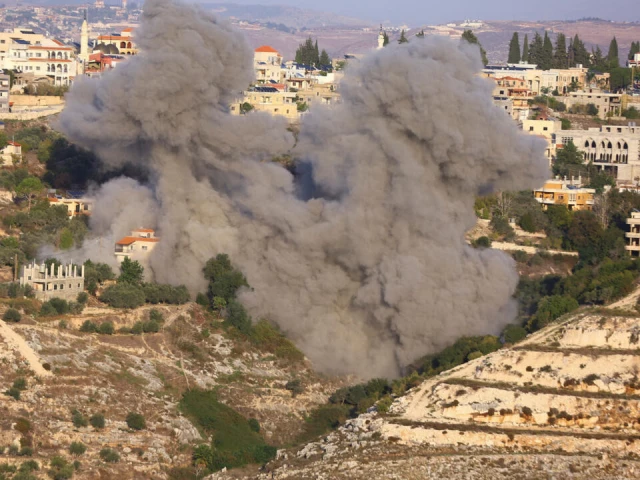
Iran sounded the alarm on Wednesday over violations of its temporary ceasefire with the United States after Israeli attacks on Lebanon and halted the flow of oil in the Strait of Hormuz.
Within hours of the ceasefire agreement brokered by Pakistan, Iran's Revolutionary Guards (IRGC) said Tehran was preparing a heavy retaliation against the Israeli regime in response to Israel’s violation of the ceasefire in Lebanon.
The warning followed reports by Al Jazeera, citing Lebanon’s Health Ministry, that at least 89 people were killed and more than 700 wounded in Israeli strikes across the country earlier in the day.
Israel carried out its heaviest strikes on Lebanon since the conflict with Hezbollah broke out last month, even as the Iran-aligned group paused attacks on northern Israel and Israeli troops in Lebanon under the two-week US-Iran ceasefire.
“In response to Israel’s violation of the ceasefire in Lebanon, Iran is preparing a heavy retaliation against the Israeli regime,” the IRGC said.
🔴BREAKING | In response to Israel’s violation of the ceasefire in Lebanon, IRAN is preparing a heavy retaliation against the Israeli regime.
— Iran Military Media ☫ (@IRMilitaryMedia) April 8, 2026
It also said that following the attacks, Iran has once again halted oil tanker traffic through the Strait of Hormuz.
Following Israel’s attacks on Lebanon, Iran has once again halted oil tanker traffic through the Strait of Hormuz and announced that it is preparing a response to Israel.
— Iran Military News ☫ (@IranMilitaryEN) April 8, 2026
The commander of the IRGC’s Aerospace Force, Brigadier General Majid Mousavi, said that an attack on Hezbollah was an attack on Iran, and the field was preparing a heavy response to the regime's brutal crimes.
An attack on Hezbollah is an attack on Iran; the field is preparing a heavy response to the regime's brutal crimes.
— True Promise - الوعد الصادق ✪🇮🇷 (@IRTruePromise) April 8, 2026
| The commander of the aerospace force of Iran’s IRGC, Brigadier General Majid Mousavi pic.twitter.com/DbuiGsvbY3
Iran's Tasnim news agency cited an unnamed source warning that Iran would withdraw from the ceasefire if attacks on Lebanon continue.
BREAKING: Iran says it will withdraw from the US ceasefire agreement if Israel continues to violate it by attacking Lebanon.
— Al Jazeera Breaking News (@AJENews) April 8, 2026
Source: Iran’s Tasnim news agency pic.twitter.com/Cm7bezN6xW
In a separate statement carried by Tasnim, the IRGC condemned what it described as a “brutal massacre in Beirut”. It warned that failure to immediately halt the attacks would draw a “regretful response to the evil aggressors in the region”.
The IRGC also said that only hours had passed since the ceasefire agreement, "yet the Zionist regime, wolf-like in nature, with brutality ingrained in it and the killing of innocents, children, and women as an inseparable part of its identity, has begun a savage massacre in Beirut.
"We issue a strong warning to the treacherous America and its partner, the murderous Zionist regime: If the aggressions against beloved Lebanon are not stopped immediately, we will fulfil our duty and deliver a regret-inducing response to the evil aggressors in the region."
🚨 The Islamic Revolutionary Guard Corps (IRGC):
— True Promise - الوعد الصادق ✪🇮🇷 (@IRTruePromise) April 8, 2026
Only hours have passed since the ceasefire agreement, yet the zionist regime, wolf-like in nature, with brutality ingrained in it and the killing of innocents, children, and women as an inseparable part of its identity, has begun…
Iranian Foreign Minister Abbas Araghchi said the ceasefire's terms were "clear and explicit".
He said the US must choose between a ceasefire and continued war via Israel.
"It cannot have both. The world sees the massacres in Lebanon. The ball is in the US court, and the world is watching whether it will act on its commitments."
The Iran–U.S. Ceasefire terms are clear and explicit: the U.S. must choose—ceasefire or continued war via Israel. It cannot have both.
— Seyed Abbas Araghchi (@araghchi) April 8, 2026
The world sees the massacres in Lebanon. The ball is in the U.S. court, and the world is watching whether it will act on its commitments. pic.twitter.com/2bzVlHFKgi
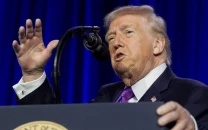
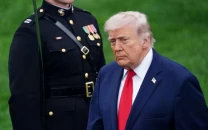
However, US officials appeared to contradict Iran’s position. President Donald Trump said Lebanon was “not included” in the two-week ceasefire agreement. Speaking to Liz Landers of PBS, the US president reportedly described the situation in Lebanon as “a separate skirmish”.
Also Read: US, Iran agree to two-week ceasefire with reopening of Strait of Hormuz
Trump further stated that Lebanon was excluded from the agreement due to the presence of Hezbollah, which he said would “get taken care of”.
Echoing the same stance, White House Press Secretary Karoline Leavitt told Axios that the US-Iran ceasefire did not apply to Israeli operations against Hezbollah in Lebanon, contradicting assertions from Iran and Pakistani mediators.
Meanwhile, Chief of Defence Forces and Chief of the Army Staff Field Marshal Asim Munir discussed ceasefire violations in a call with Araghchi.
Review of ceasefire violations in Araqchi's call with Pakistani Army Commander
— Iran Consulate - Hyderabad (@IraninHyderabad) April 8, 2026
🔹In this call, the parties also referred to the recent telephone conversation between the Pakistani Prime Minister and Dr. Pezeshkian, the President of Iran, and emphasized the importance of… pic.twitter.com/psKOGUAYav
During the conversation, both sides also referred to a recent telephone exchange between Prime Minister Shehbaz Sharif and Iranian President Masoud Pezeshkian, stressing the need for continued coordination and follow-up on agreed areas.
The call also addressed reported violations of the ceasefire in Iran and Lebanon by Israel.
Israel escalated its parallel war in Lebanon, launching its heaviest strikes yet, sending huge columns of smoke above Beirut as buildings crumpled.
Lebanon's health minister said dozens had been killed and hundreds wounded. Residents said some of the Israeli strikes had come without the usual warnings for civilians to evacuate.
Long after the ceasefire was meant to take effect, Kuwait, the UAE and Bahrain all reported fresh Iranian missile and drone strikes, several of which targeted vital oil, power and desalination infrastructure.
Read More: How Pakistan brokered a two-week ceasefire deal between US, Iran?
Iran also attacked Saudi Arabia's huge East-West Pipeline to the Red Sea just hours after the ceasefire was agreed, an industry source told Reuters. The pipeline is the main route by which some oil has been able to bypass the blockaded strait.
Earlier in the day, PM Shehbaz had announced that Iran and the US, along with their allies, agreed to an immediate ceasefire “everywhere, including Lebanon”, effective immediately. He also invited delegations from both countries to Islamabad on April 10 for talks aimed at reaching a final settlement.
President Trump endorsed the two-week truce shortly before a self-imposed deadline for Tehran to reopen the Strait of Hormuz. Writing on his Truth Social platform, he described the development as “a big day for world peace” and signalled US support for regional stability, including ensuring safe passage through the vital maritime route.
Talks could take place in Pakistan
PM Shehbaz said he had invited Iranian and US delegations to meet in Islamabad on Friday, and that Iran's president had confirmed Tehran would attend.
With several of Iran's veteran political leaders killed in the war, Iran's delegation is expected to be led by the parliament speaker and former Revolutionary Guards Commander Mohammad Baqer Qalibaf, with FM Araghchi.
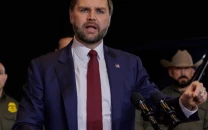
Trump told the New York Post that in-person talks would happen soon, but said his Vice President JD Vance might not attend because of security concerns, contradicting media reports that Vance would lead the US delegation.
Despite concerns over the durability of the ceasefire, Brent crude, which had risen by more than 50% since the war began, was down around 15% on the day, at $94.50 a barrel at 1440 GMT.
Read: Pete Hegseth claims decisive US military victory over Iran
US stocks jumped to near one-month highs, joining a major global relief rally.
Though both the US and Iran declared victory, their core disputes remained unresolved, with each sticking to competing demands for a deal that could shape the Middle East for generations.
The Strait of Hormuz remained shut. A senior Iranian official involved in the discussions told Reuters that Tehran could open it on Thursday or Friday ahead of peace talks.
Any opening, however, would be conditional on agreement over a ceasefire framework, and would be limited, with ships still requiring Iran’s permission to pass.
In a flurry of online posts, Trump announced new tariffs of 50% on all goods from any country that supplies arms to Iran. He insisted Iran had undergone "regime change" and would agree not to enrich uranium, which can be used in nuclear warheads.
Defence Secretary Pete Hegseth said Washington had won a decisive military victory and that Iran's missile programme had been functionally destroyed.




This material may not be published, broadcast, rewritten, redistributed or derived from. Unless otherwise stated, all content is copyrighted © 2026 The Express Tribune.





COMMENTS
Comments are moderated and generally will be posted if they are on-topic and not abusive.
For more information, please see our Comments FAQ