Cabinet approves Pakistan’s first National Vaccine Policy
Updated 2 hours ago

EU foreign policy chief and Qatar's minister of state also appreciate Pakistan's efforts in call with DPM
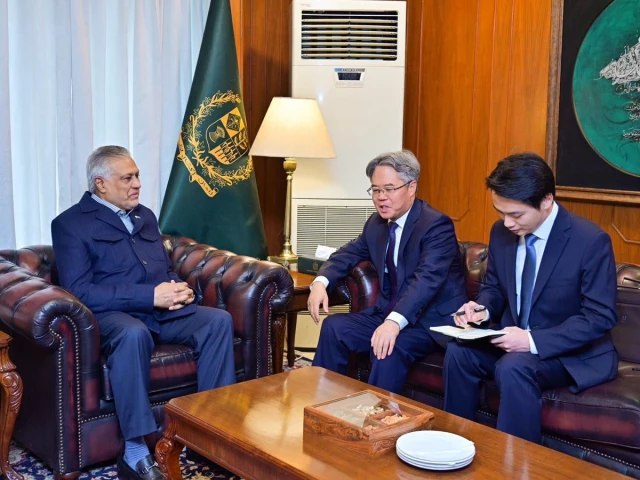
Chinese Ambassador Jiang Zaidong on Wednesday appreciated Pakistan’s constructive role in advancing peace and security in the Middle East and the Gulf region during a meeting with Deputy Prime Minister and Foreign Minister Ishaq Dar.
According to a statement issued by the Ministry of Foreign Affairs (MOFA) on X, Ambassador Zaidong conveyed China’s deep appreciation for Pakistan’s efforts in promoting peace and security in the Middle East and the Gulf region.
The statement further noted that FM Dar reaffirmed Pakistan’s sustained commitment to promoting dialogue and diplomacy as essential tools for achieving lasting peace and stability in the Middle East and West Asia.
“Both sides expressed the hope that ongoing efforts would lead to durable peace and security in the region, for the benefit of all parties,” the statement read.
Deputy Prime Minister/Foreign Minister Mohammad Ishaq Dar, @MIshaqDar50, held a telephonic conversation tonight with the Foreign Minister of Saudi Arabia, Faisal bin Farhan, @FaisalbinFarhan.
— Ministry of Foreign Affairs - Pakistan (@ForeignOfficePk) April 7, 2026
The two leaders discussed the regional situation and evolving developments in the… pic.twitter.com/Cu2SOakprL
Earlier, FM Dar discussed the evolving regional situation and urged a lasting peace process during a series of telephonic conversations with regional counterparts and European Union Foreign Policy Chief Kaja Kallas.
According to MOFA, during a telephonic conversation with Kallas, FM Dar discussed the latest regional developments.
It said that Dar highlighted Pakistan’s sustained efforts to promote dialogue and diplomacy for lasting peace, while Kallas commended Islamabad’s role in creating space for diplomacy, including facilitating the initial US-Iran ceasefire, and expressed full European Union (EU) support for Pakistan’s ongoing peace initiatives.
"I spoke to Pakistani Foreign Minister @MIshaqDar50 and thanked him for securing this initial deal. The door to mediation must remain open, as the underlying causes of the war remain unresolved."@kajakallas @eu_eeas https://t.co/ODa9o1U6P5
— EUPakistan (@EUPakistan) April 8, 2026
FM Dar held a telephonic conversation with Qatar’s Minister of State, Mohammed bin Abdulaziz Al-Khulaifi, as part of Pakistan’s intensifying diplomatic outreach amid fast-evolving regional developments.
"During the call, Dar highlighted Islamabad’s sustained efforts to promote dialogue and diplomacy for peace and stability, while the Qatari minister appreciated Pakistan’s constructive role," it said.
Deputy Prime Minister/Foreign Minister Senator Mohammad Ishaq Dar @MIshaqDar50 spoke today with Minister of State of Qatar, Dr. Mohammed bin Abdulaziz Al-Khulaifi @Dr_Al_Khulaifi.
— Ministry of Foreign Affairs - Pakistan (@ForeignOfficePk) April 8, 2026
On the latest regional developments, DPM/FM shared Pakistan’s sustained efforts to promote dialogue… pic.twitter.com/mM2z2szWwE
FM Dar also had a telephonic conversation with his Turkish counterpart Hakan Fidan, during which both discussed the latest developments in the region.
"Dar highlighted Pakistan’s continued resolve to promote dialogue and diplomatic engagement, sharing the latest developments in Pakistan’s efforts to foster peace and stability in the region," it said.
Dar also spoke with the Foreign Minister of Egypt, Badr Abdelatty and exchanged views on the evolving regional situation.
"FM Dar highlighted the latest developments in Pakistan’s ongoing efforts to promote dialogue and diplomatic engagement towards advancing peace and stability in the region," said the statement.
Deputy Prime Minister/Foreign Minister Mohammad Ishaq Dar, @MIshaqDar50, held a telephonic conversation tonight with the Foreign Minister of Saudi Arabia, Faisal bin Farhan, @FaisalbinFarhan.
— Ministry of Foreign Affairs - Pakistan (@ForeignOfficePk) April 7, 2026
The two leaders discussed the regional situation and evolving developments in the… pic.twitter.com/Cu2SOakprL
According to the MOFA, in conversation with the Foreign Minister of Saudi Arabia, Faisal bin Farhan, the two leaders discussed the regional situation and evolving developments in the Middle East and the wider region.
"FM Dar shared the latest developments in Pakistan’s continued efforts to promote dialogue and diplomatic engagement in pursuit of peace and stability in the region," it stated.
Ceasefire breakthrough
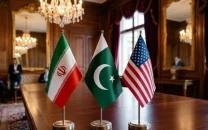
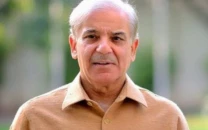
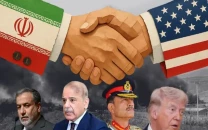
Last night, Prime Minister Shehbaz Sharif announced that the United States and Iran, along with their allies, had agreed to an immediate two-week ceasefire under a Pakistan-facilitated framework.
In a post on X, the premier said the ceasefire would take effect “everywhere, including Lebanon and elsewhere”, and invited US and Iranian delegations to Islamabad on April 10 for negotiations aimed at a conclusive settlement.
With the greatest humility, I am pleased to announce that the Islamic Republic of Iran and the United States of America, along with their allies, have agreed to an immediate ceasefire everywhere including Lebanon and elsewhere, EFFECTIVE IMMEDIATELY.
— Shehbaz Sharif (@CMShehbaz) April 7, 2026
I warmly welcome the…
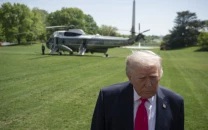
The announcement followed a dramatic shift by US President Donald Trump, who agreed to the pause shortly before a deadline tied to the reopening of the Strait of Hormuz. Iran, represented by Foreign Minister Abbas Araghchi, signalled willingness to halt counter-attacks and ensure safe passage through the strategic waterway, contingent on cessation of hostilities.
The understanding, described as the “Islamabad talks” framework, was the result of sustained backchannel diplomacy led by Pakistan, which facilitated exchanges between Washington and Tehran and helped bridge key differences.




This material may not be published, broadcast, rewritten, redistributed or derived from. Unless otherwise stated, all content is copyrighted © 2026 The Express Tribune.





COMMENTS
Comments are moderated and generally will be posted if they are on-topic and not abusive.
For more information, please see our Comments FAQ