PSX rallies nearly 2,000 points as oil prices ease
Updated 5 hours ago

Dollar nears highs as markets brace for US deadline on Hormuz reopening
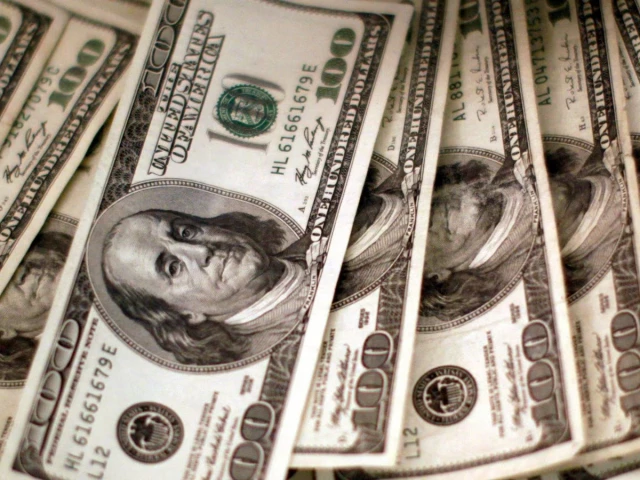
The dollar stood just shy of recent highs on Tuesday as traders counted down to a US-imposed deadline for Iran to open the Strait of Hormuz to shipping or face attacks on its infrastructure.
War in the Middle East and the closure of the chokepoint in the Persian Gulf have sent energy prices soaring and driven investors to the dollar as the most effective safe haven, pushing the greenback higher, especially in Asia.
Hope for some sort of deal or breakthrough held off further dollar buying over Easter, but markets were jittery, and there were few sellers of dollars ahead of US President Donald Trump's 8:00 pm Eastern Time (midnight GMT) deadline.
The yen slipped to 159.79 to the dollar, not far from multi-decade troughs and levels that drew intervention in 2024. The euro bought $1.1533 and sterling $1.3227, slightly above multi-month lows from late March.
"(The) market (is) long USD in case of further escalation, but stocks, gold and CNH trade well and put a lid on dollar gains," said Brent Donnelly, president at Spectra Markets.
"It's hard to make any high-confidence predictions here ... we wait for 8:00 pm and see what type of attacks Iran and US/Israel launch in the meantime".
Read: UNSC to vote on Iran-Hormuz resolution amid Trump ultimatum
Trump said on Monday Iran could be "taken out" in one night, and that night might be tomorrow night." He promised to destroy Iranian power plants and bridges, brushing off concerns that such actions would be a war crime or alienate Iran's people.
Iran and Israel traded attacks on Tuesday as Tehran refused to reopen the Strait. Israel said it completed a wave of airstrikes targeting Iranian government infrastructure. Defences intercepted Iranian missiles in Israel and Saudi Arabia.
The Australian and New Zealand dollars, which tumbled as fighting and Iranian strikes on Mideast energy infrastructure intensified late in March, are off lows but trading softer at $0.6917 and $0.57, respectively.
The South Korean won remains on the weak side of 1,500, a level plumbed only in the wake of crises in 2009 and the late 1990s. Indonesia's rupiah dropped to a record low, while China's yuan hung on to March's steady tone.
"The dollar may ease modestly further in the near term because of optimism the US will 'end' the Iran war," said Commonwealth Bank of Australia analysts in a note.
"However, there are three participants in the war: the US, Israel and Iran. What matters for the world economy and currencies is whether the Strait of Hormuz is open. The US leaving the conflict does not reopen the Strait.













This material may not be published, broadcast, rewritten, redistributed or derived from. Unless otherwise stated, all content is copyrighted © 2026 The Express Tribune.










COMMENTS
Comments are moderated and generally will be posted if they are on-topic and not abusive.
For more information, please see our Comments FAQ