Gold drops by Rs5,200 per tola as global prices tumble
Updated 11 hours ago

Initiative offers global stakeholders facility to store oil, LNG and LPG for onward export
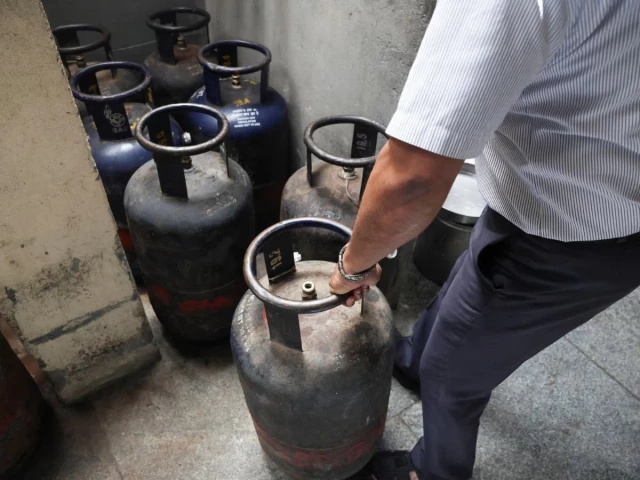
Federal Minister for Maritime Affairs Muhammad Junaid Anwar Chaudhry has announced plans to establish the Pakistan Maritime Energy City, an ambitious initiative aimed at meeting both domestic and international energy storage and re-export requirements as part of a broader strategy to expand Pakistan's economic footprint.
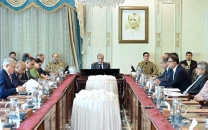
Chairing a meeting to review the identification of sites for three or four new ports along the country's coastline, the minister said Pakistan had already demonstrated its potential by facilitating foreign transshipment cargo amid ongoing regional tensions. He noted that this momentum would be leveraged to position the country as a key regional hub for energy logistics. A 12-member multi-agency committee had been constituted under the maritime minister's "Hundred Years Vision 2047-2147" to identify suitable locations for new deep-sea ports and associated infrastructure. The committee has been tasked with laying the groundwork for future maritime expansion and economic growth.
Speaking at the meeting, Junaid Anwar said the proposed energy city would offer international stakeholders the facility to store oil, liquefied natural gas (LNG) and liquefied petroleum gas (LPG) for onward export. "Meeting Pakistan's needs will remain the top priority, but the facility will also cater to global demand," he stressed, adding that the energy city would also be integrated with ports' infrastructure.
The minister directed the committee to begin work on identifying a suitable land for the project and prepare a comprehensive development plan. He emphasised that consultations with all stakeholders, particularly provincial governments, would be held prior to the formal launch of the project. Highlighting the economic potential of the initiative, Junaid Anwar said that in times of regional instability, the proposed energy city could generate significant revenue for Pakistan while ensuring uninterrupted supply chains. "Just as our ports are serving transshipment needs, the energy city will cater to global energy requirements," he added.
The minister announced that smaller auxiliary energy facilities would also be developed to support major ports, with connectivity through pipelines, maritime routes and re-export mechanisms to strengthen supply lines. During the briefing, Port Qasim Authority Director General Rear Admiral Muhammad Khalid, who is also the committee convener, said that substantial progress had been made in data collection for identifying new port sites.











This material may not be published, broadcast, rewritten, redistributed or derived from. Unless otherwise stated, all content is copyrighted © 2026 The Express Tribune.






COMMENTS
Comments are moderated and generally will be posted if they are on-topic and not abusive.
For more information, please see our Comments FAQ