
No more bail
Updated 13 hours ago

Slow courts, vague laws make defamation cases in Pakistan rare to resolve

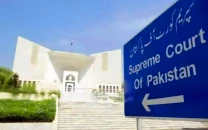
For most Pakistanis, seeking justice through a defamation suit is an endless marathon. Cases languish for years, bogged down by a legal system rife with intentional flaws that permit endless adjournments and rarely deliver clear conclusions.
The recent verdict in the Ali Zafar-Meesha Shafi dispute stands as a rare exception - though even here, the case took nearly eight years. The court ordered Shafi to pay Zafar Rs5 million in damages, finding her sexual assault allegations against Zafar to be "false, defamatory and injurious" and not "made for public good".
While defamation cases in Pakistan rarely reach a conclusion, the country's defamation laws are among the most vague and aggressive in the world, often hiding behind flawed cultural arguments rather than any sense of fairness.
It is in part because of these problems that many aggrieved parties prefer to sue in foreign jurisdictions due to clearer laws that can be fairly applied. It is why some Pakistani commentators keep losing cases in the UK, where honest opinions are generally protected, as long as they are fact-based.
By contrast, in the US, known for its highly permissive free speech laws, courts have shown that even public figures such as presidents are subject to defamation law. In 2024, a federal appeals court upheld an $83.3 million judgment against President Trump for statements denying sexual assault allegations. Notably, despite efforts to delay hearings after the 2019 filing, the actual case took barely a year to decide in 2023.
Compare that to another case where Trump sued a comedian for joking that his real father was an orangutan. Though Trump went on TV to say he sincerely believed the comment "wasn't a joke", US law protects satire. Despite Trump's assertion that the claim was plausible, it was withdrawn within weeks, likely to avoid allowing for a countersuit.
It is in every citizen's interest that defamation law be made clearer and the offences made narrower to allow for better application and faster processing of cases. Otherwise, justice will remain an elusive promise.



This material may not be published, broadcast, rewritten, redistributed or derived from. Unless otherwise stated, all content is copyrighted © 2026 The Express Tribune.












COMMENTS
Comments are moderated and generally will be posted if they are on-topic and not abusive.
For more information, please see our Comments FAQ